Natural Stone Masonry in Meath & Dublin
Stonework should look as though it belongs there. Whether we're building a new limestone entrance, repairing an old rubble wall or matching stone on a period property, the first job is understanding the building and choosing the right stone for it.
We work with all stone types — limestone, granite, sandstone, rubble and reclaimed natural stone. We build walls, entrances, steps and stone features, and carry out repairs where the original materials and character matter just as much as the finished appearance.
Natural stonework for new builds, older homes and heritage properties
A new stone wall and a two-hundred-year-old wall need different approaches. On a new build, we can plan the foundations, stone sizes, bond and finish from the beginning. On an older building, we first look at what is already there: how the stone is laid, what mortar was used and why the masonry may have deteriorated.
That distinction matters. A repair should solve the underlying problem without leaving an obvious patch or introducing materials that are unsuitable for the original wall.
We undertake natural stone boundary and garden walls, entrance pillars and steps, stone facing, matching and rebuilding, and traditional repairs. Where the job involves a protected structure or structural movement, the work must follow the appropriate conservation advice, permissions and design requirements.
Send us photographs of your project →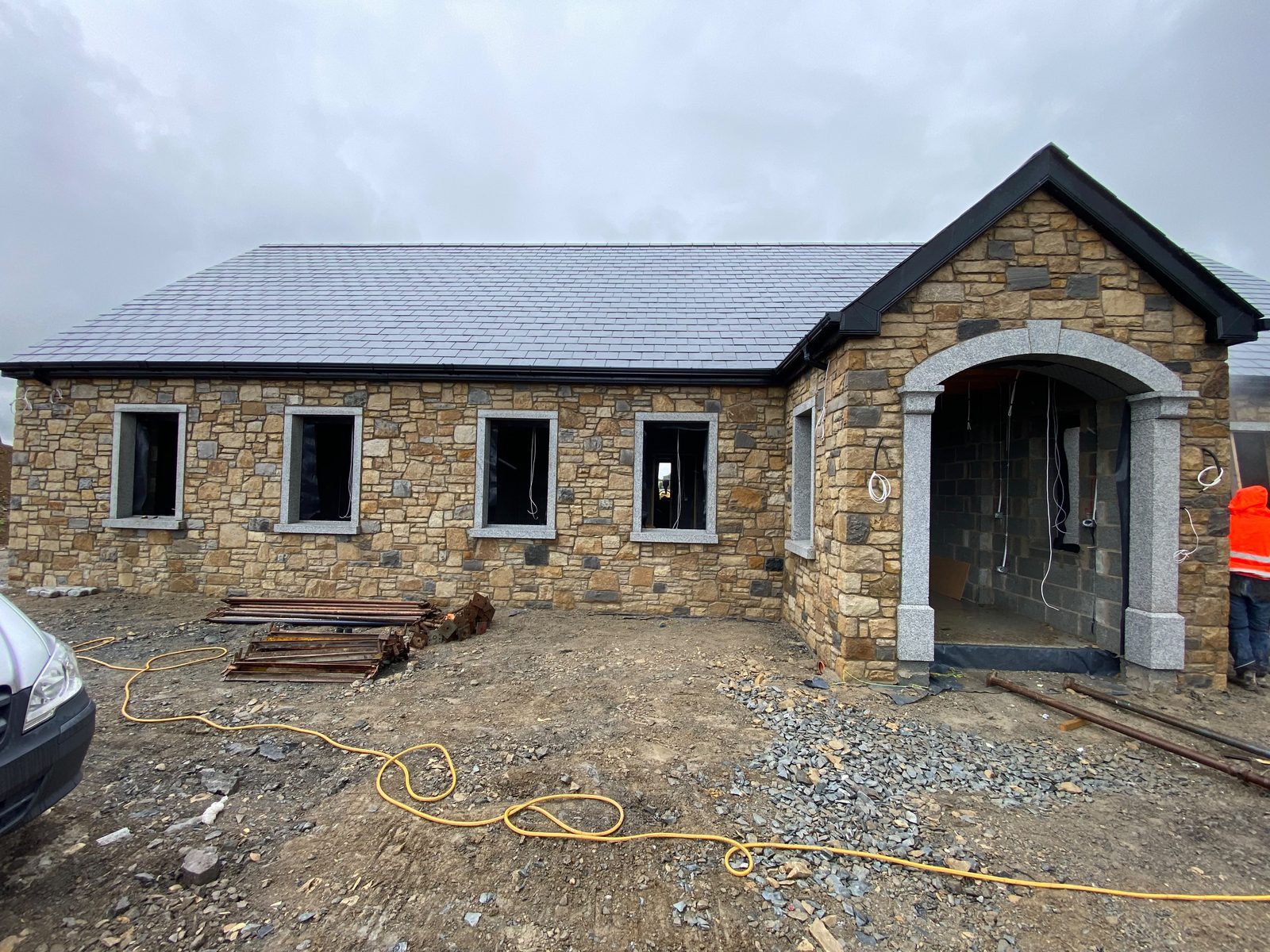
Choosing the right stone — we work with all stone types
One team covers all stone work, from a rubble field wall to dressed granite steps. That matters on mixed jobs — a limestone wall with granite copings, or an old cottage with sandstone quoins — where the stone, the match and the mortar all have to be decided together.
Irish limestone
A familiar sight in traditional walls and buildings across Meath and the Midlands. Its grey and blue-grey tones suit boundary walls, entrances, copings and many repair projects. The right choice depends on the stone's characteristics, exposure and the finish required.
Granite
A distinctive grain and a crisp appearance when dressed. It works particularly well for entrance piers, steps, architectural details and walls where a strong, defined stone finish is wanted. We assess colour, texture and dimensions before choosing a match.
Sandstone
Warmer tones and more variation. Often chosen for features or for repairs to existing sandstone masonry. Because different sandstones behave differently, selection, bedding and detailing need care.
Rubble and fieldstone
Irregular stone is part of the character of Irish farm buildings, cottages and old boundary walls. The skill lies in choosing and placing each piece so the wall has a natural appearance and a sound internal build, rather than simply filling gaps with mortar.
Reclaimed and matching stone
When an old wall needs rebuilding, we look at what can be retained and reused. If additional stone is needed, we aim to match the existing colour, size, texture and laying pattern as closely as practical. Exact matches are not always available; we'll explain the options before work begins.
Not sure what you have?
Send us a photograph of the existing stone and we'll tell you what it is, what it can be matched with and what the realistic options are. Send a photo →
The finish makes the difference
The same stone can look completely different depending on how its face is worked, how it's laid and how the joints are finished.
Random rubble
Irregular stones laid to suit their natural shapes, commonly seen on traditional cottages and boundary walls.
Coursed rubble
Roughly shaped stones arranged in recognisable courses for a more ordered appearance.
Cut and dressed stone
Worked stone with defined faces and edges, suited to formal entrances, steps, quoins and copings.
Split-face stone
A textured face that retains the natural fractured appearance of the stone, often chosen for contemporary features.
Dry stone walling
Stone built without mortar, using careful selection, overlap and bonding. Suitability depends on the wall's purpose, dimensions and location. Dry stone wall guide →
Mortar and pointing finishes
Joint width, profile, colour and mortar choice all affect the appearance and performance of masonry. On older walls, mortar should be selected to suit the existing stone and construction, rather than using one mix for every job. Pointing styles →
Adding natural stone to an existing wall
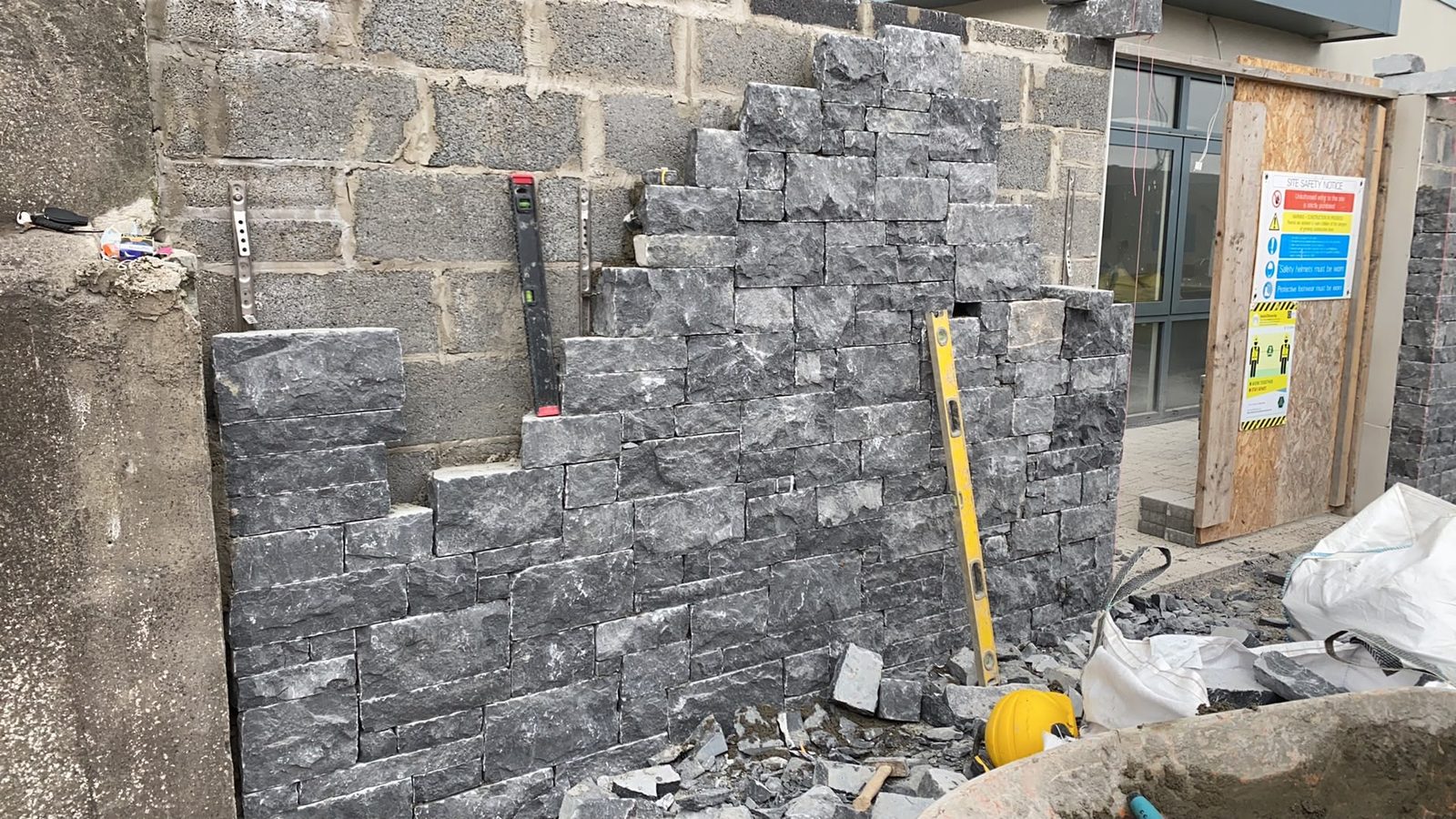
Natural stone can be used to create a new face on suitable masonry, including some blockwork and brickwork. But it is not simply a matter of sticking stone to the outside. The weight of the stone, supporting structure, restraint, moisture management, openings and movement all need to be considered.
For a new house or extension, we can discuss the intended stone finish and how it should meet windows, doors, corners and copings. For an older building, the priority is compatibility with the existing construction and keeping water from becoming trapped in the wall.
If you're unsure whether your project needs stone cladding, a new stone leaf or a full rebuild, send us a photograph and a few details. We can discuss the options and arrange a site visit where needed.
Repairing and matching existing stone masonry
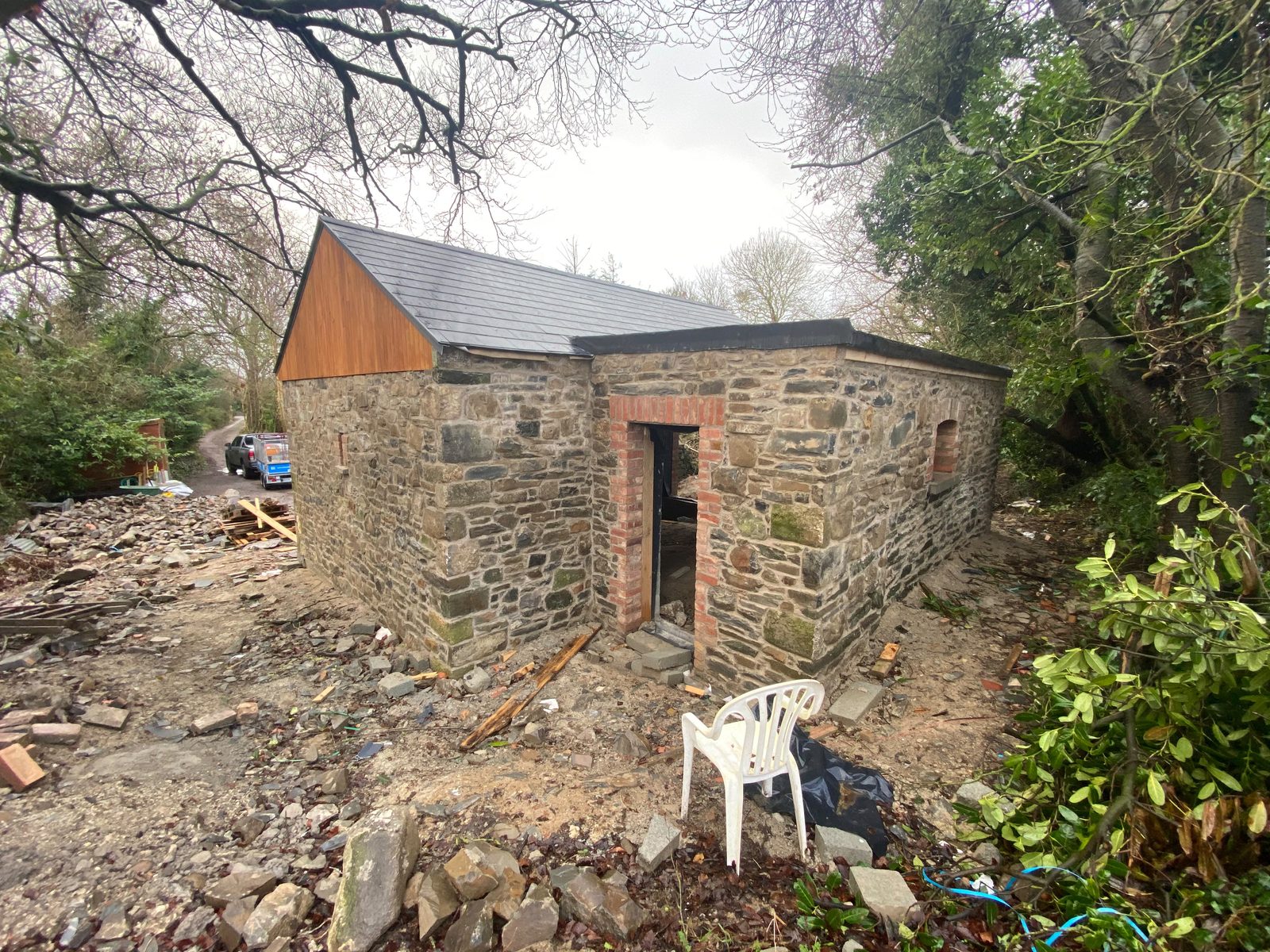
The obvious damage is not always the whole problem. Open joints, loose stone, bulging sections, cracked copings or damp patches can point to water entry, movement or previous repairs that have not suited the building.
Before recommending a repair, we look at the wall's condition, how it is supported, how rainwater drains away and whether the original stone can be reused. The right answer might be local repointing, replacing a few damaged stones, rebuilding an unstable section or obtaining structural or conservation advice first.
We aim to keep sound original fabric wherever practical and make new work sit naturally beside it. For traditional masonry, that may mean carefully selected lime mortar and matching stone; the precise specification should be based on the wall, not a blanket rule.
Real projects, not just promises
Four pieces of stonework we've written up in full — what was there, what we built or repaired, and the stone and mortar used.
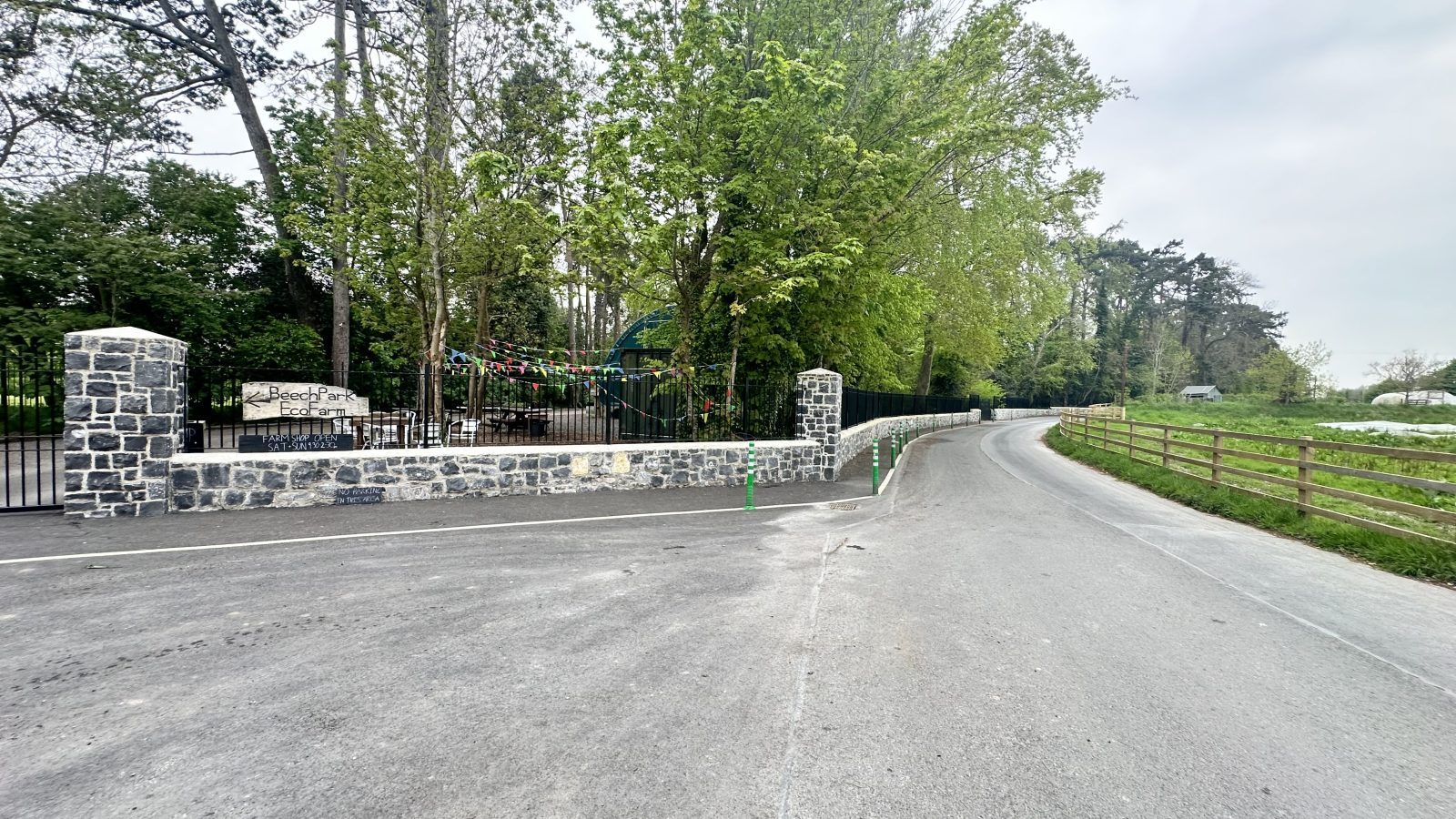
Limestone estate entrance and boundary wall
Natural limestone entrance pillars and gates, then over 300 metres of hand-laid limestone boundary wall topped with railings and a new footpath. Shows coursing, corners and how a long run is kept consistent.
Granite boundary wall in Dublin
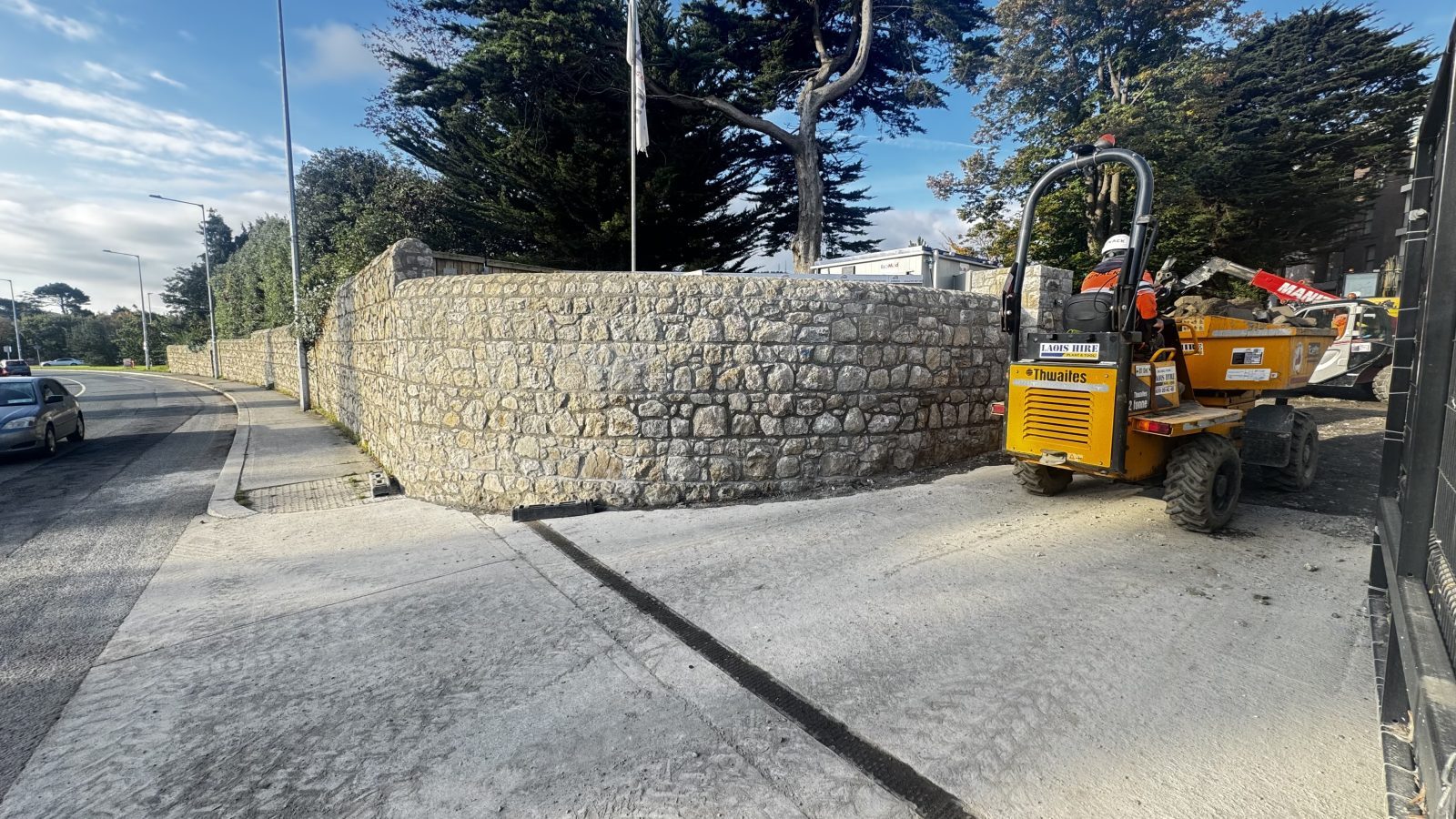
A natural granite wall where the material, joint pattern and proportions had to work together along a curved roadside boundary.
The Wonderful Barn, Leixlip
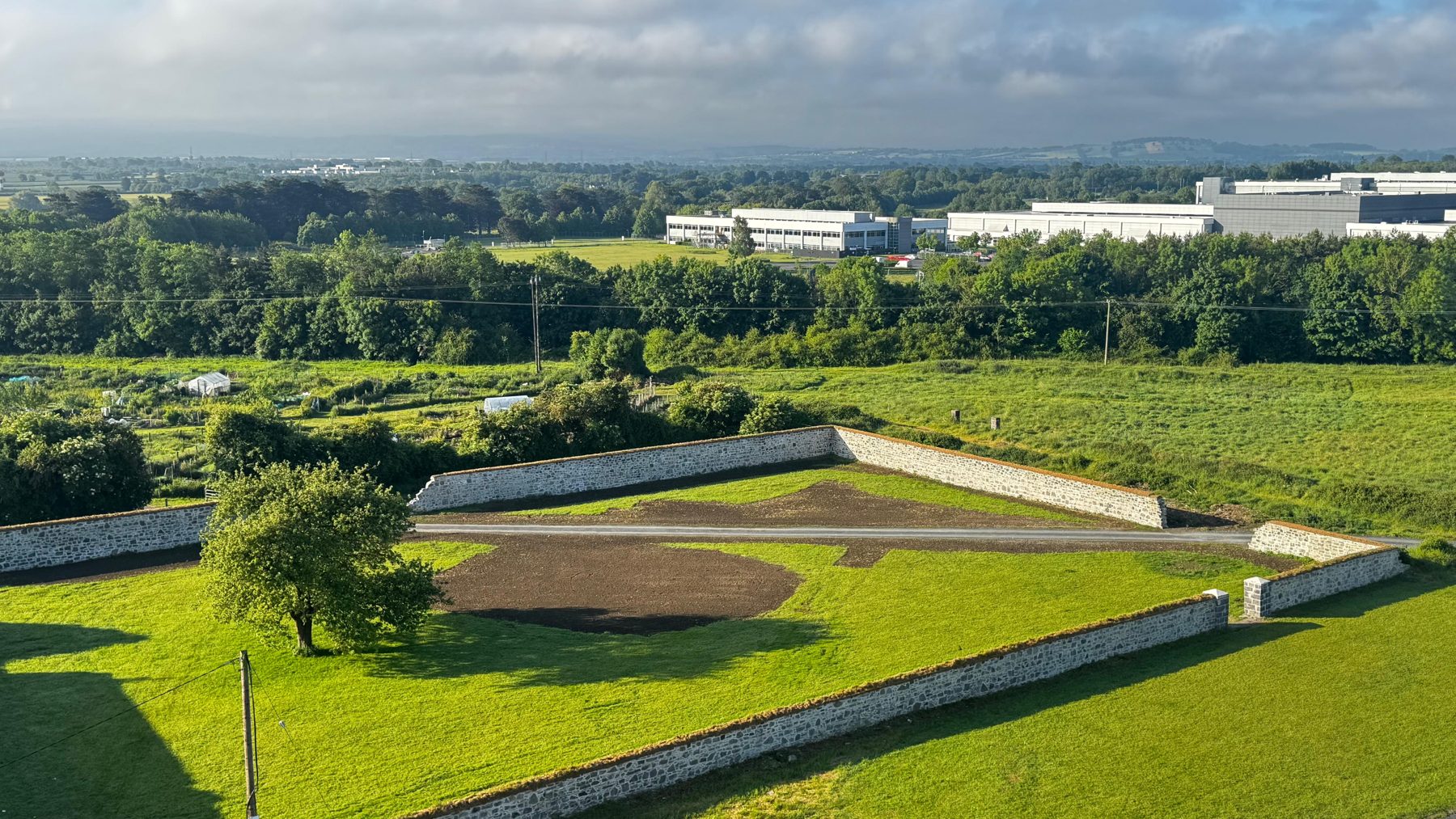
Restoration of the 18th-century rubble stone walls of the walled enclosure: original stone retained and reused, failed sections rebuilt and the walls repointed in lime.
Grange Castle, Clondalkin
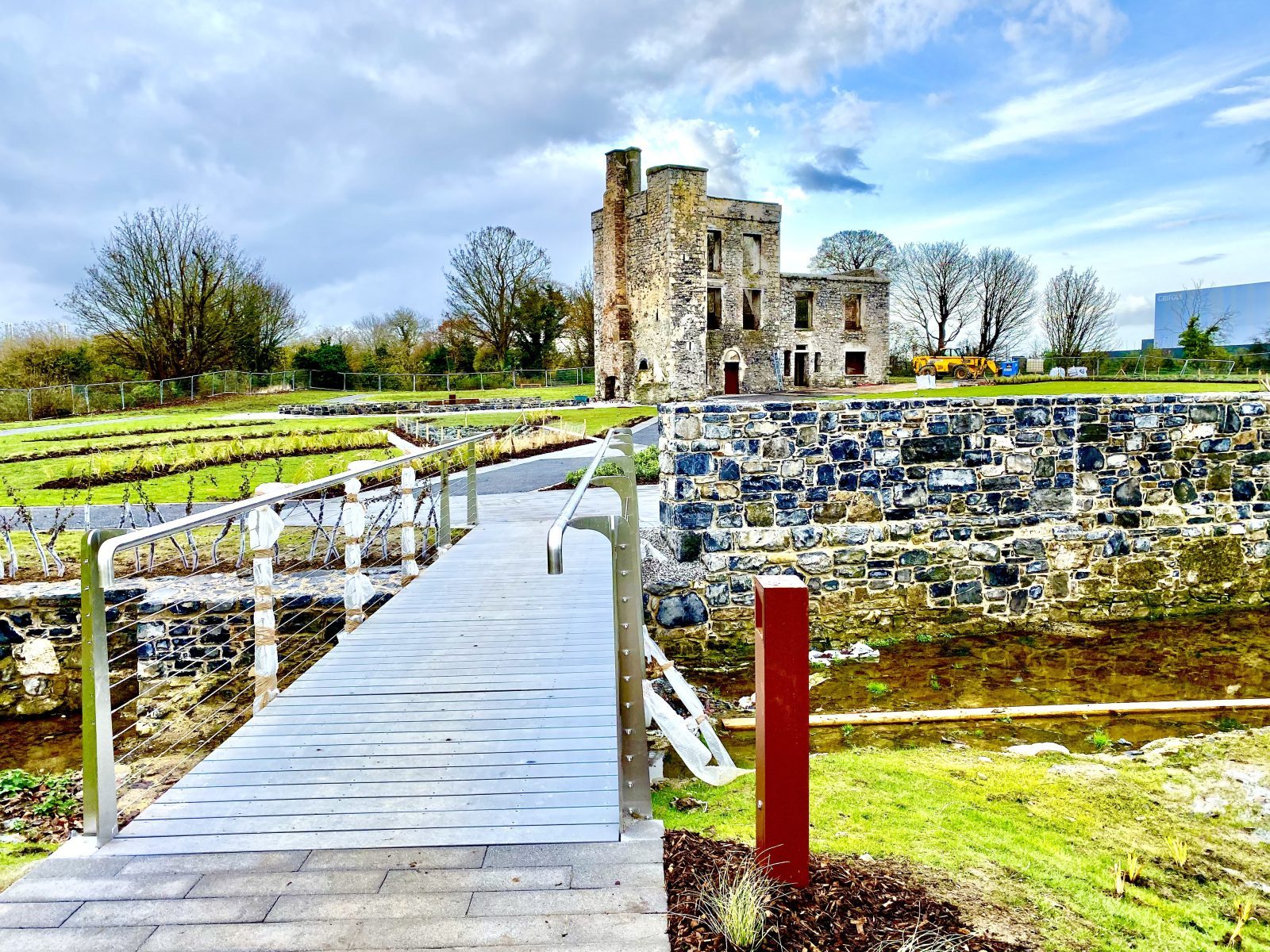
Heritage conservation of the medieval castle and its grounds: masonry consolidation and repair, lime repointing, rebuilt boundary walls and groundworks.
Recent natural stone work
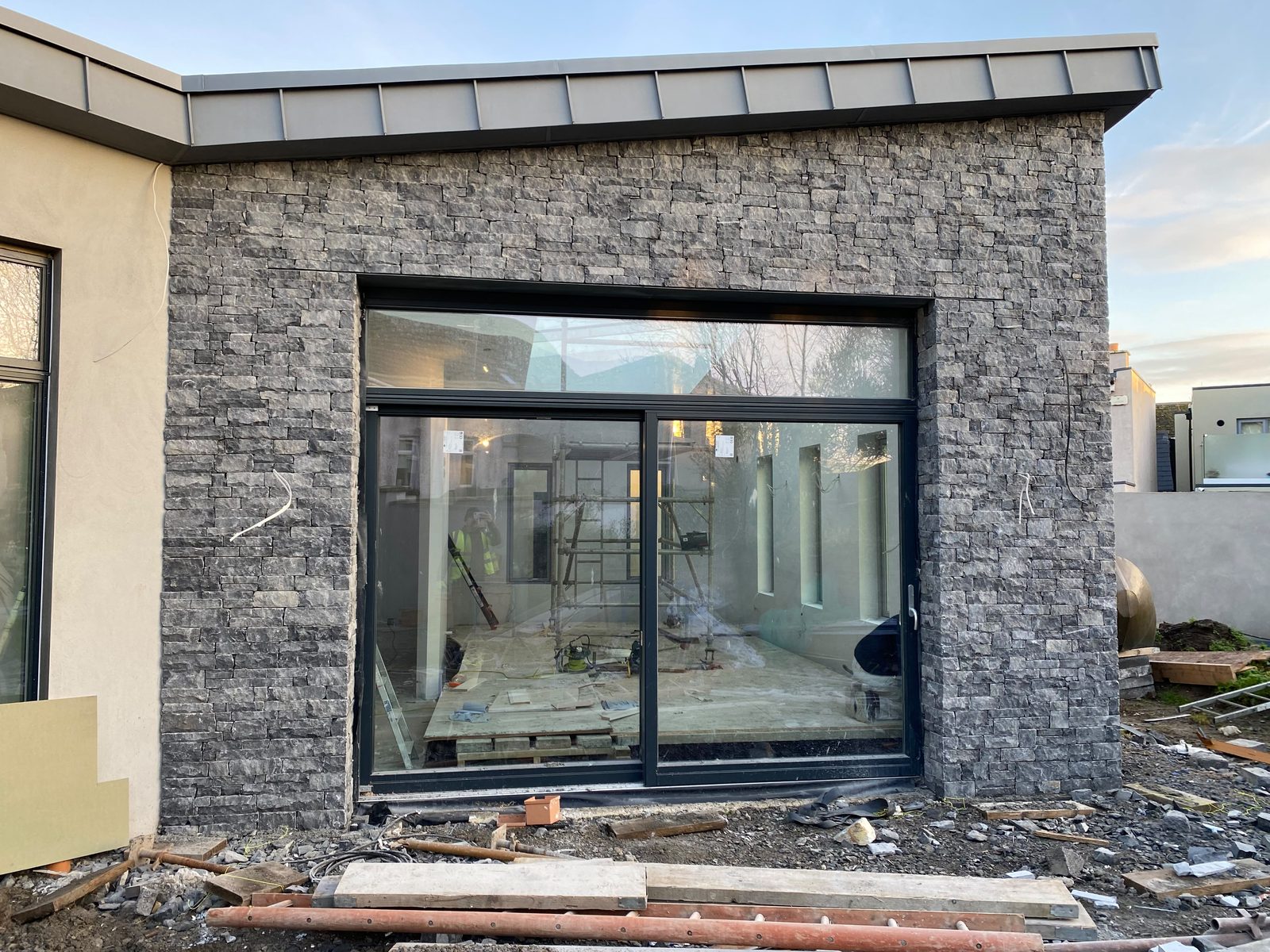
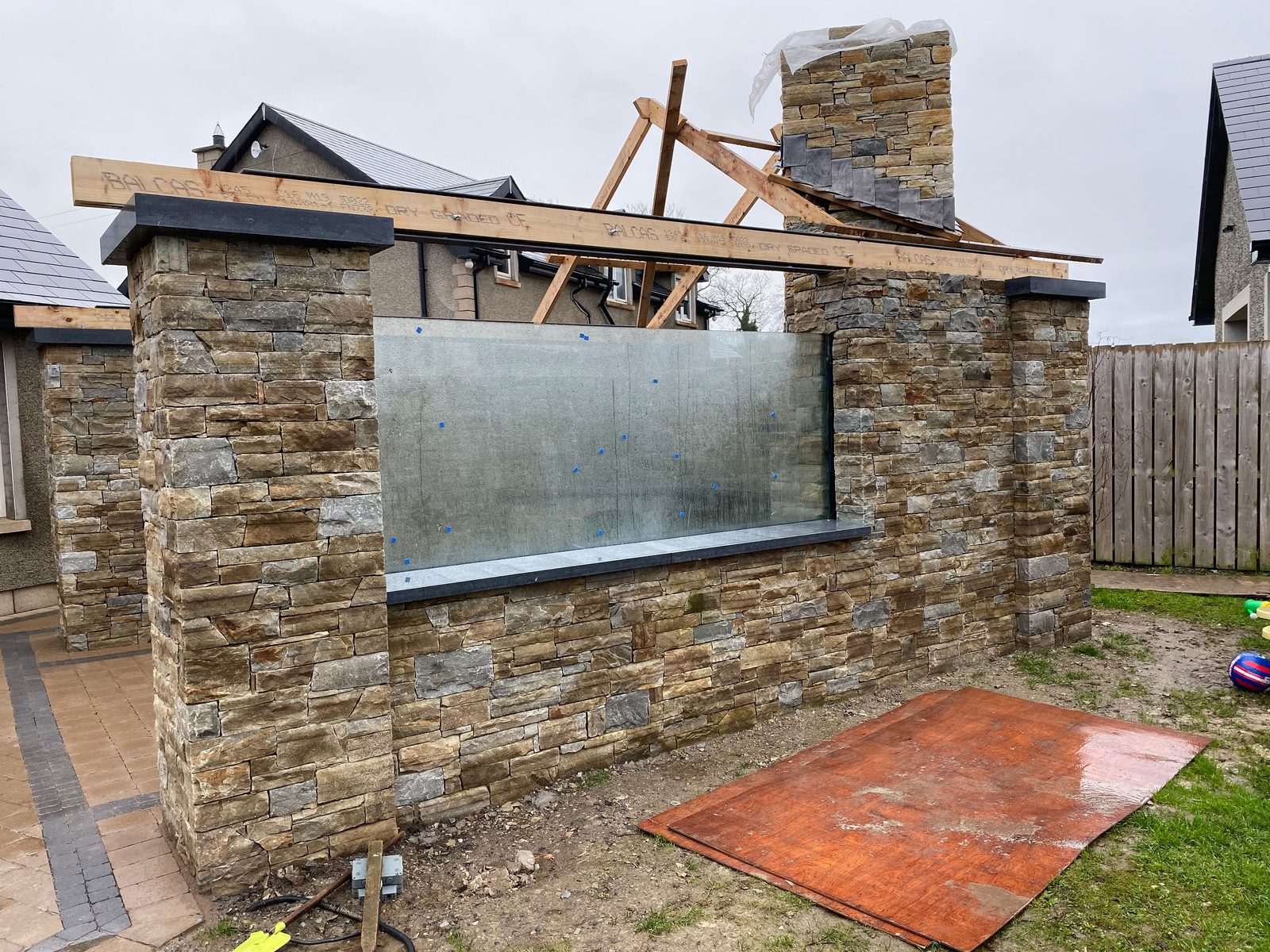
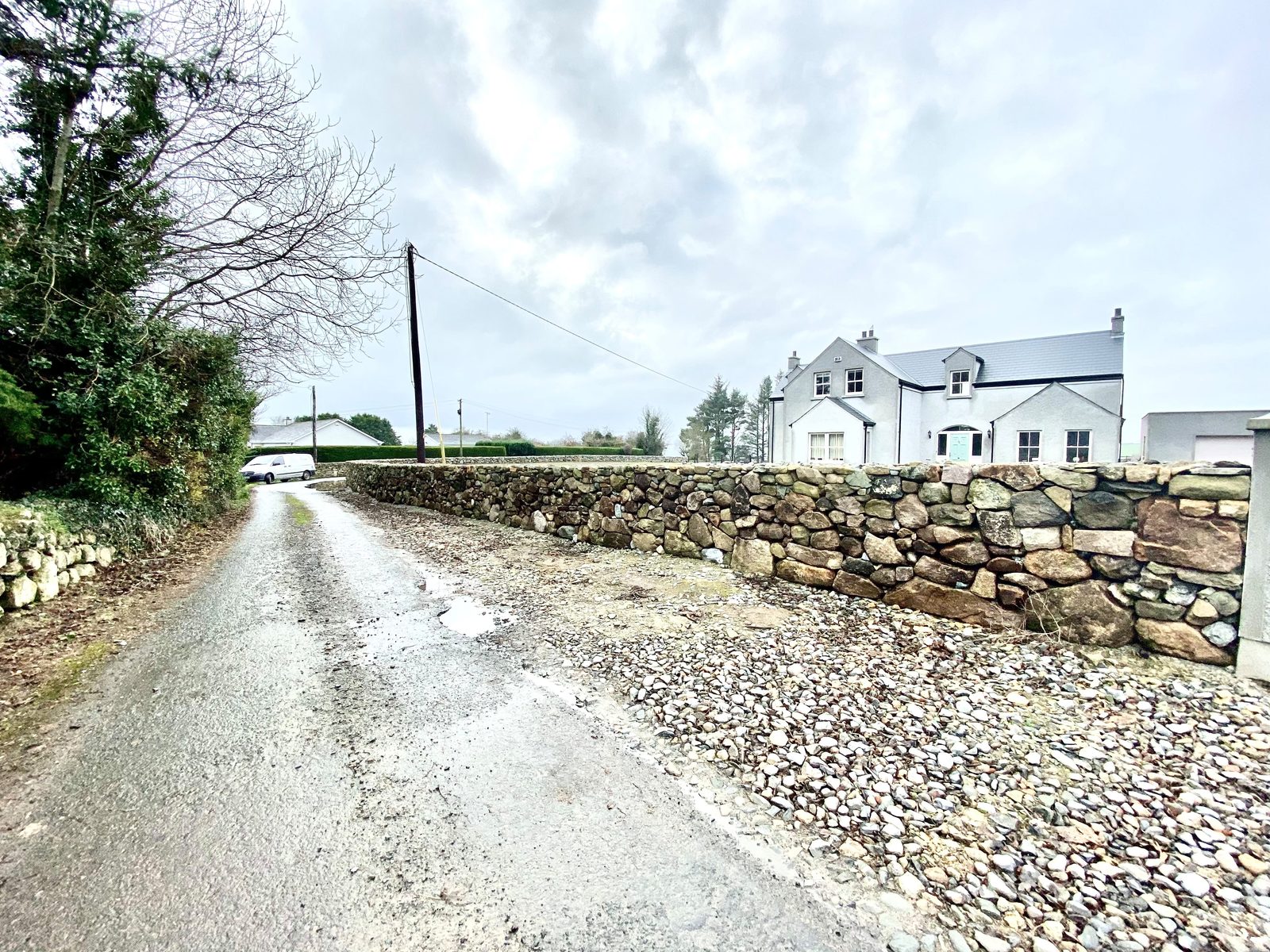
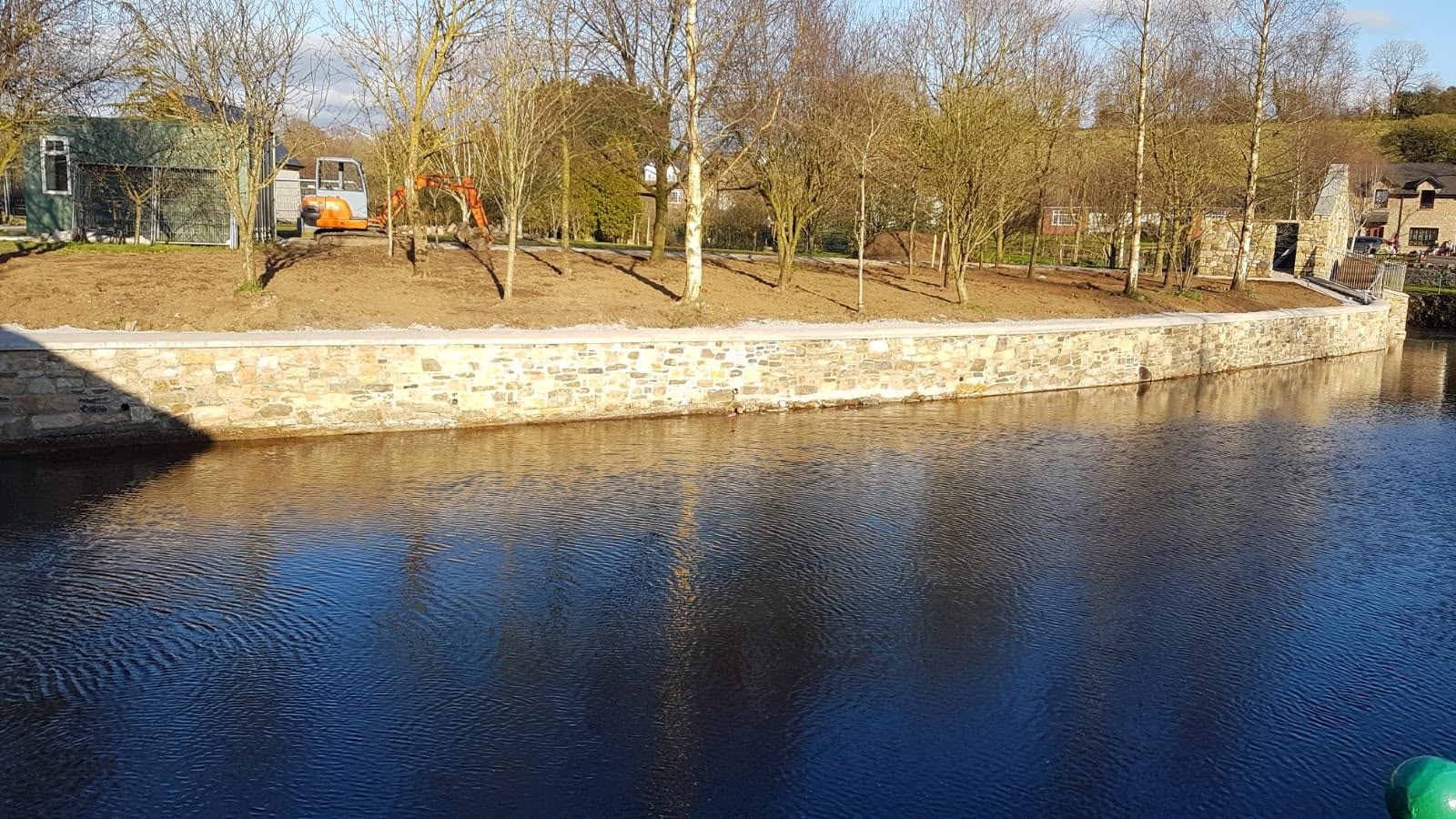
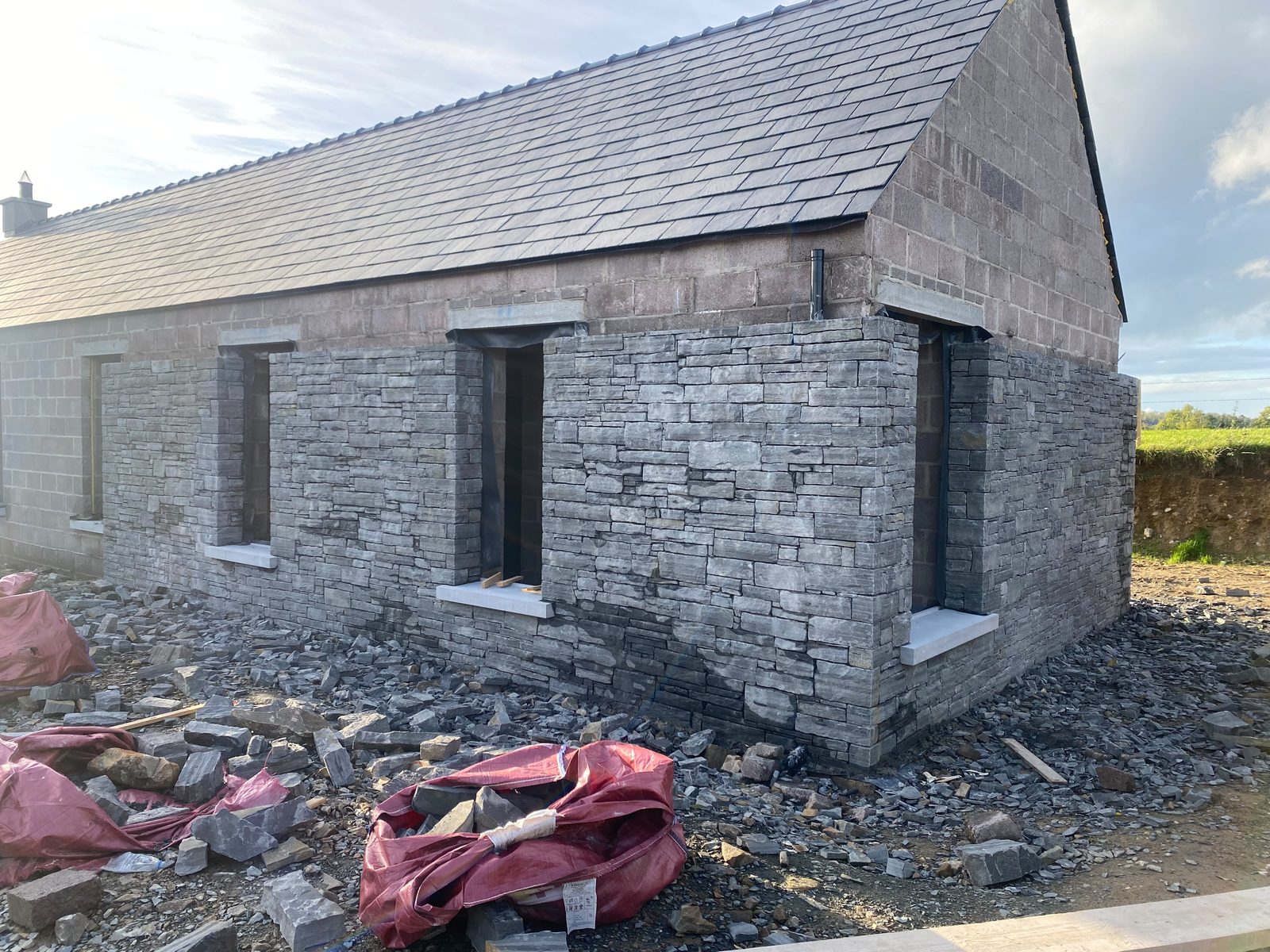
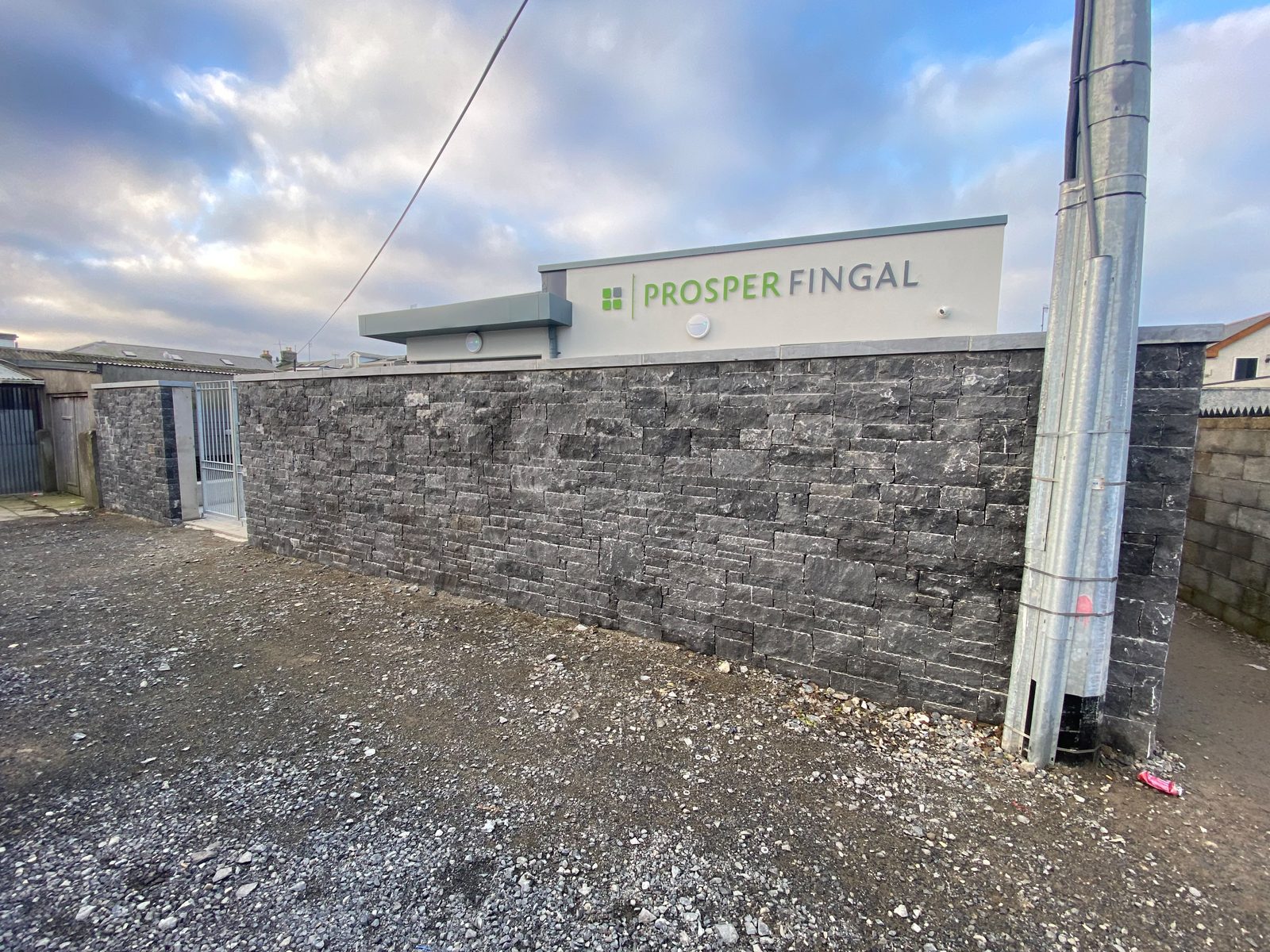
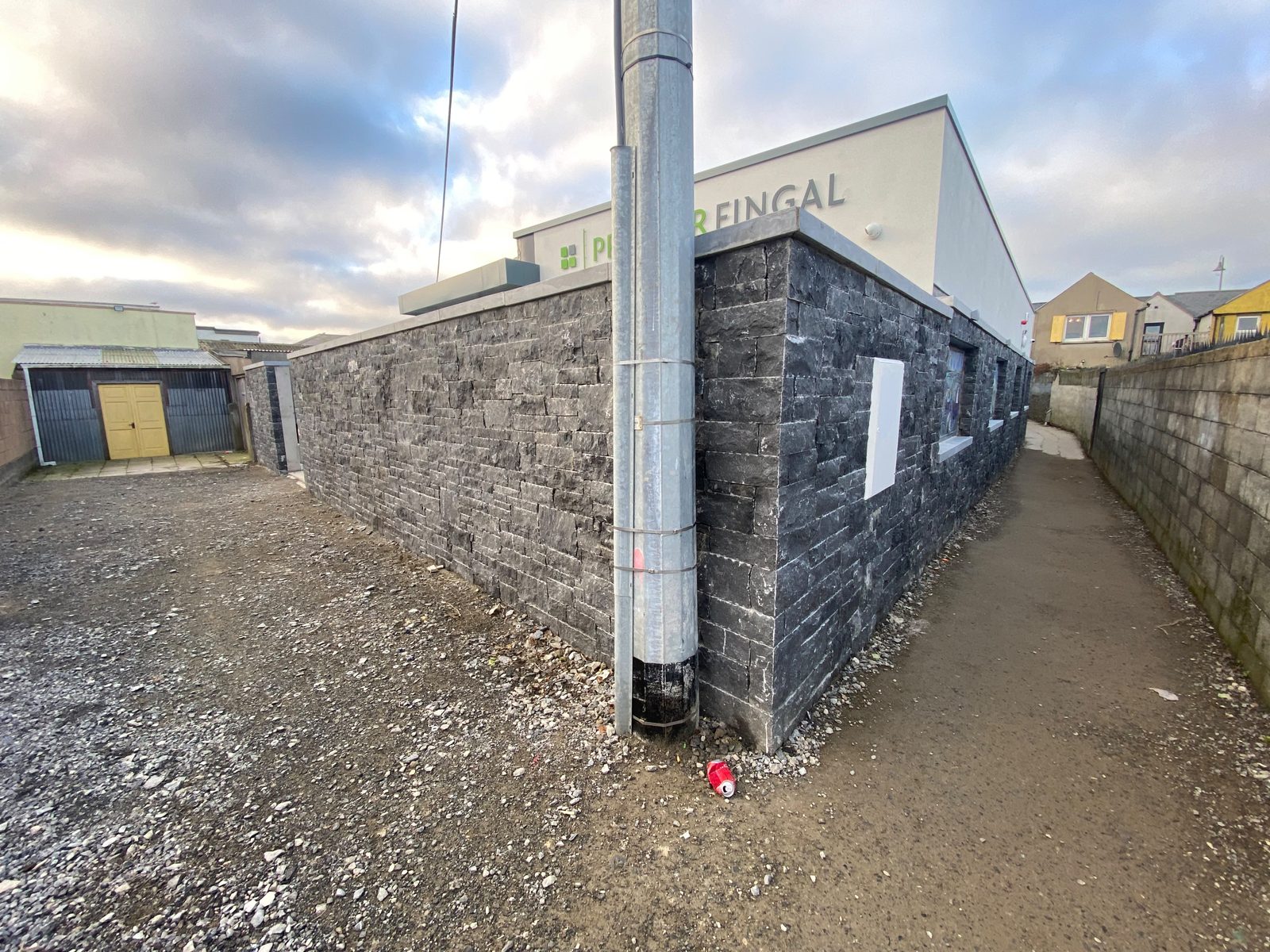
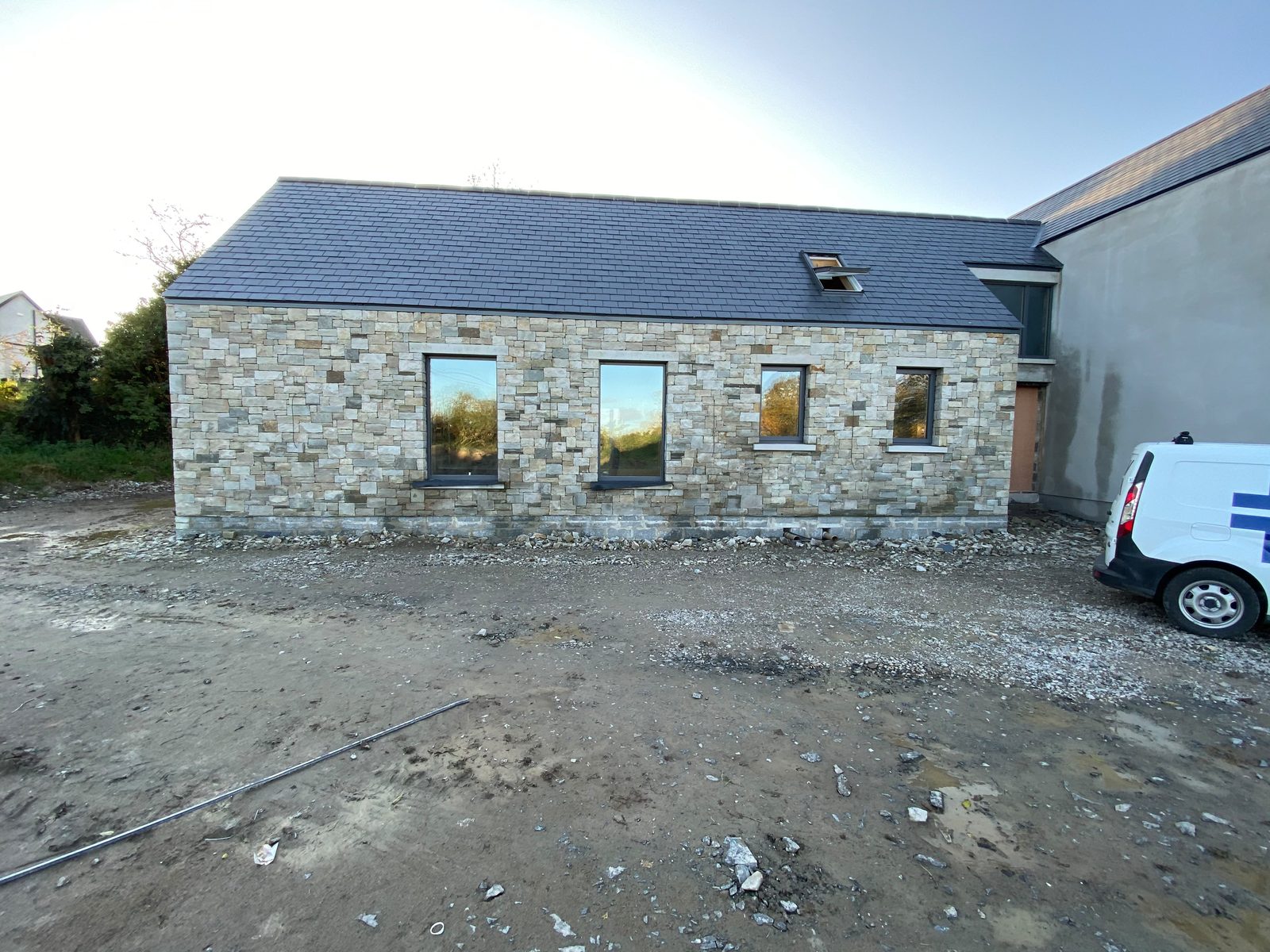
Photographs from our own jobs across Meath and Dublin — walls, stone facing, feature work and restoration. No stock images.
How we approach a stone masonry project
Tell us what you need
Send photographs, the location and a short description. Drawings and approximate dimensions are helpful if you have them.
We look at the building or site
For suitable projects we arrange a visit to discuss the stone, finish, access and any repair concerns.
We agree the scope
The quotation makes clear what is included, what needs further investigation and whether design, engineering or conservation input is required.
We carry out the stonework
Stone selection, laying pattern, joints, corners, copings and site protection are all considered as part of the job.
We walk through the finished work
We explain any relevant curing, protection or maintenance considerations for the materials used.
What does natural stone masonry cost?
The cost depends on much more than the square metres of visible stone. A simple new wall with good access is different from matching an old wall, dressing individual stones or working around a protected building.
The main factors are:
- The stone — type and availability, and whether a specific old stone has to be sourced to match.
- Cutting and dressing — random rubble is slow, skilled work; dressed quoins, copings and steps are slower again.
- Foundations and support — groundwork under a new wall, or ties and restraint for stone added to an existing one.
- Height and access — scaffolding, awkward sites and working around live properties.
- Mortar and drainage — lime work on older masonry, and detailing to keep water out of the wall.
- Careful dismantling — where existing masonry must be taken down and the stone cleaned and reused.
Published starting rates — separate services, not a general stone masonry price:
Natural stone cladding from €140/m² · Repointing from €120/m²
Walls, entrances, matching and restoration are priced per job. Your itemised quotation states exactly what is included — stone, labour, preparation, access — so there's nothing to interpret.
Why clients choose L&A Building Experts
Good stonework is in the details that are easy to miss: a corner that turns properly, a coping that sheds water, a repair that follows the old wall's bond, and a mortar that suits the building.
We bring experience in both new natural stonework and traditional masonry repairs, across all stone types. Our aim is to recommend an approach that makes sense for the property, explain the choices clearly and leave work that looks right in its setting.
"I would like to thank this firm for the stonework on a large project. Both the work and the employees were of the highest quality and did more than expected of them. I would highly recommend this company."
Kimmage Hardware · Google review"I can not recommend Arthur and his team highly enough, they started on the agreed date and nothing was a problem after that... 10/10 in everything they done for me, very professional team of guys."
Alan Bow · Google reviewNatural stone masonry FAQs
Do you work with all stone types?
Yes. Limestone, granite, sandstone, rubble and fieldstone, reclaimed stone and split-face — all stone work is done by the same team, in mortar or dry-laid. The one thing we don't do is treat them all the same: each stone is selected, bedded and pointed to suit how it behaves and the building it's going on.
Can you match the stone on my existing wall?
Often, yes. We compare the stone type, colour, texture, size and laying pattern, then assess what can be reused or sourced. Some old stone is difficult to match exactly, so we explain the likely finish before starting.
Which is better for an outside wall: limestone or granite?
Both can be suitable, depending on the specific stone, the design and exposure. The right choice also depends on the appearance you want, local character, detailing and budget. We can discuss options after seeing the site.
Do older stone walls always need lime mortar?
Many traditionally built walls benefit from compatible lime mortar, but the right mix depends on the stone, exposure, existing materials and condition. We assess the wall rather than specifying the same mortar for every property. Lime vs cement explained →
Can natural stone go over an existing block wall?
It may be possible, provided the structure and proposed system are suitable. The support, restraint, moisture detailing and weight need to be considered. We can assess the project and identify where design advice is required.
Can you repair a leaning or bulging stone wall?
Sometimes a local repair is possible, but a leaning or bulging wall may have a structural problem. Keep people away from any unstable section and have it assessed before work begins. The solution may involve rebuilding and correcting the cause of movement. Structural repairs →
Do you work on protected structures?
Yes — our heritage work includes The Wonderful Barn in Leixlip and Grange Castle in Clondalkin. Work to a protected structure may need specialist conservation input and statutory consent, depending on the proposal. We can discuss the scope and any professional team involved.
How do I get a quote?
Send us photographs, your town or county, approximate dimensions and a short explanation of what you need. For larger or more complicated work, we arrange a site visit before preparing a written quotation.
Natural stone masonry across Meath, Dublin and surrounding counties
We're based in Navan, Co. Meath, and work across Meath, Dublin and neighbouring counties, depending on the project. We regularly discuss stone walling, entrances, cladding and repairs with homeowners, property managers and people caring for older buildings. If you're outside our usual area, send us the location and details and we'll let you know whether we can help.
Have a stone project in mind?
A photograph is often the best place to start. Your name, phone number and project location are enough to begin — photos are helpful but optional.
or call 086 066 6591 · WhatsApp · info@buildingexperts.ie
We'll use your details to respond to your enquiry. See our privacy notice.
Tell us where the property is and what you want built or repaired
Whether you're trying to match existing stone or planning something new, we'll help you work out the next step — and arrange a free site visit where it's needed.