Restoring Grange Castle — a €1.2m Dublin heritage project
We were entrusted with the full conservation and restoration of the historic Grange Castle in Clondalkin, Dublin — consolidating the medieval castle, repairing its masonry and structure, rebuilding its boundary walls, and re-landscaping the whole site. A €1.2 million heritage contract, completed in 2019.
Our biggest project — the conservation of Grange Castle
Grange Castle in Clondalkin is one of south Dublin's genuine historic landmarks — a medieval fortified tower house that has stood for centuries, now preserved as a striking heritage centrepiece within its modern surroundings. Bringing a protected structure like this back from a fragile, weathered state is specialist work, and it's the kind of project we're proudest to be trusted with.
This was a €1.2 million conservation contract, completed in 2019, covering everything from stabilising the castle itself to re-landscaping the grounds around it: castle consolidation, structural and masonry repair, replacing the failing window lintels, partial lime repointing, rebuilding the boundary walls and repairing their tops, groundworks, landscaping, footpaths and stone paving. Every part of it was carried out to conservation standards, in the traditional materials the building demands.
A historic castle worth saving
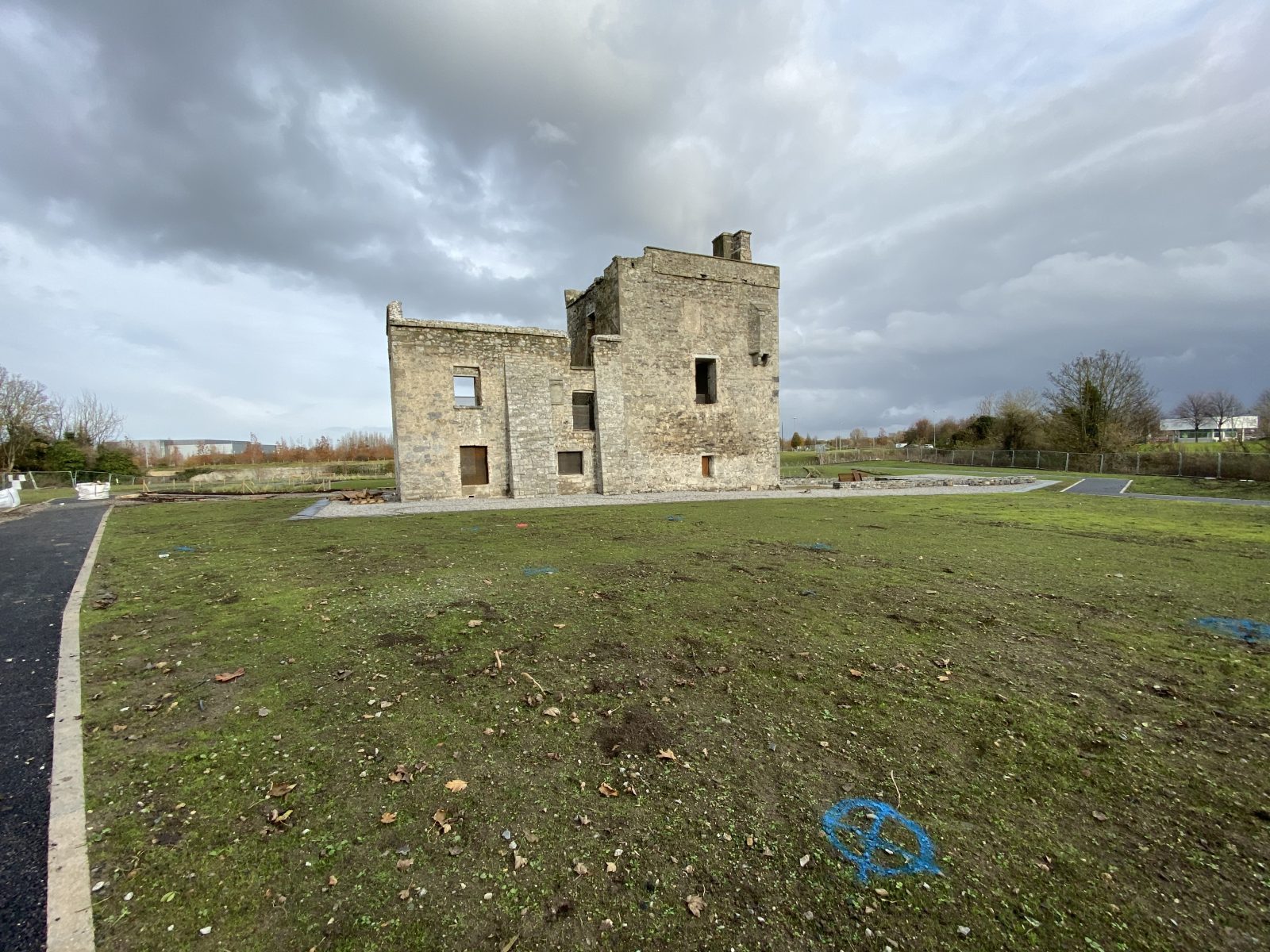
Grange Castle is a tall stone tower house — the kind of fortified medieval building that once dotted the Pale around Dublin, and one of the few of its type left standing in the area. Centuries of weather had taken their toll: open joints, eroded and loose stone, and structural movement that had to be dealt with before anything else.
On a protected structure of this importance, nothing is rushed and nothing is improvised. Every stage was assessed, recorded and carried out in keeping with how the castle was originally built — the right stone, the right lime mortar, and the right conservation methods throughout.
Making the castle sound and safe again
The first job on any old structure is to stop it moving. We consolidated the castle and carried out the structural repairs it needed — stabilising the walls, stitching and securing cracked and moving masonry, and replacing the failing lintels over all the windows, which had decayed and were no longer carrying the load. All of it done before a single finishing stone was touched.
Get this stage right and the building stands for another few centuries; skip it, and every repair above is wasted. On a tower house this tall, working safely at height and to conservation standards is a craft in itself.
The stonework repaired and partially repointed in lime
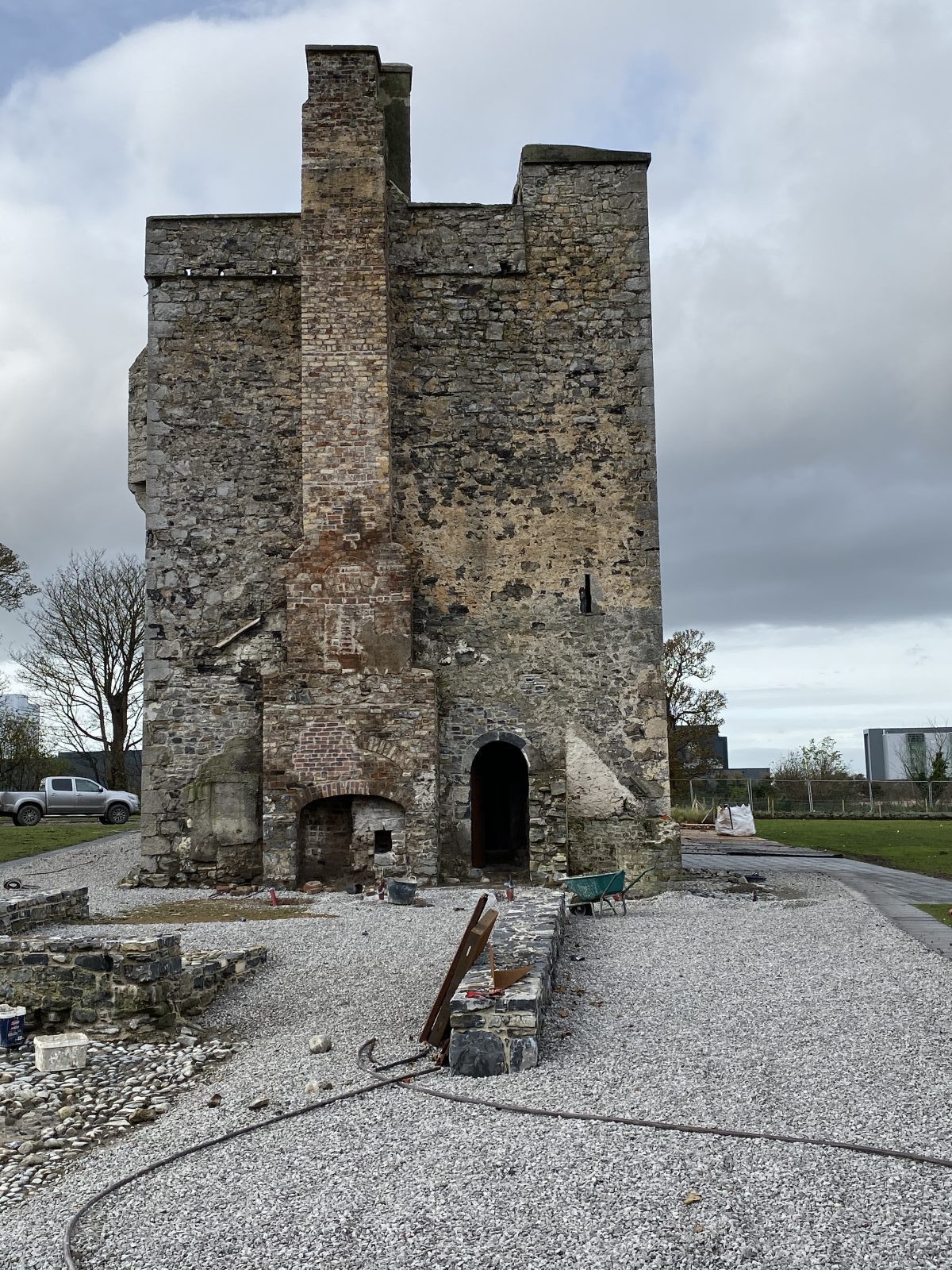
With the structure secured, we repaired the masonry and, where the joints had failed, raked them out and repointed the stonework in traditional lime mortar — resetting loose and eroded stone, matching the original, and finishing the joints by hand. Repointing only where it was needed keeps as much of the original historic fabric as possible, which is exactly what conservation work should do.
On a historic building, lime isn't a preference, it's a requirement. Hard cement traps moisture and destroys old stone over time; breathable lime lets the wall dry out, moves gently with the structure and protects the stone for generations. It's the only right way to repoint a building like this.
The historic walls rebuilt in matching stone
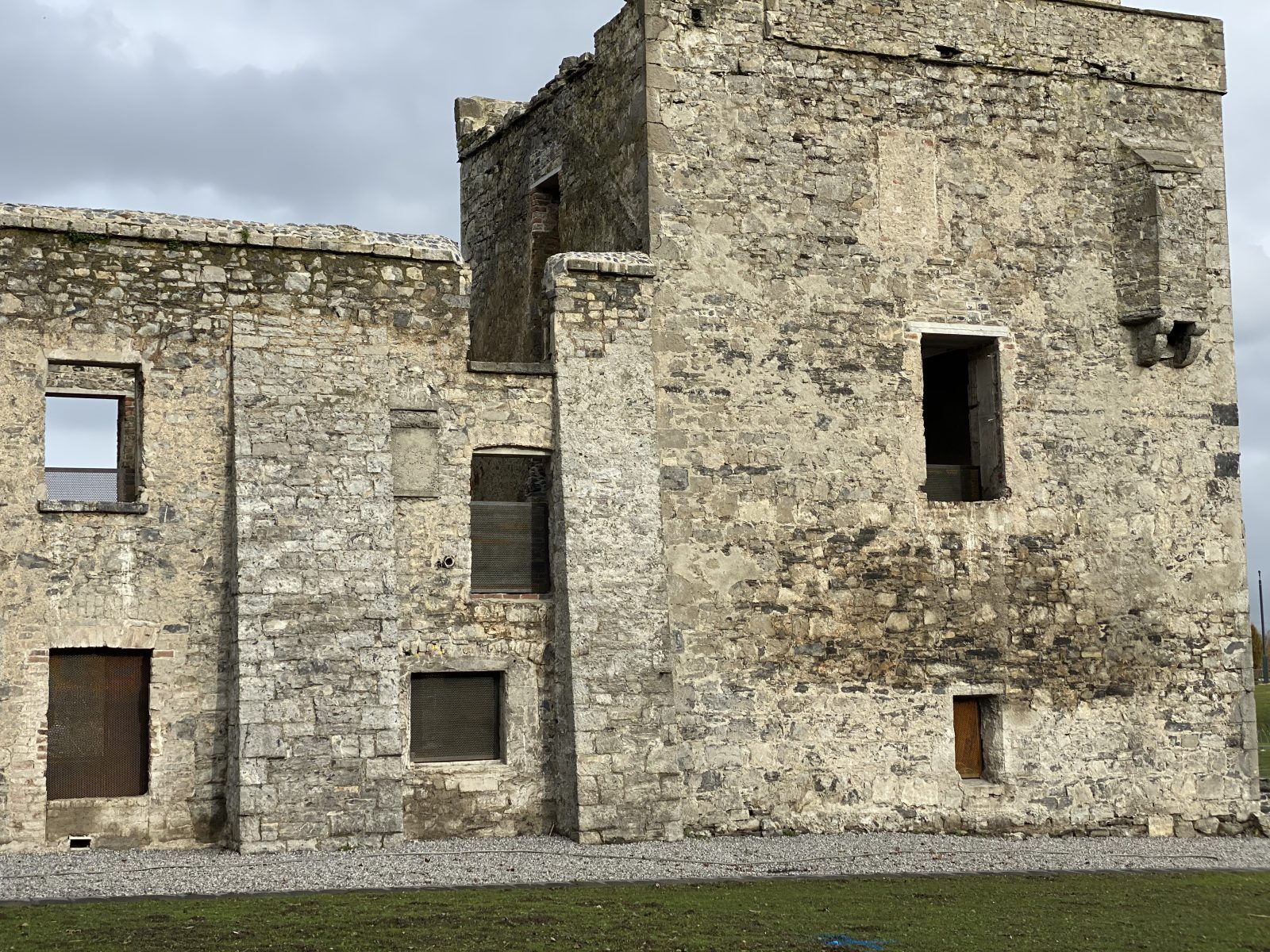
Around the castle, the old boundary and enclosure walls had fallen and eroded. We rebuilt them by hand in matching rubble stone — choosing and placing each stone so the new work beds and bonds like the original, and reads as part of the historic site rather than a modern repair. We also repaired the wall tops the whole way along, so they shed water properly and protect the wall beneath — a wall lives or dies by its top.
Rebuilding old walls to conservation standard is where two decades of stonework shows: keeping them plumb and true, tying new into old, and matching the stone, coursing and character exactly.
The whole setting brought back to life
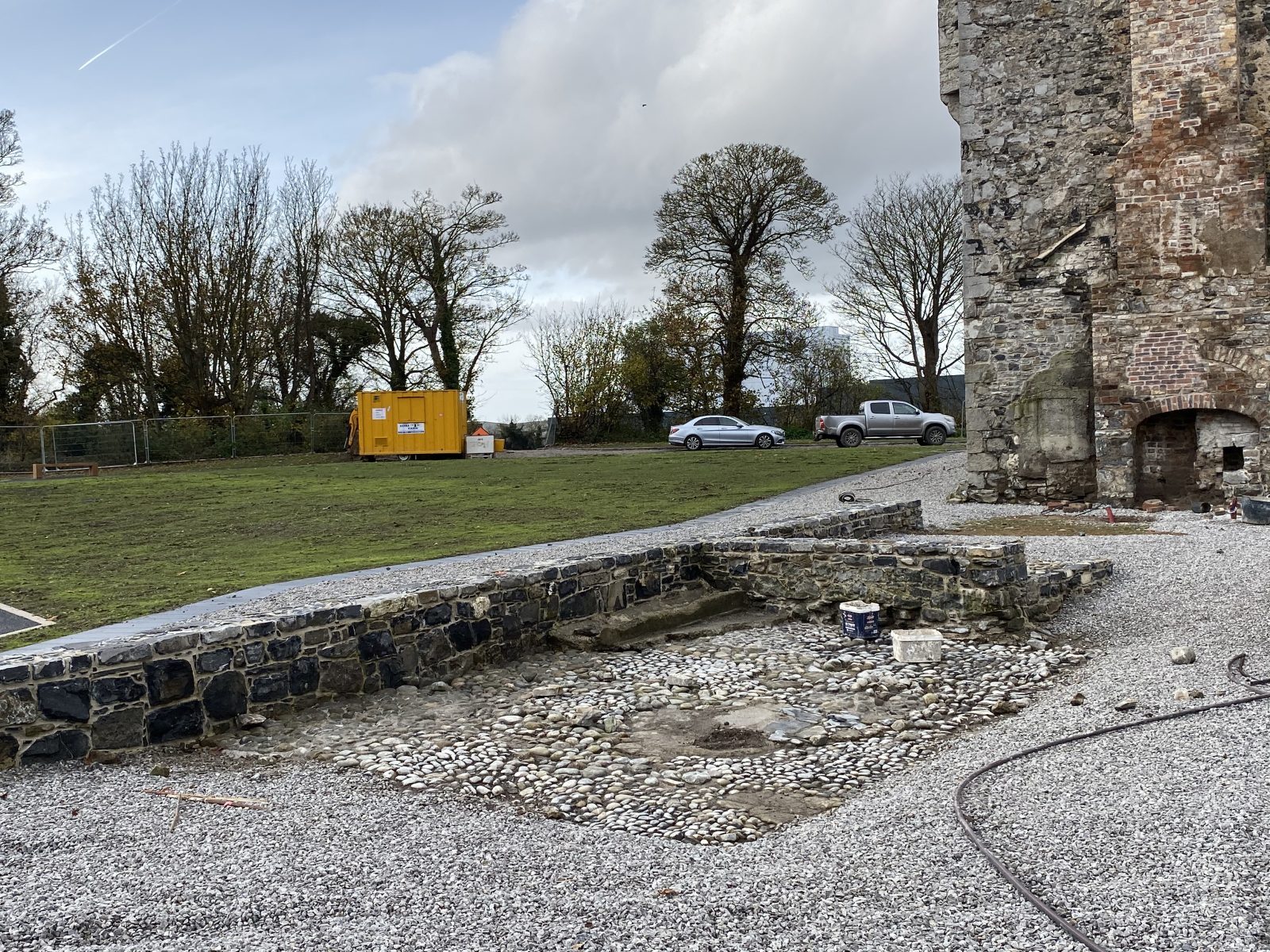
A landmark is only as good as its setting. Beyond the stonework, the contract included the full groundworks and landscaping around the castle — new footpaths, stone paving, gravel and grassed areas, and a striking timber boardwalk crossing the water, so the site could be opened up and enjoyed.
Doing the stonework and the surrounding groundworks under one roof meant the whole project was joined-up and finished to a single, consistent standard — from the top of the castle to the paths at its feet.
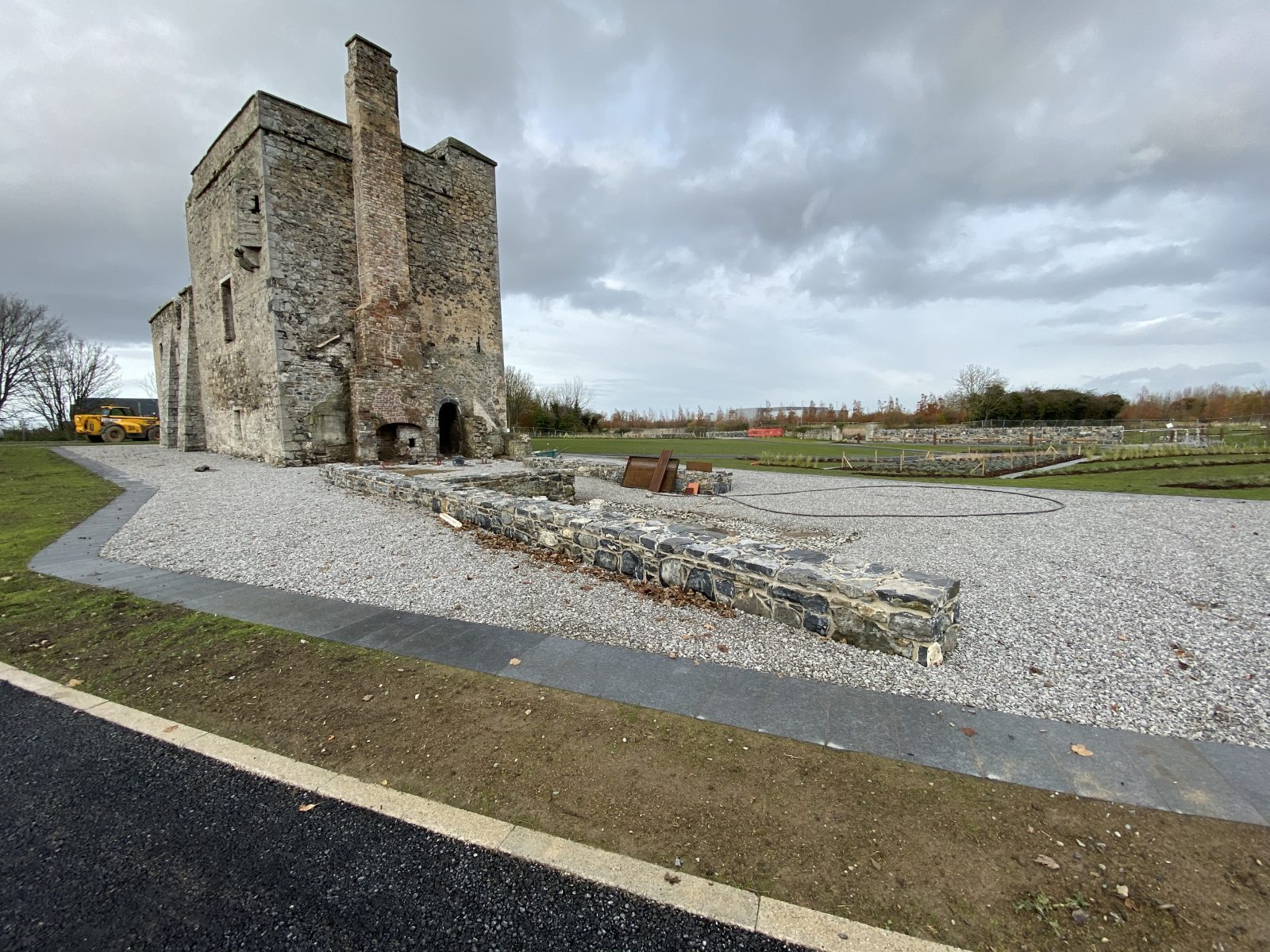
A historic castle, secured and reopened
Finished, Grange Castle stands sound, repointed and safe, with its walls rebuilt and its grounds landscaped and open — a piece of medieval Dublin secured for the future and set off beautifully against its modern surroundings.
It's the biggest and most demanding project we've delivered: a €1.2 million heritage conservation contract, carried out to the standard a building of this importance deserves.
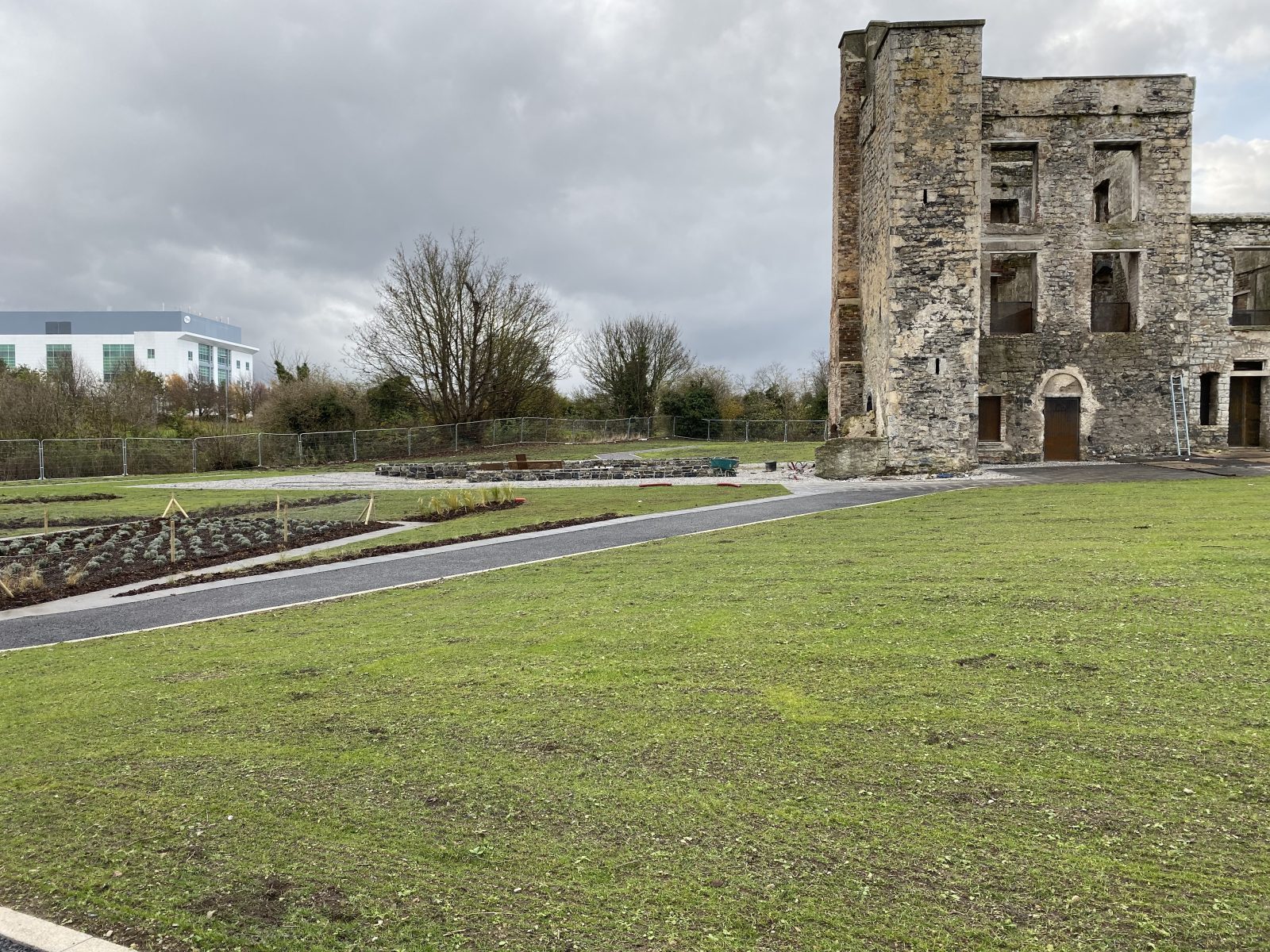
What the project involved
A conservation contract on this scale draws on every part of what we do:
🏰 Castle consolidation
Stabilising and securing a fragile medieval tower house to conservation standards.
🏗️ Structural repair
Dealing with movement and cracked masonry so the structure is sound for the long term.
🪨 Masonry repair
Resetting and replacing loose and eroded stone, matched to the original.
🪟 Window lintels replaced
Replacing the failing, decayed lintels over all the castle's windows.
🧴 Partial lime repointing
Raking out and repointing the stonework where the joints had failed, in breathable lime, by hand.
🧱 Rebuilding boundary walls
Rebuilding fallen historic walls in matching rubble stone.
🧢 Wall tops repaired
Repairing the tops of the walls so they shed water and protect the stone.
⛏️ Groundworks
Full site groundworks around the castle and its walls.
🌿 Landscaping & footpaths
Paths, gravel, grassed areas and a timber boardwalk to open the site up.
🪨 Stone paving
Natural stone paving slabs laid to finish the setting.
This project was valued at €1.2 million.
Being trusted with the conservation of a protected national landmark like Grange Castle — and delivering it to standard — says everything about the level we work to. Whether your project is a single wall or a major heritage contract, we bring the same care and give you a clear, itemised quote after a free site visit.
Discuss your project →The project gallery
The castle, the stonework and the finished setting. Tap any photo to enlarge.
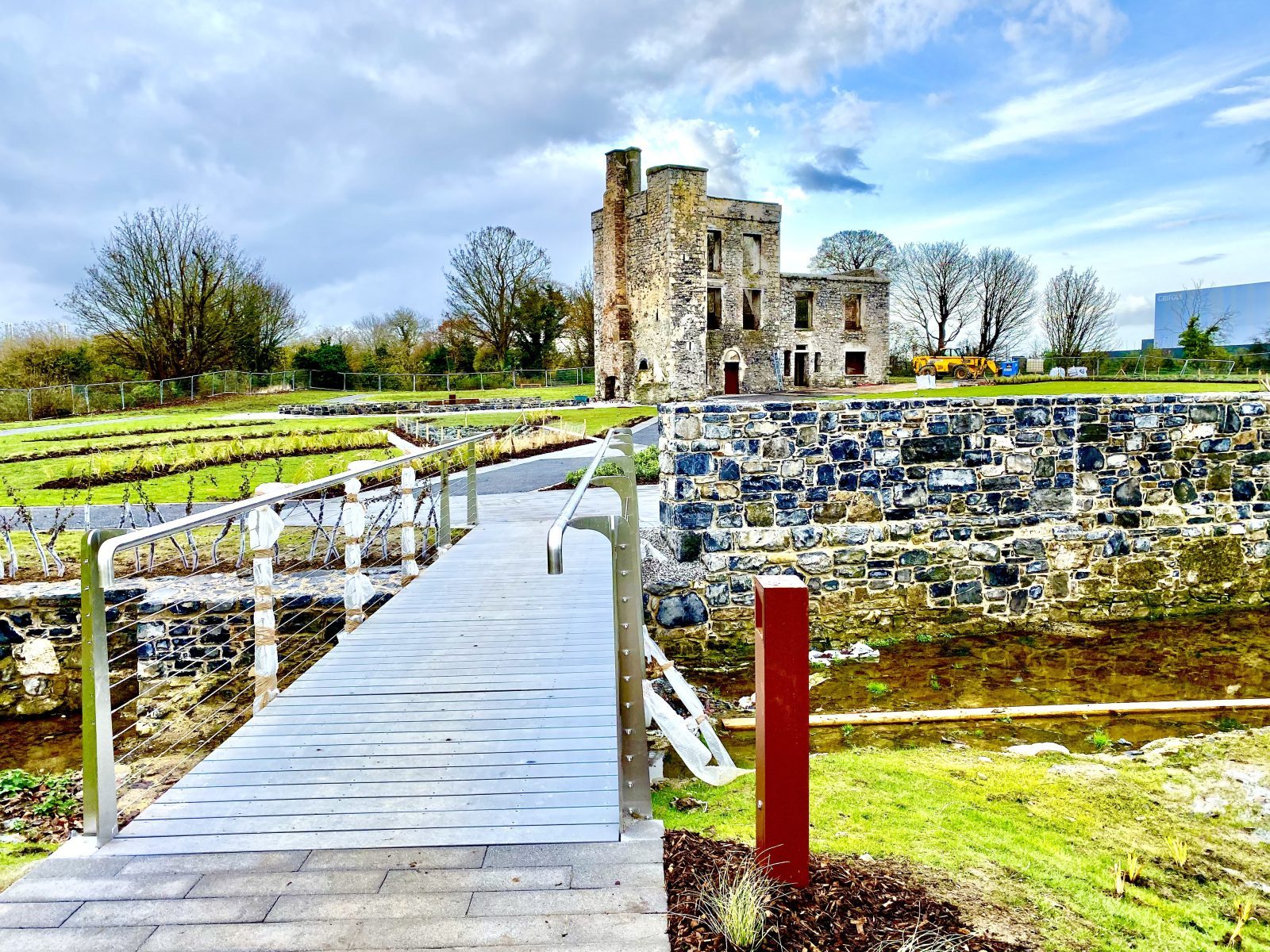
Conservation done the right way — in lime
People often ask why not just use cement — it's cheaper and quicker. On a historic building it's the wrong answer. Cement is hard and sealed, so it traps moisture inside old stone and, over a few winters, blows the faces off it. The building slowly destroys itself.
Lime mortar is soft and breathable. It lets moisture escape, moves gently with the structure instead of cracking it, and can be re-worked in future. It's how buildings like Grange Castle were built, and — on a protected structure especially — it's the only right way to restore them.
More on our restoration work →
What our customers say
"I would like to thank this firm for the stonework on a large project. Both the work and the employees were of the highest quality and did more than expected of them. I would highly recommend this company."
Kimmage Hardware · Google review"I can not recommend Arthur and his team highly enough, they started on the agreed date and nothing was a problem after that... 10/10 in everything they done for me, very professional team of guys."
Alan Bow · Google reviewGet my free quote
Your name and number is all we need — add a photo if handy. We’ll call you back today.
or call 086 066 6591 · WhatsApp · ★ Rated 5.0
We use the details you send to assess and respond to your enquiry. See our Privacy & Cookies page.
Have a historic or protected building to restore?
From a single period wall to a major heritage conservation contract — if it's old stone, we know how to bring it back properly. Free site visit, honest quote, based in Navan and covering Dublin, Kildare, Meath and beyond.