Restoring the historic walls of The Wonderful Barn, Leixlip
We were entrusted with a €350,000 restoration of the historic boundary walls surrounding one of Ireland's most unusual 18th-century landmarks — rebuilding, repairing and repointing hundreds of metres of protected stone wall, entirely in traditional lime mortar.
A landmark project — the walls of The Wonderful Barn
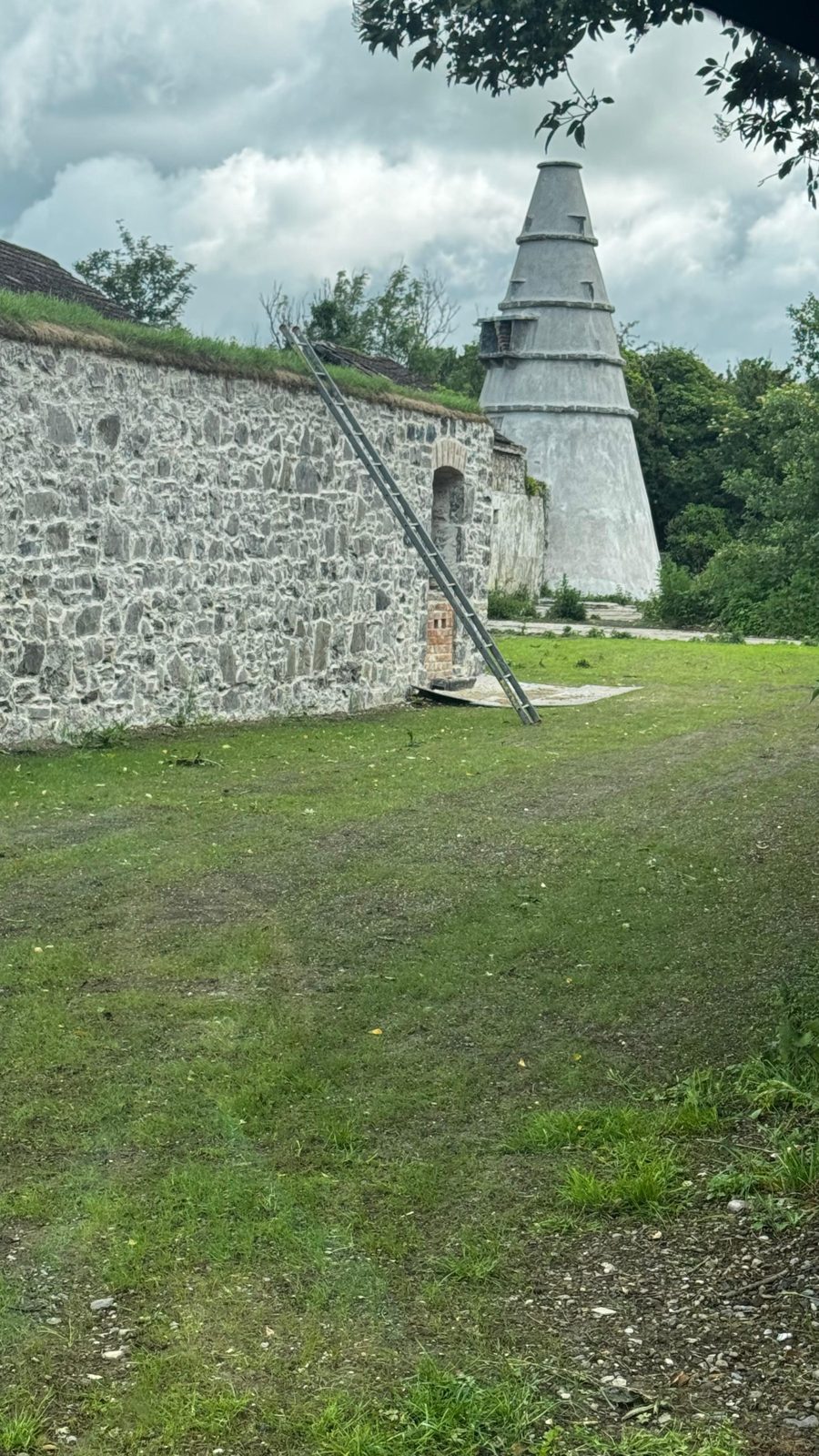
The Wonderful Barn in Leixlip, Co Kildare is one of Ireland's most distinctive historic buildings — a striking corkscrew-shaped grain store built in 1743, with its spiral external staircase winding up the outside and two smaller conical towers alongside it. It's a protected structure and a much-loved local landmark.
We were trusted to restore the extensive historic boundary walls that enclose the site — hundreds of metres of old rubble-stone wall that had suffered badly over the centuries. This was a €350,000 heritage restoration, carried out to conservation standards: structural rebuilding where the walls had failed, careful stone repair, and full repointing throughout in breathable lime mortar — never cement. It's the kind of large, sensitive project that only comes to a team that can prove it does this work properly.
See the transformation
Drag the slider across each photo to reveal the before and after — the same historic walls, brought back properly in lime.
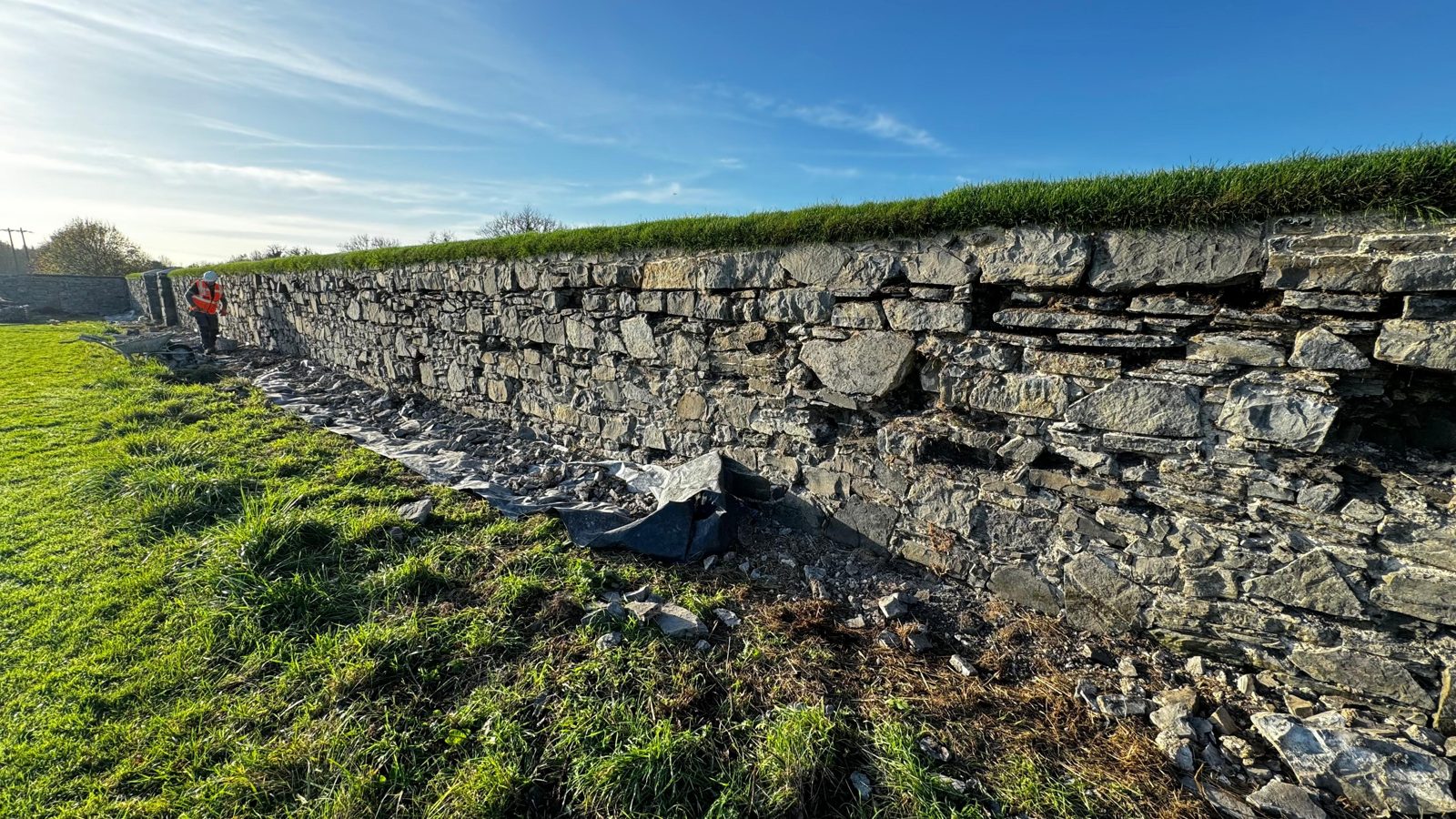
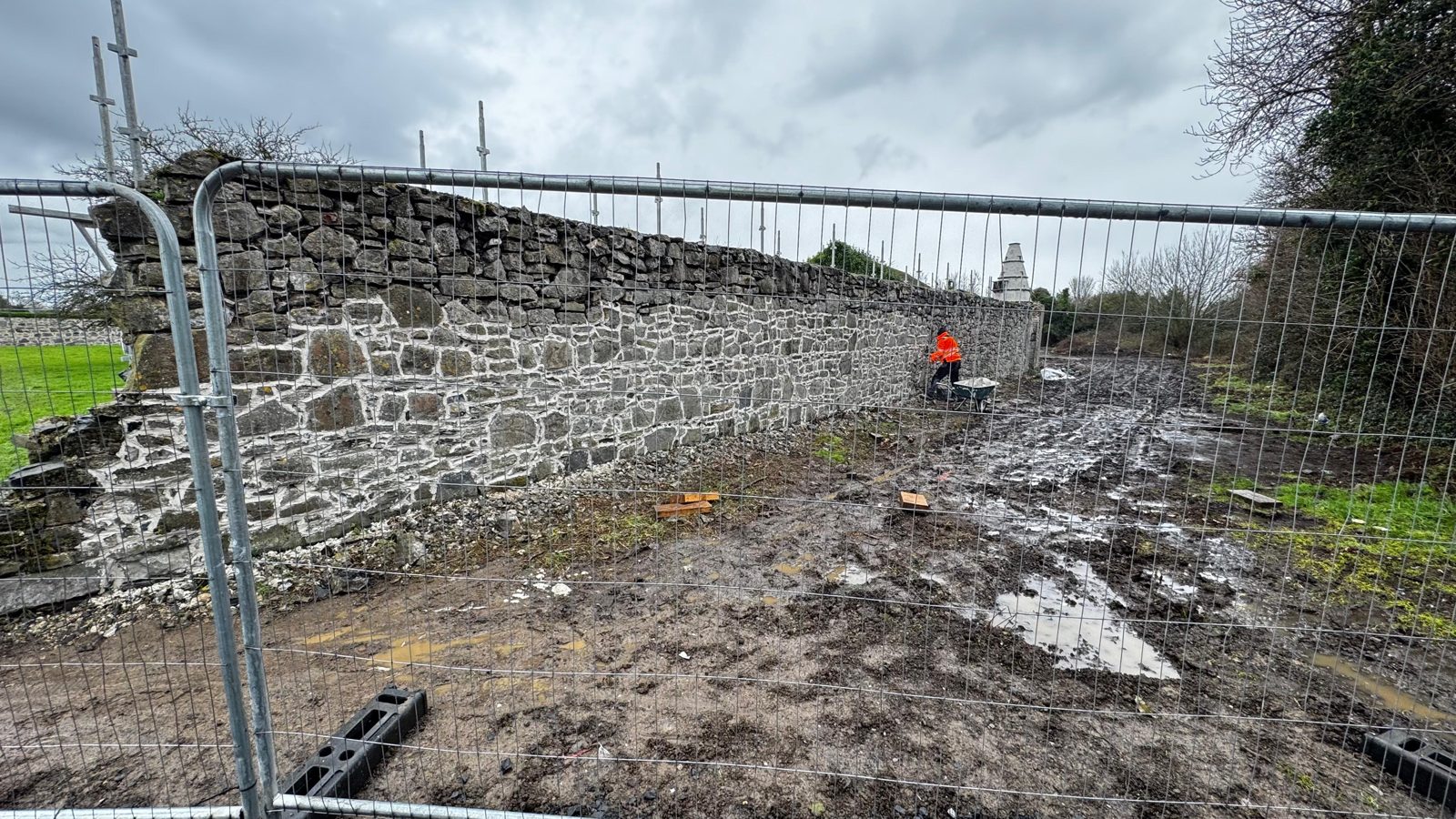
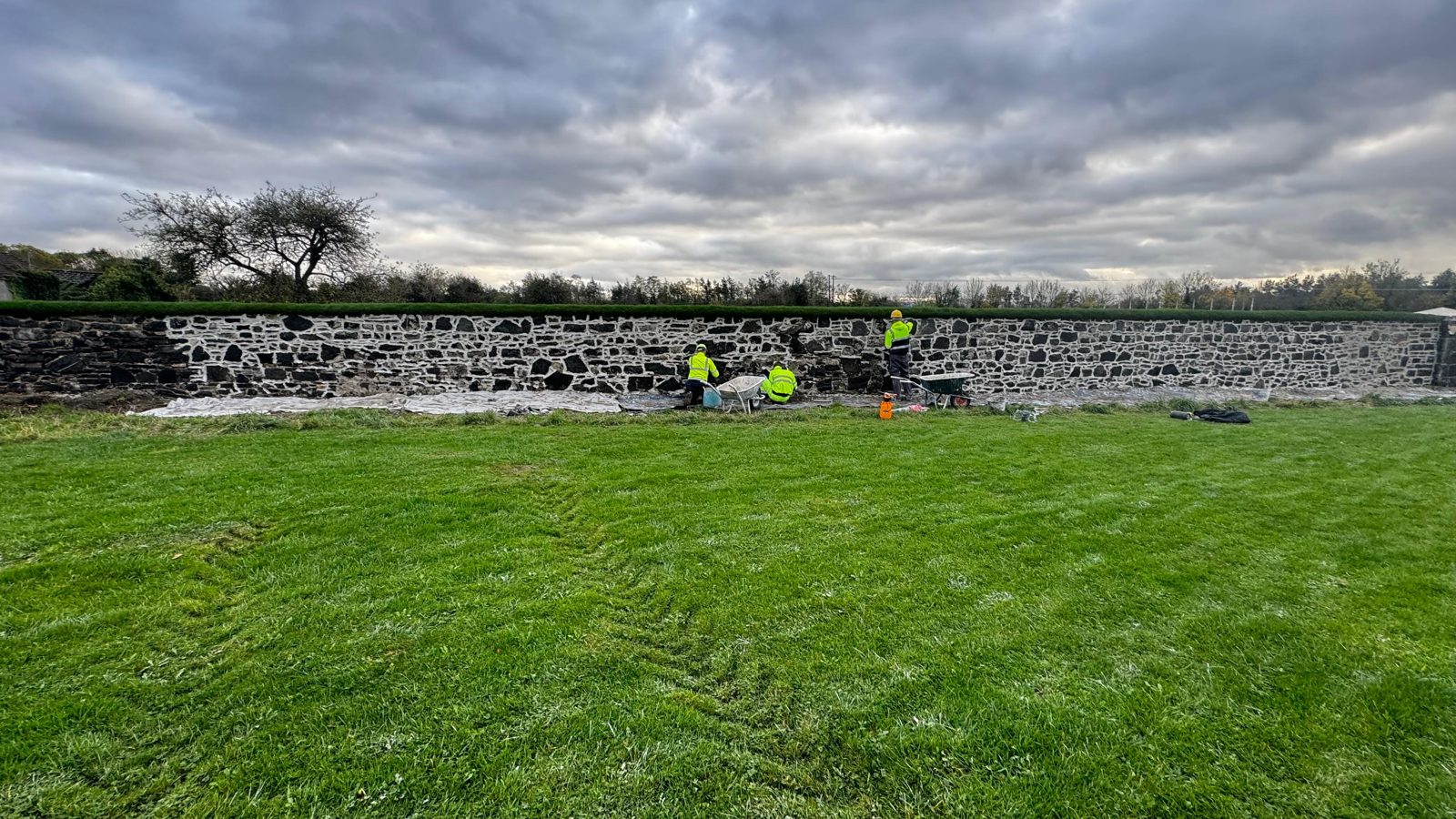
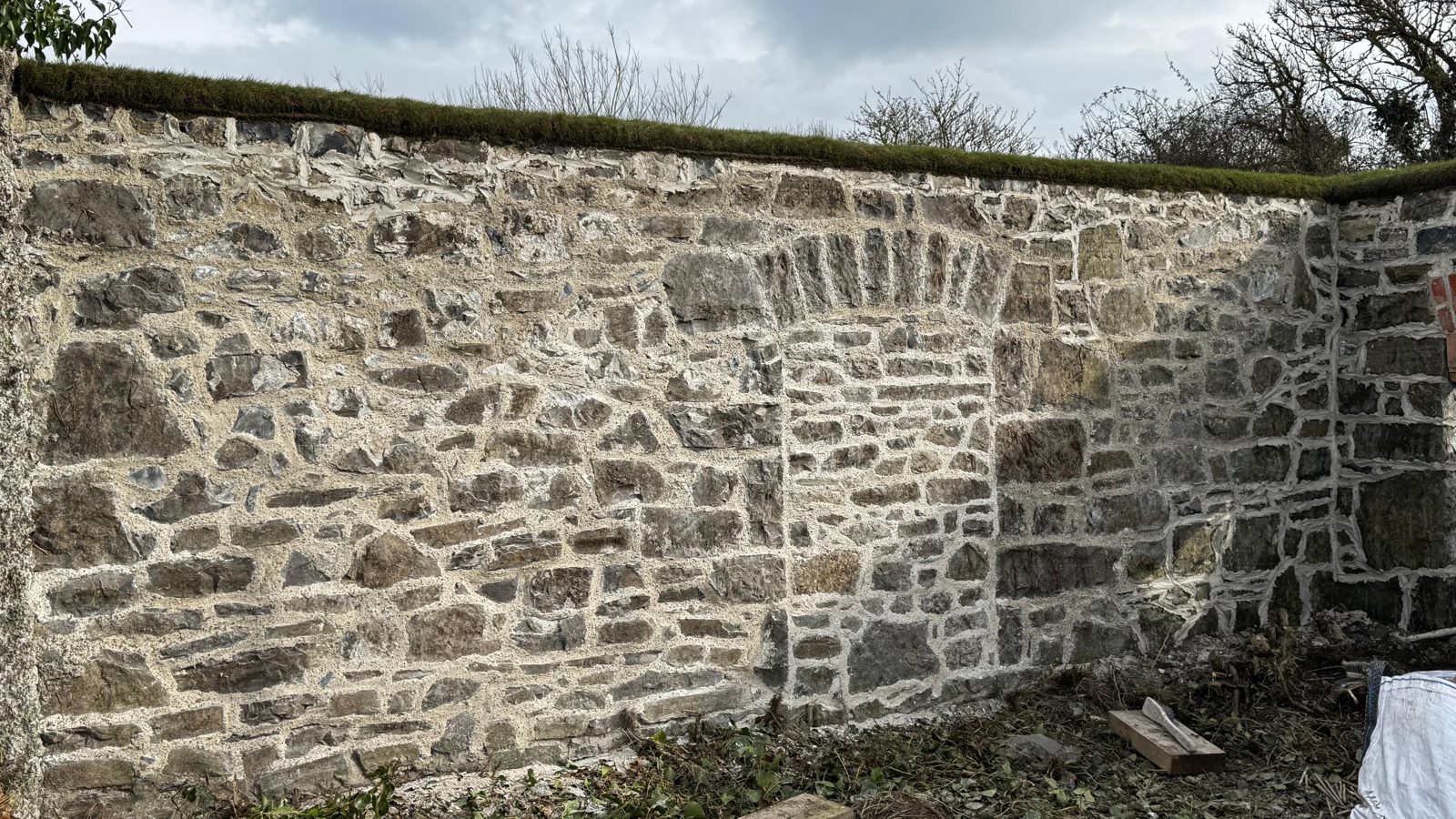
Rubble-stone wall — raked out and repointed in lime
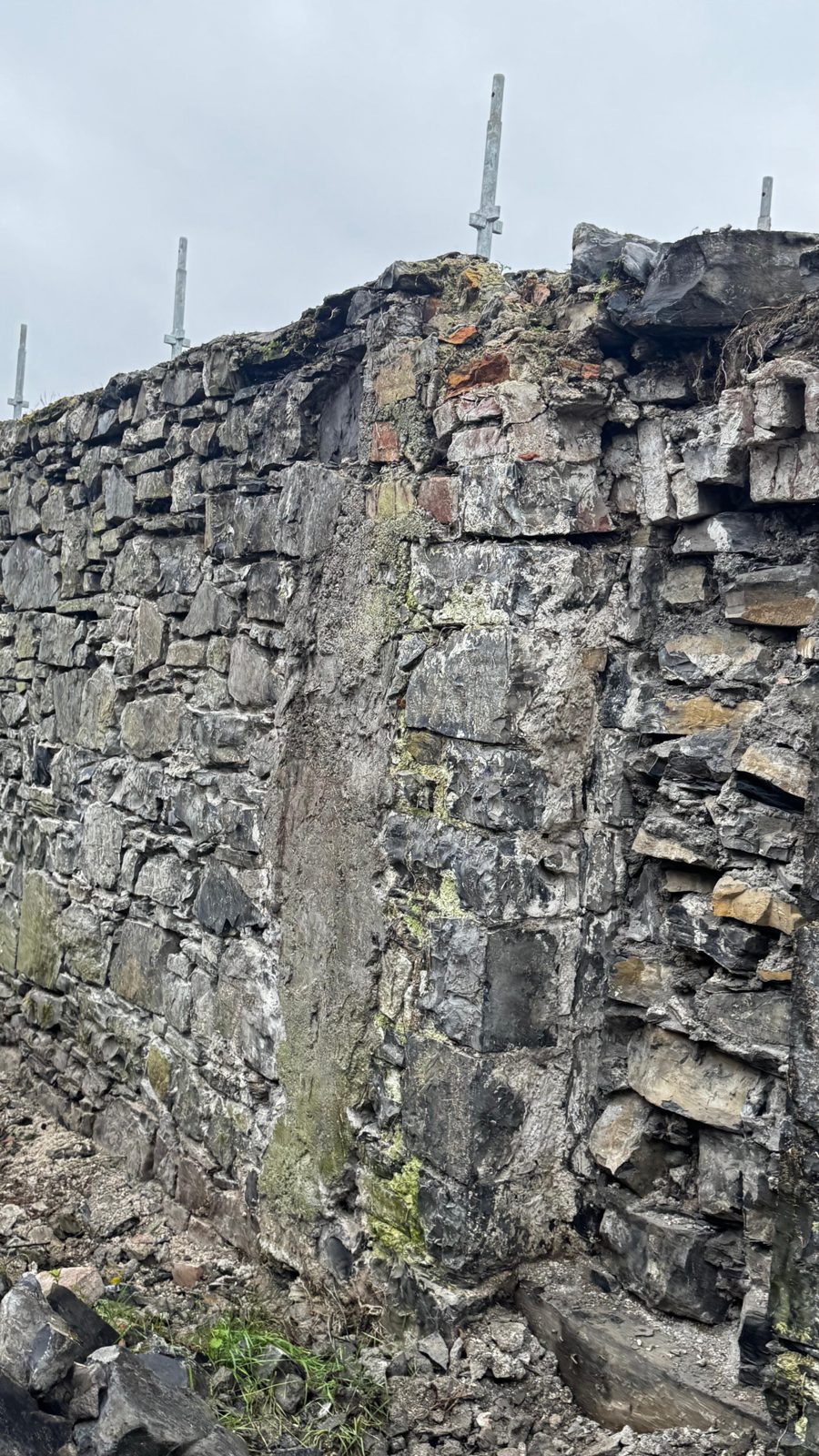
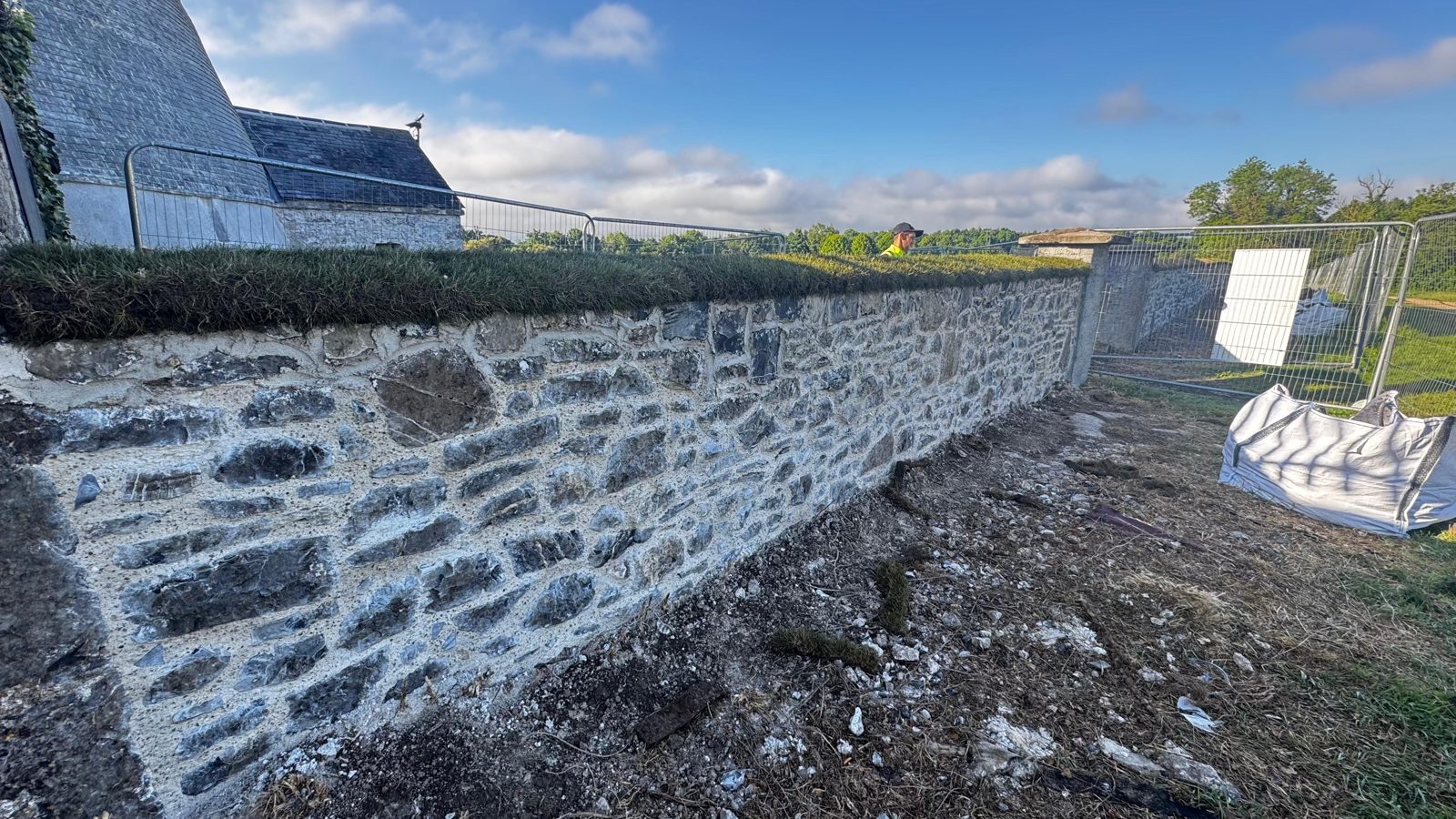
A failed section — rebuilt in matching stone
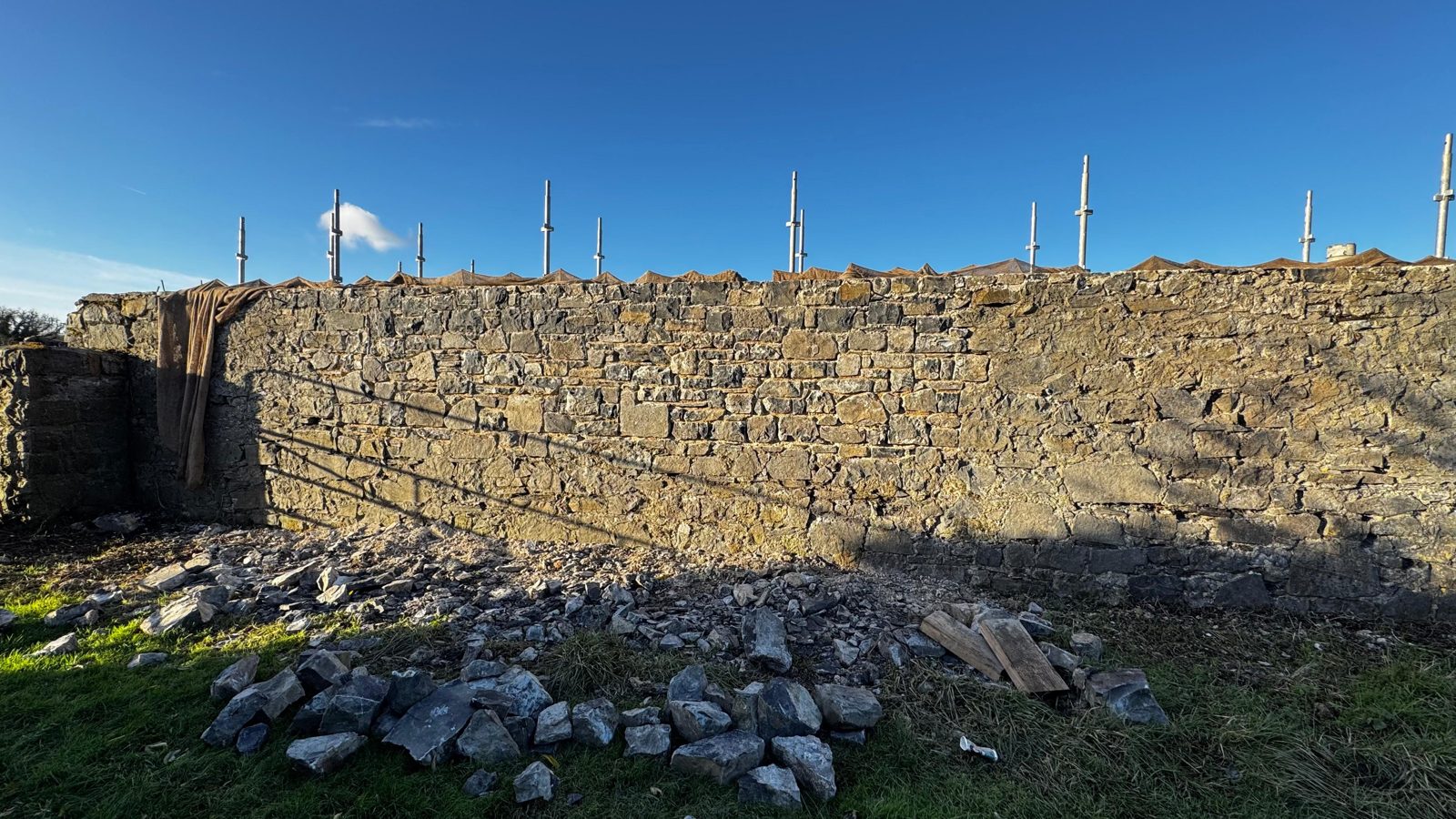
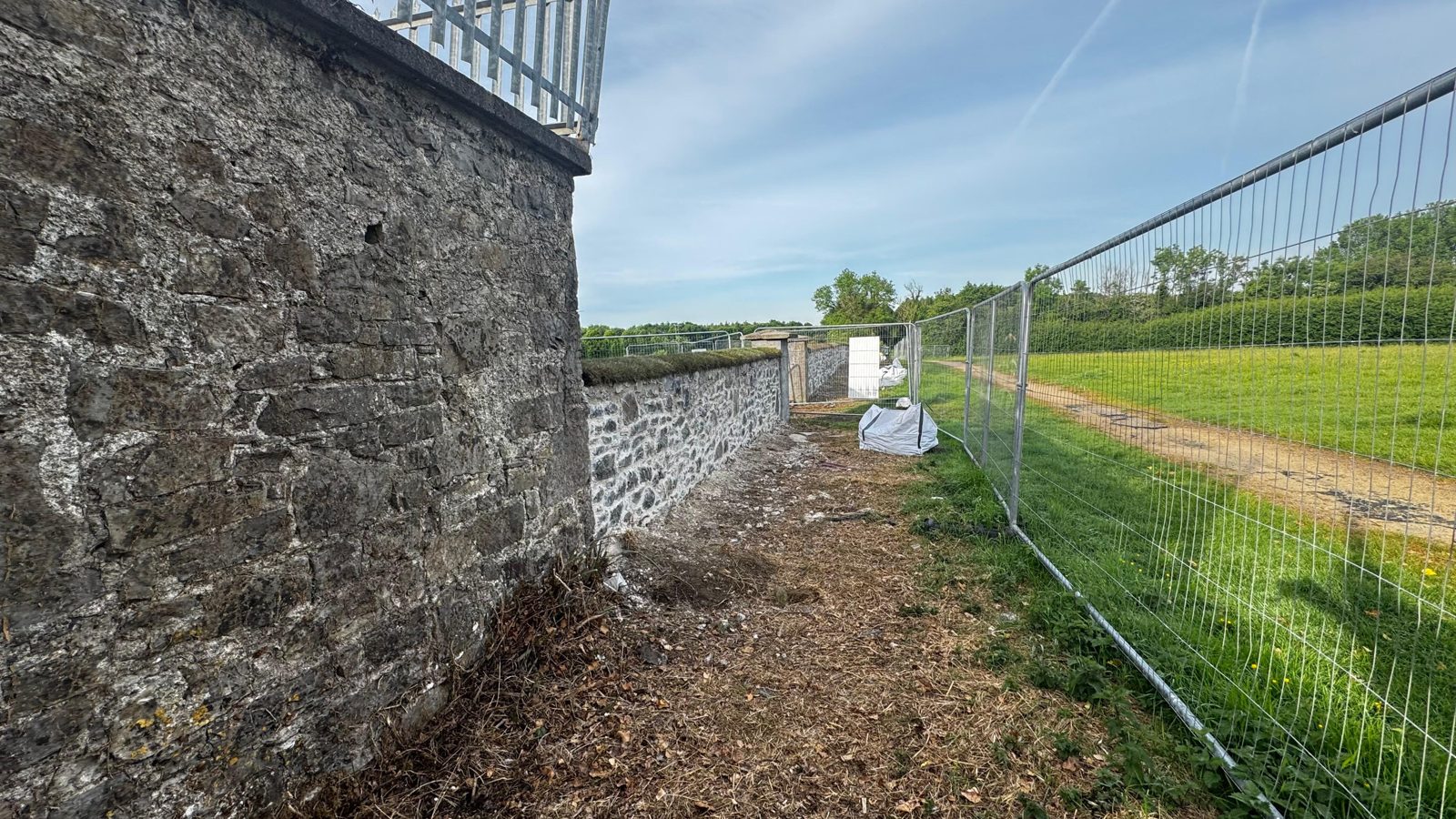
Walls with centuries of history — and centuries of weather
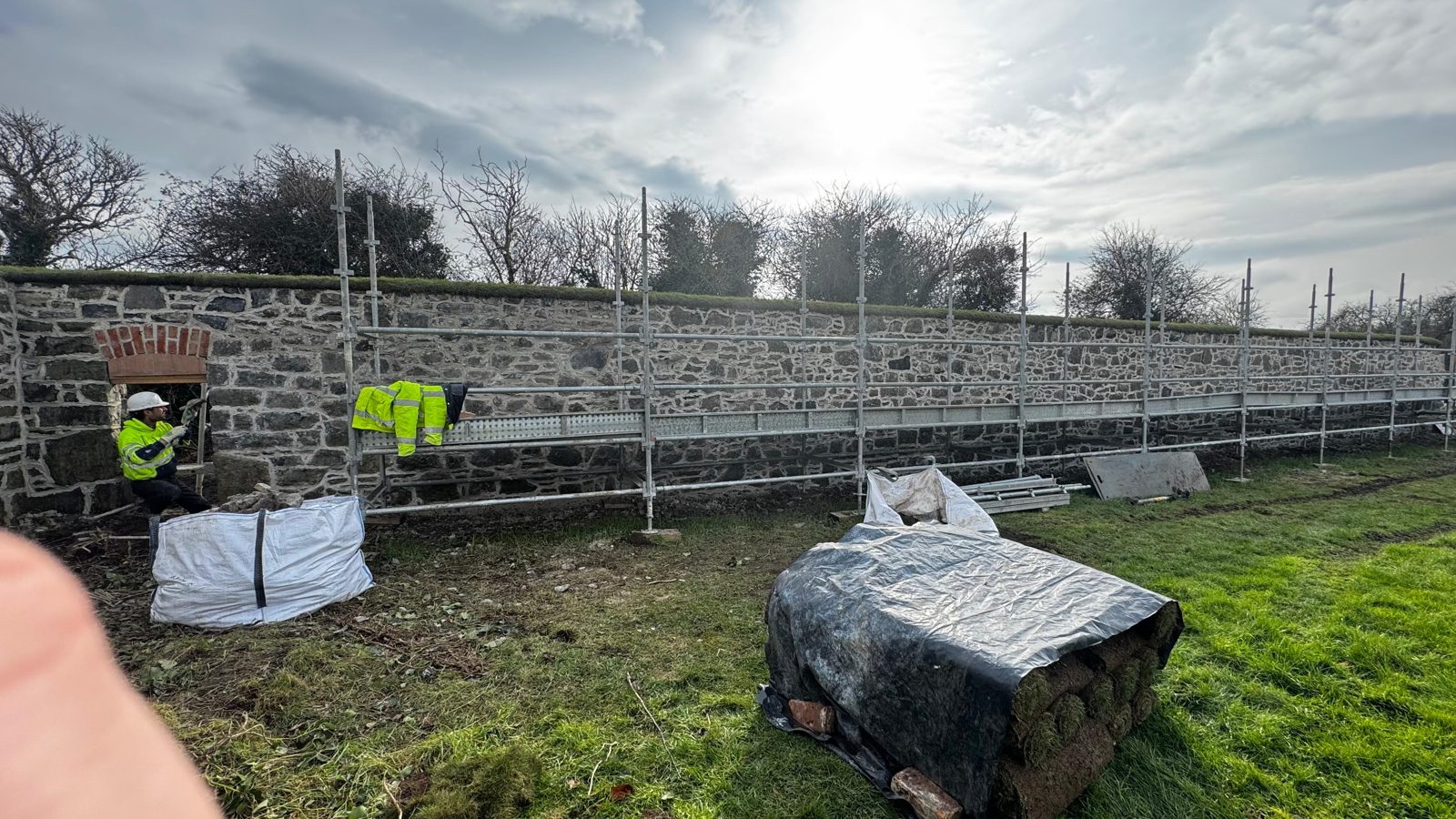
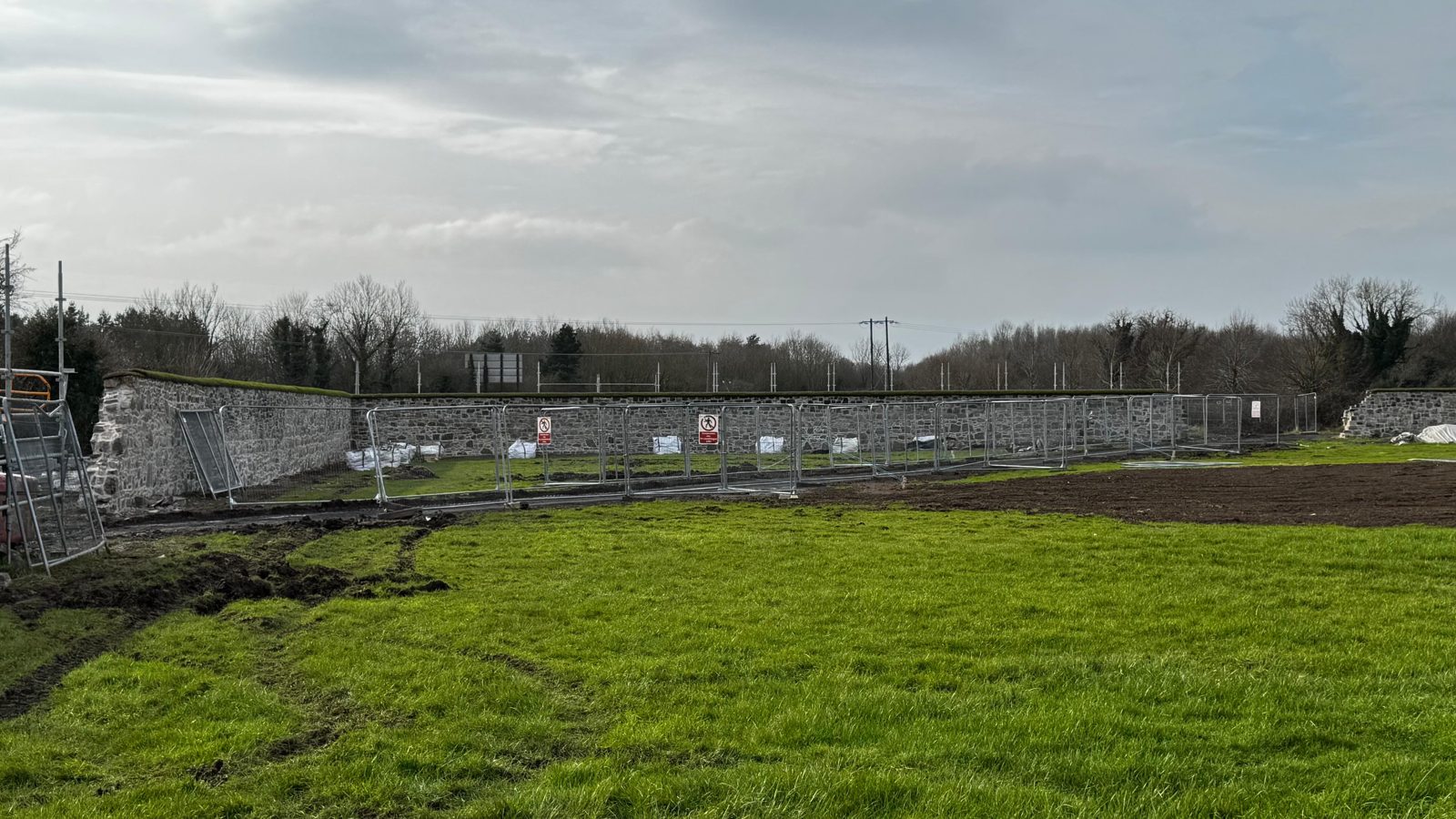
The Wonderful Barn estate is enclosed by long runs of traditional rubble-stone wall, built the same way as the barn itself. After generations exposed to the Irish weather, much of it was in a poor way — mortar washed out, sections bulging and leaning, some lengths partly collapsed, and vegetation forcing the stones apart.
On a protected structure like this, you can't just patch it. Every metre had to be assessed, recorded and restored in keeping with the original — the right stone, the right mortar, the right methods. That's exactly the kind of work we specialise in.
Finding out what each length of wall really needed
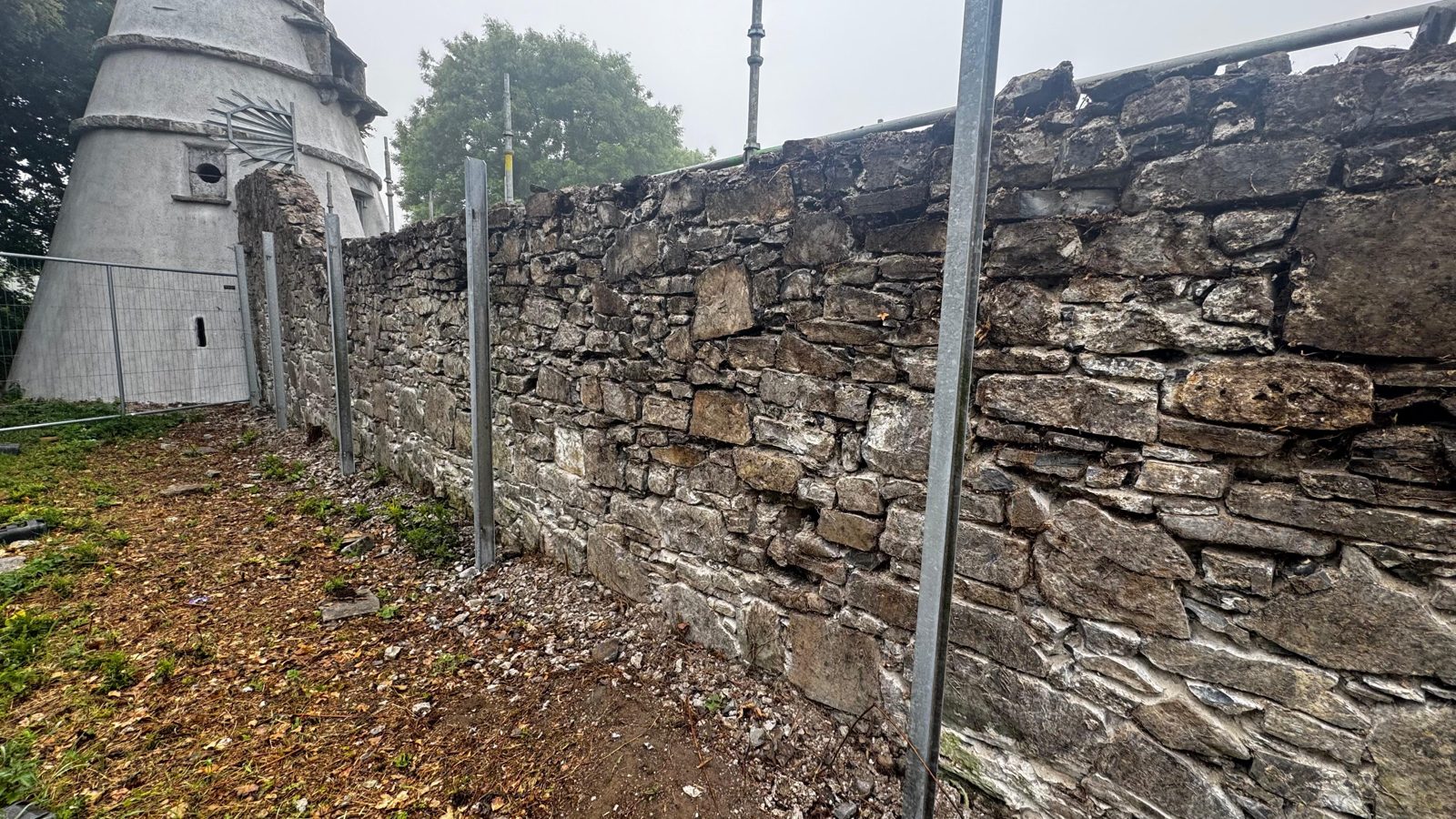
We worked our way along the walls section by section. Some lengths just needed the old, failed mortar raked out and repointing. Others had lost their structural integrity completely — bulged, cracked or collapsed — and needed taking down and rebuilding.
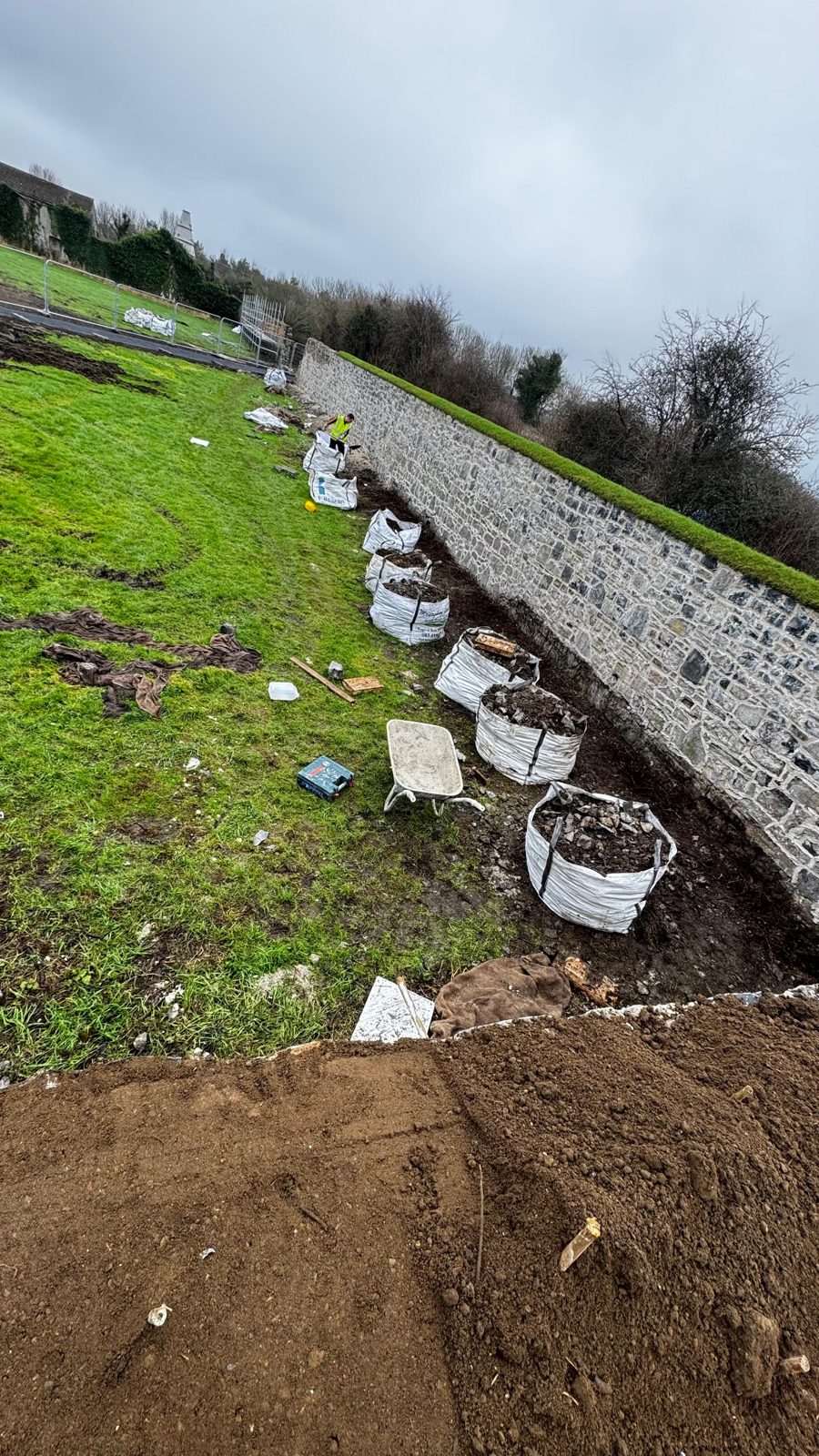
Where the base of the wall had been undermined or was sitting in wet ground, we dug down and made the foundations good before rebuilding above. Getting the bottom of a wall right is what stops the whole thing moving again — skip it, and you're back in a few winters.
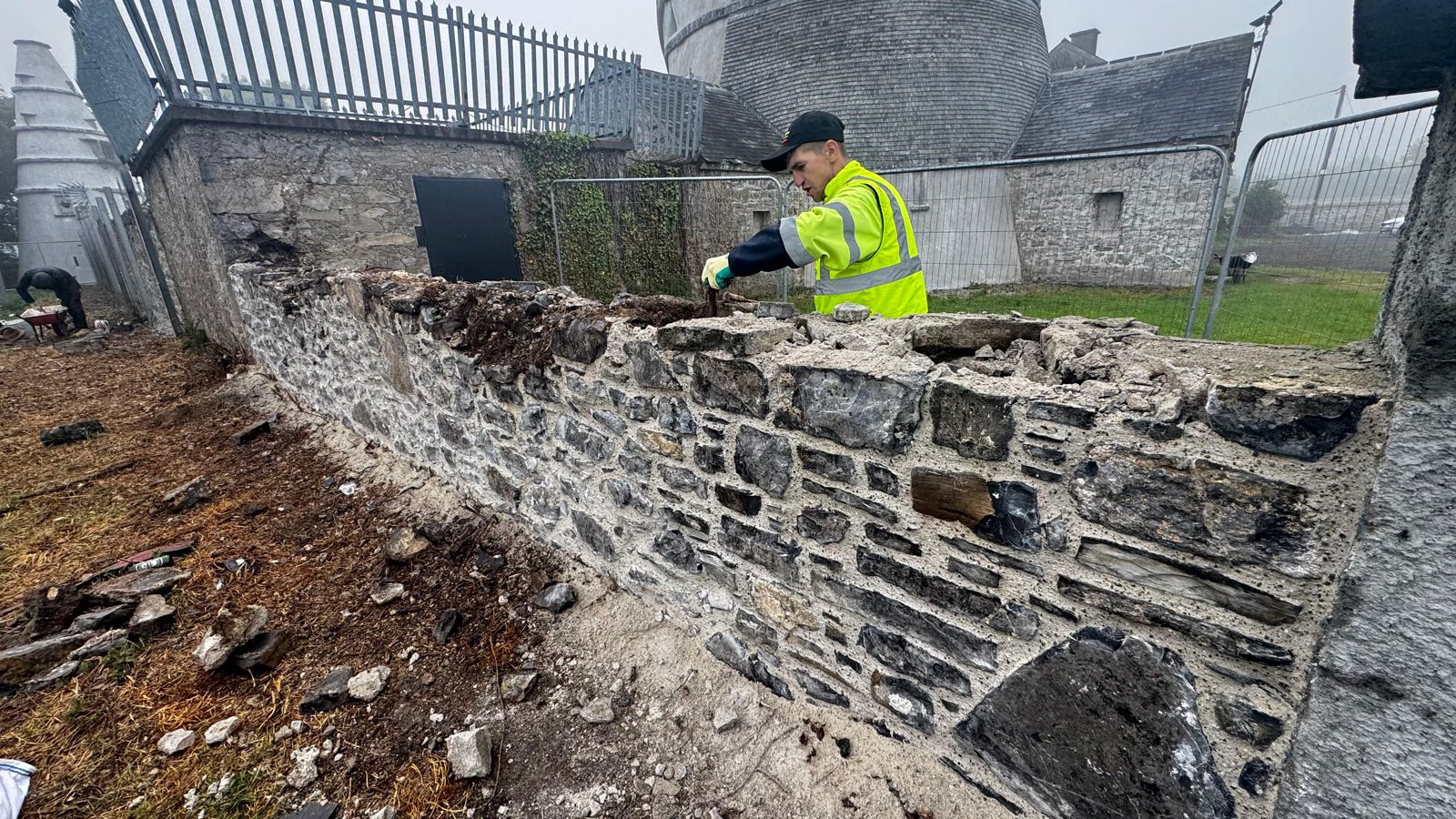
Rebuilding the failed sections in matching stone
Where the wall had gone beyond repair, we carefully took it down, saved the original stone, and rebuilt it by hand — matching the stone, the coursing and the character of the original so the repair reads as part of the historic wall, not a modern patch.
Rebuilding an old rubble wall properly is a real craft: choosing and placing each stone so it beds and bonds through the thickness of the wall, keeping it plumb and true, and tying new work into old. This is where 20+ years of stonework shows.
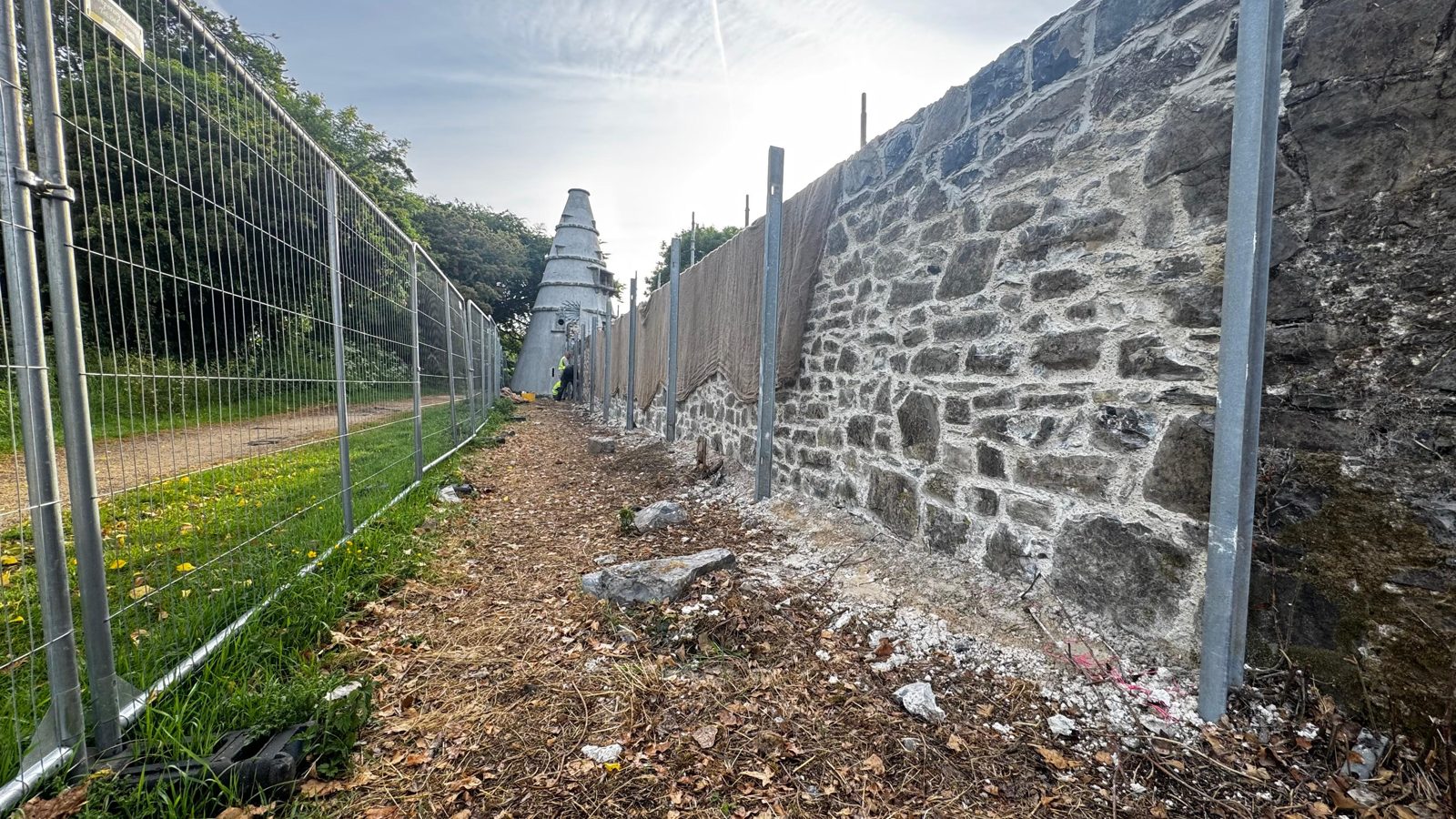
Raked out and repointed — every joint in lime
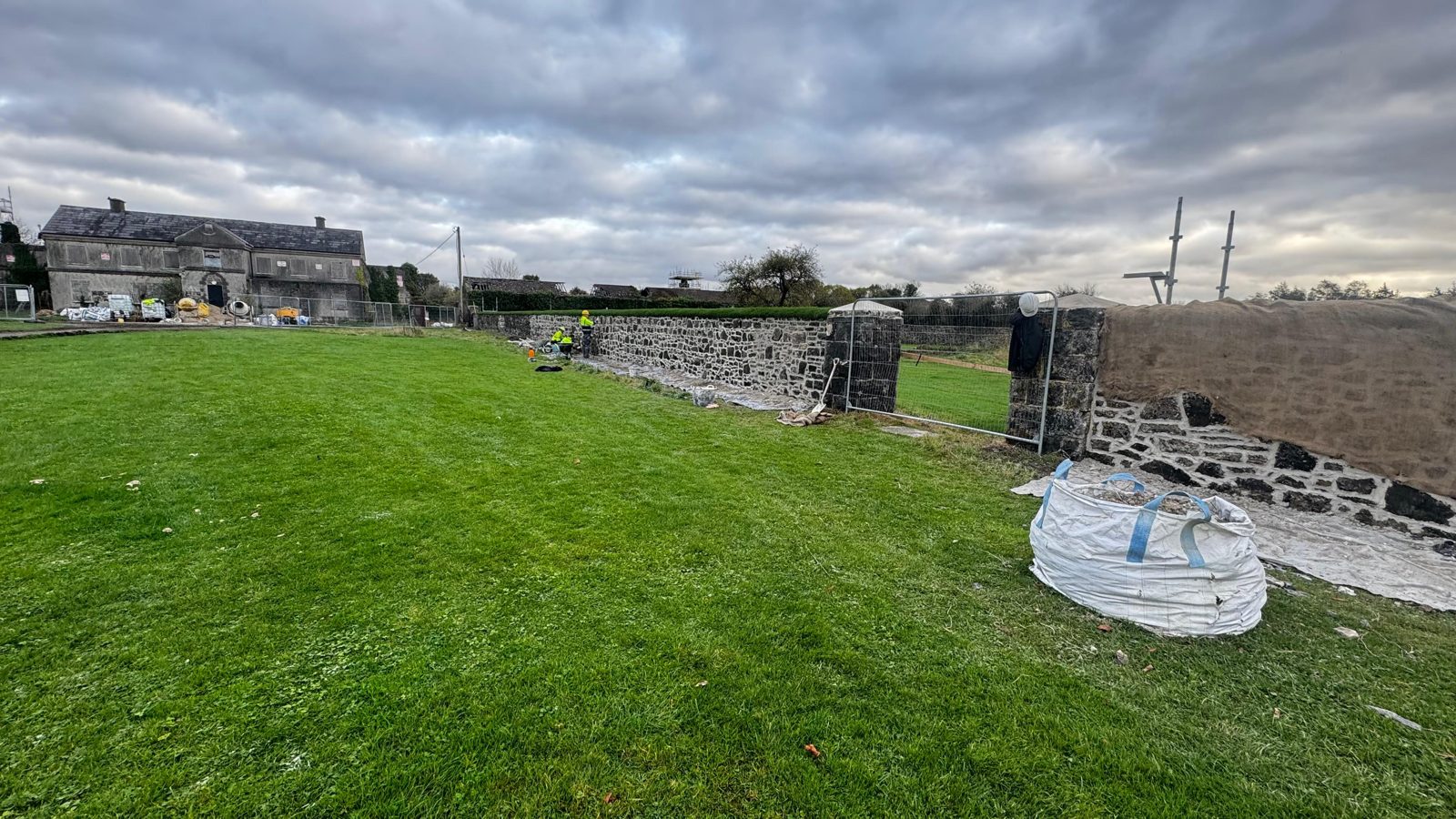
The heart of the job was the repointing. We raked the old, failed mortar out of the joints to a proper depth and repointed the whole length in traditional lime mortar — matched in colour and finished by hand.
On a protected historic structure, lime isn't a preference, it's a requirement. Hard cement traps water in old stone and destroys it over time; lime lets the wall breathe, flexes gently with the structure, and protects the stone for generations. Getting the mix, the depth and the finish right along hundreds of metres of wall is painstaking work — and it's what this building deserves.
Wall tops and copings made good
A wall lives or dies by its top — if water gets in over the top, it washes the whole wall out from the inside. We made good the tops and copings the length of the walls, including the traditional grassed and sod copings, so rain is shed and the walls are protected the way they were designed to be.
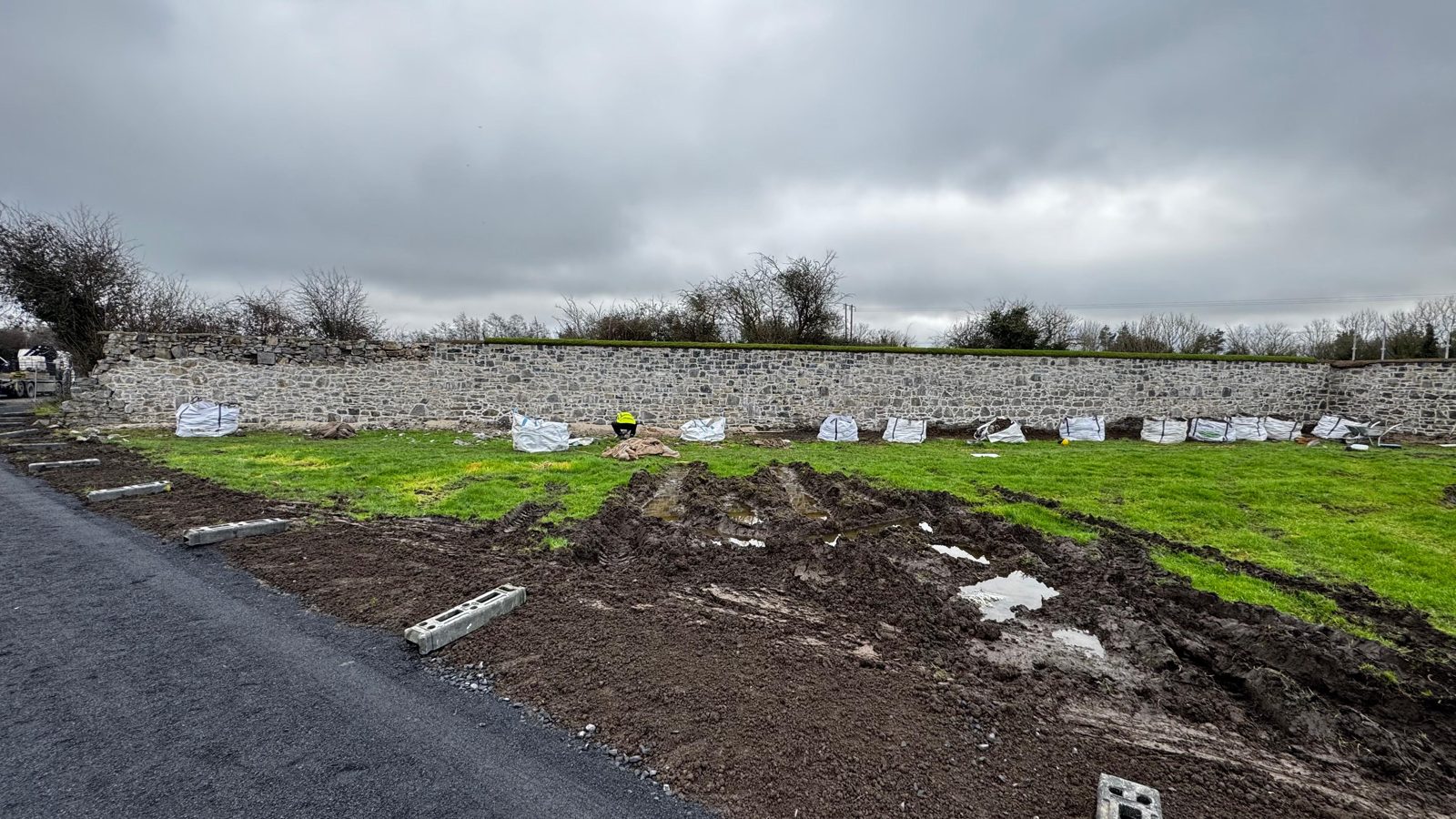
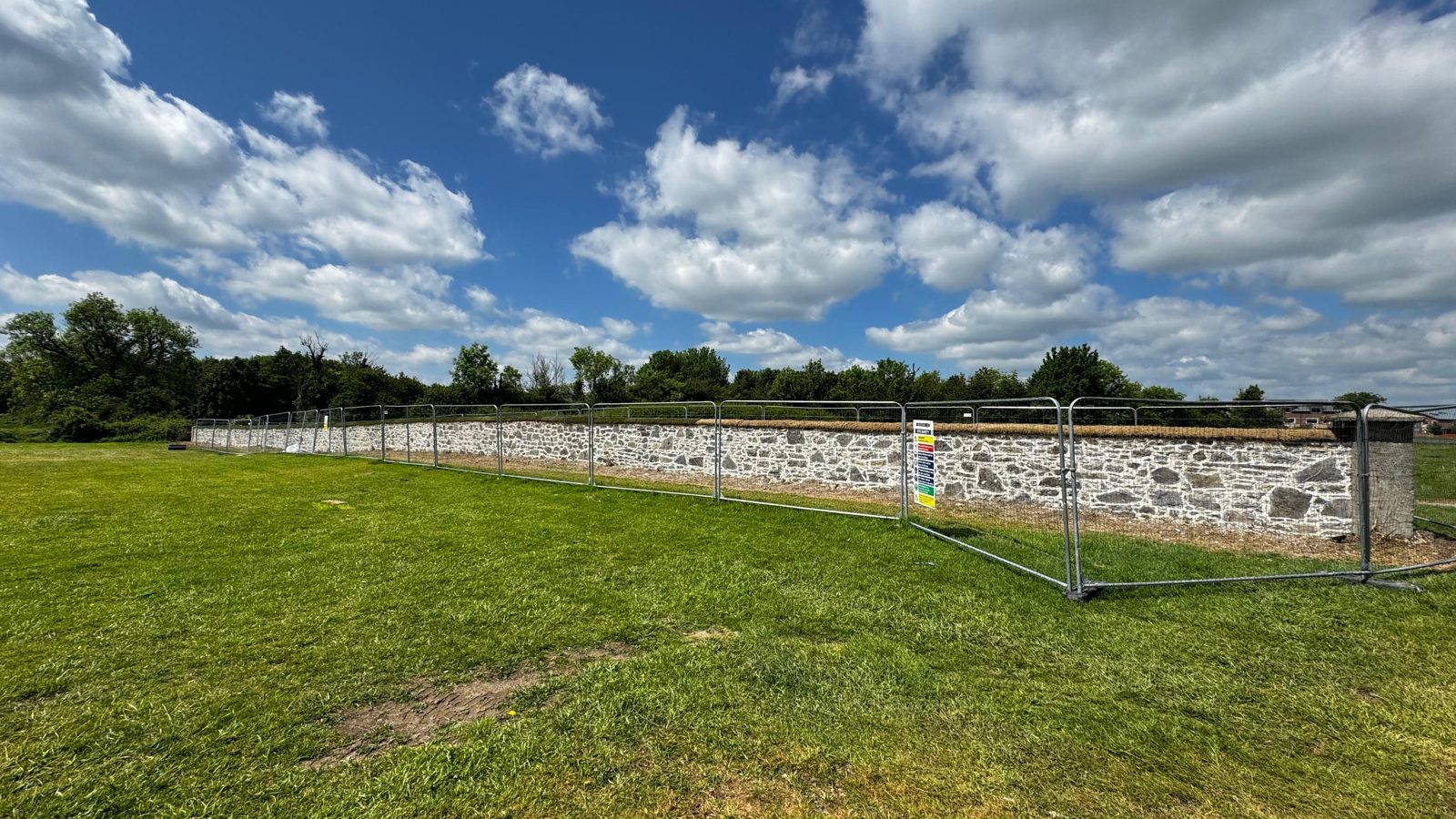
Finished, the joints were left clean and consistent, the copings sound, and the walls straight and stable — ready to stand for another few generations.
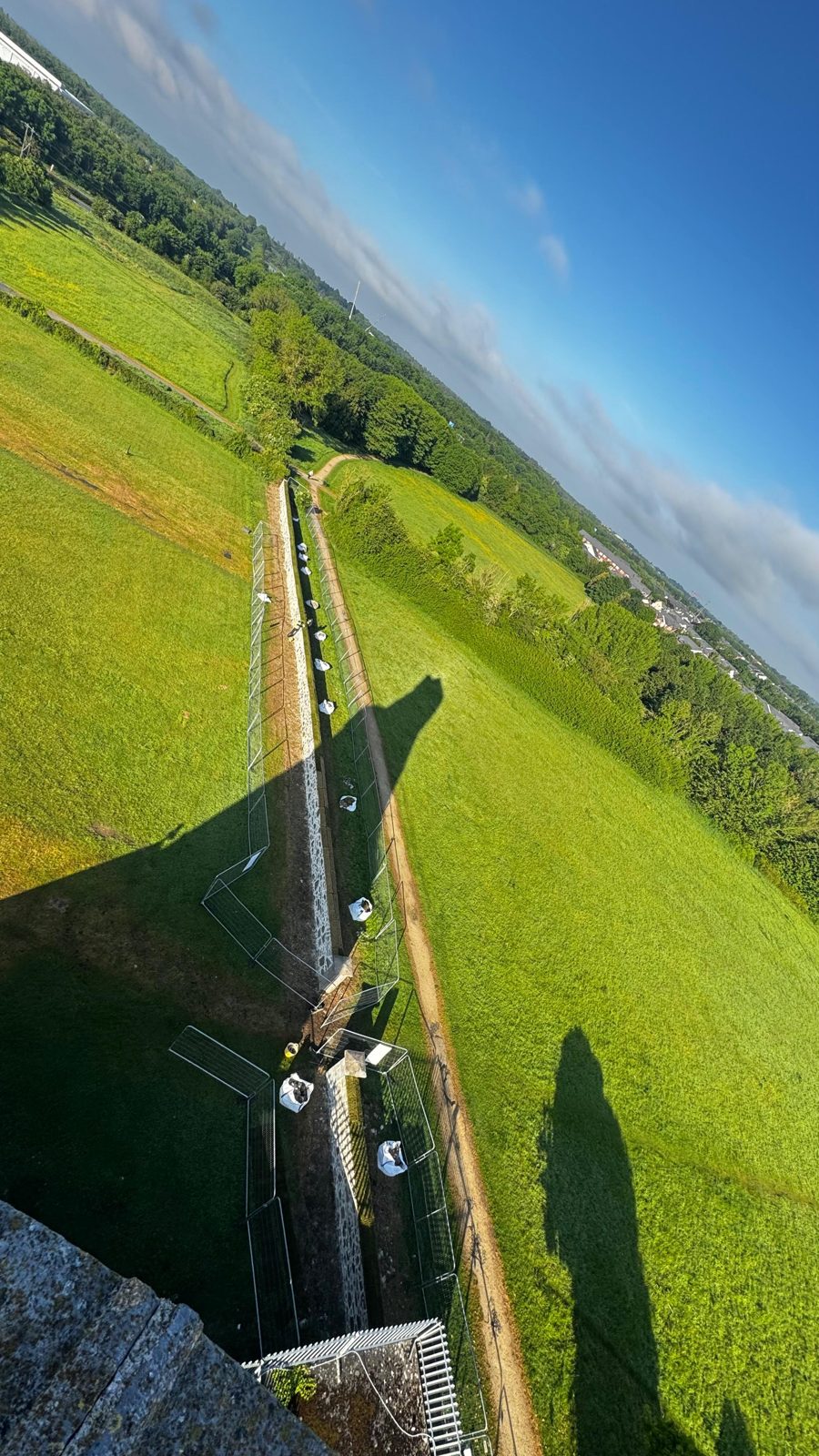
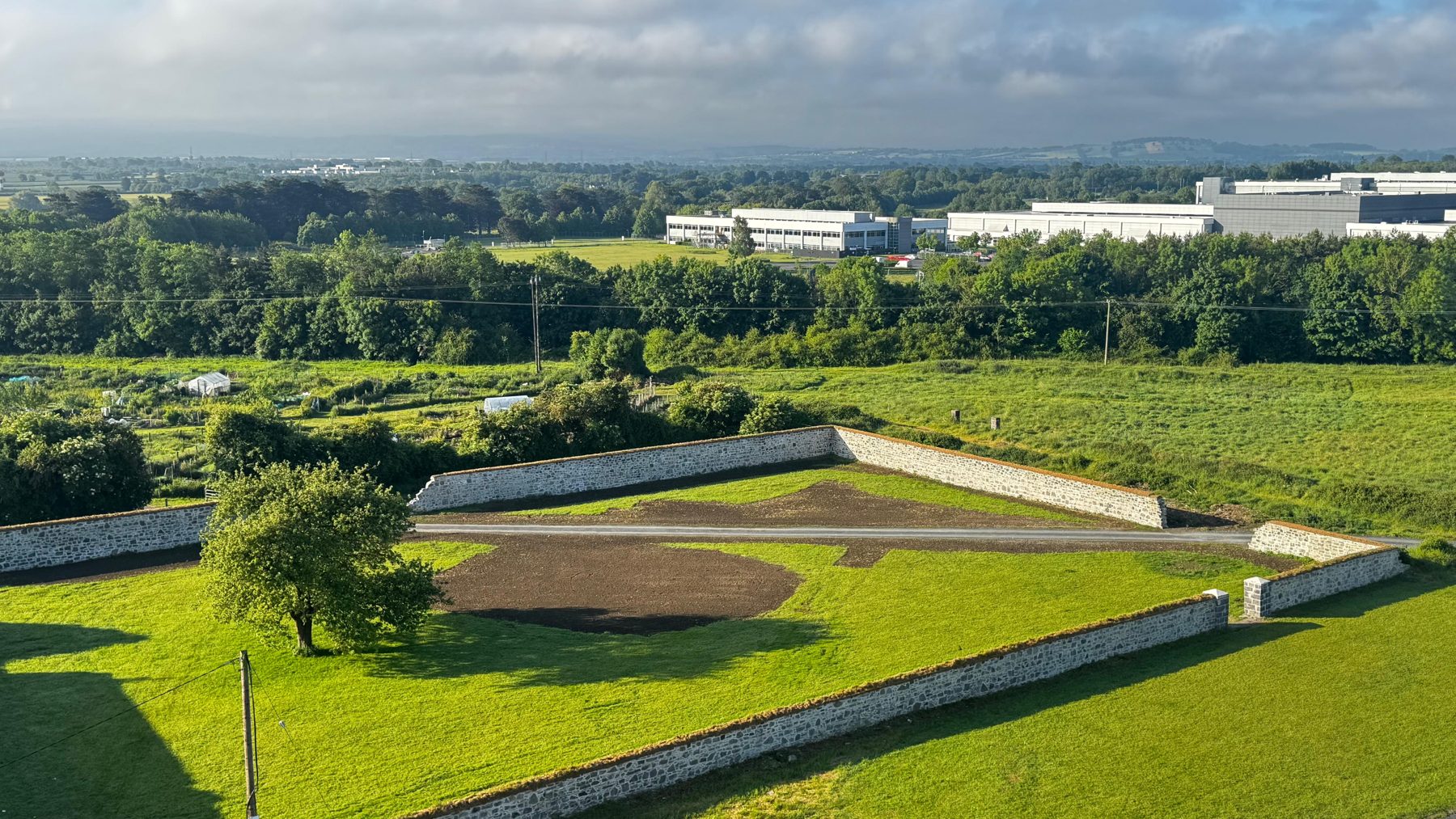
Hundreds of metres of historic wall, sound again
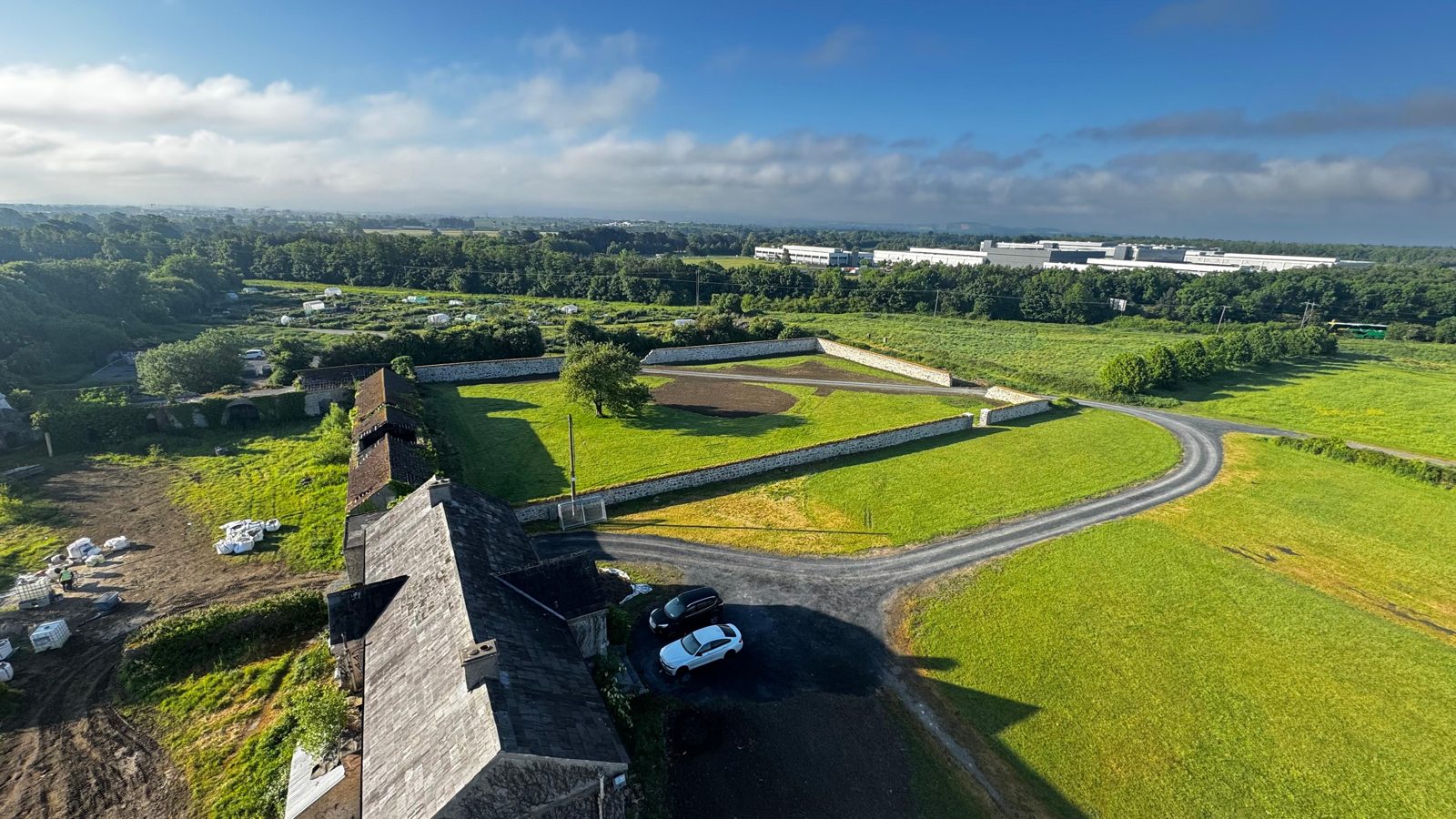
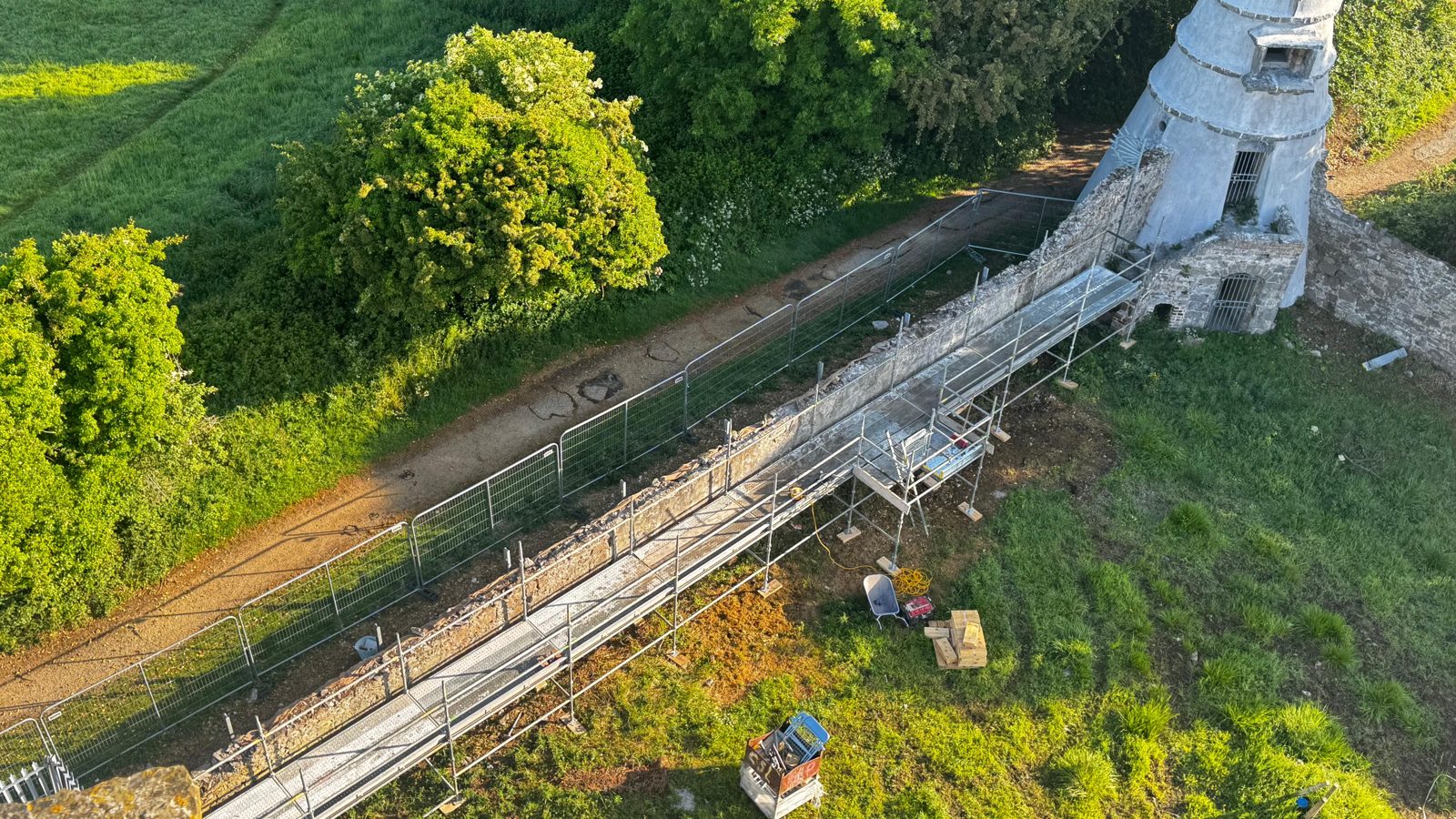
From the air you can see the scale of it — the full enclosure of walls around The Wonderful Barn, structurally sound, sympathetically repointed and standing straight. A protected piece of Ireland's built heritage, secured for the future.
It's the kind of project we're proudest of: large, technically demanding, sensitive heritage work, done to conservation standards and finished to a standard the building deserves.
What the job involved
A heritage wall restoration on this scale draws on every part of what we do:
🏛️ Conservation-standard work
Sensitive restoration of a protected structure, in keeping with the original build and methods.
🧱 Structural rebuilding
Taking down and rebuilding collapsed and bulging sections by hand in reclaimed, matching stone.
🧴 Lime repointing
Hundreds of metres of joints raked out and repointed in breathable lime mortar, matched and hand-finished.
🪨 Stone matching
Matching stone, coursing and character so repairs blend seamlessly into the historic wall.
⛏️ Foundations & bases
Repairing undermined and wet wall bases so the walls stay stable for the long term.
🧢 Copings & wall tops
Making good the tops and traditional grassed copings so water is shed and the wall is protected.
🚧 Access & safety
Scaffolding, heritage fencing and safe site management on a publicly sensitive landmark site.
📋 Managed at scale
A €350,000 project delivered by our own team, section by section, to a consistent standard throughout.
This restoration was a €350,000 project.
Heritage restoration on this scale is a major undertaking — and being trusted with a protected national landmark like The Wonderful Barn says everything about the standard we work to. Whether your project is a single garden wall or a large conservation contract, we bring the same care and give you a clear, itemised quote after a free site visit.
Discuss your project →The full project gallery
From damaged and collapsed walls to fully restored heritage stonework. Tap any photo to enlarge.
Lime mortar — the only right choice for historic walls
People often ask why not just use cement — it's cheaper and quicker. On a historic wall, cement is the wrong answer. It's hard and sealed, so it traps moisture inside the old, soft stone and, over a few winters, that trapped water freezes and blows the faces off the stone. The wall slowly destroys itself.
Lime mortar is soft and breathable. It lets moisture evaporate back out, moves gently with the wall instead of cracking it, and can be re-worked in future. It's how these walls were built, and — on a protected structure especially — it's the only right way to restore them. Every joint at The Wonderful Barn was done in lime.
More on our restoration work →
What our customers say
"I would like to thank this firm for the stonework on a large project. Both the work and the employees were of the highest quality and did more than expected of them. I would highly recommend this company."
Kimmage Hardware · Google review"I can not recommend Arthur and his team highly enough, they started on the agreed date and nothing was a problem after that... 10/10 in everything they done for me, very professional team of guys."
Alan Bow · Google reviewGet my free quote
Your name and number is all we need — add a photo if handy. We’ll call you back today.
or call 086 066 6591 · WhatsApp · ★ Rated 5.0
We use the details you send to assess and respond to your enquiry. See our Privacy & Cookies page.
Have historic stone walls that need restoring?
From a single period wall to a large conservation contract — if it's old stone, we know how to bring it back properly. Free site visit, honest quote, based in Navan and covering Kildare, Dublin, Meath and beyond.