A full stone cottage restoration in Swords, Dublin
We stripped the old cement render off this Swords cottage, took it back to bare stone and rebuilt it from the ground up — structural repair, new foundations, rebuilt stonework, a new stone porch, reclaimed-brick chimney repairs and a hand-built stone fireplace — every joint in traditional lime mortar. Here is the whole job, start to finish.
The brief — save the cottage, keep its character
A full cottage restoration like this is routine work for our team — a small job, by the scale of what we take on — but it's a great example of how we work. This old stone cottage in Swords, Co Dublin needed a complete remake. At some stage it had been coated in hard cement render, which looks solid but traps damp inside old stone walls and slowly damages them. The floor was failing and the chimney and fireplace needed rebuilding — so the owner had us bring the whole thing back properly, the traditional way, as a full building restoration.
They didn't want a new-build that happened to look old. They wanted the real thing kept — the same stone walls, the same character — but sound, dry, warm and good for another hundred years. That meant taking the cement render off, going back to breathable lime mortar throughout, and getting the structure right before a single stone was pointed.
See the transformation
Drag the slider across each photo to reveal the before and after. Same building, same stone — brought back properly.
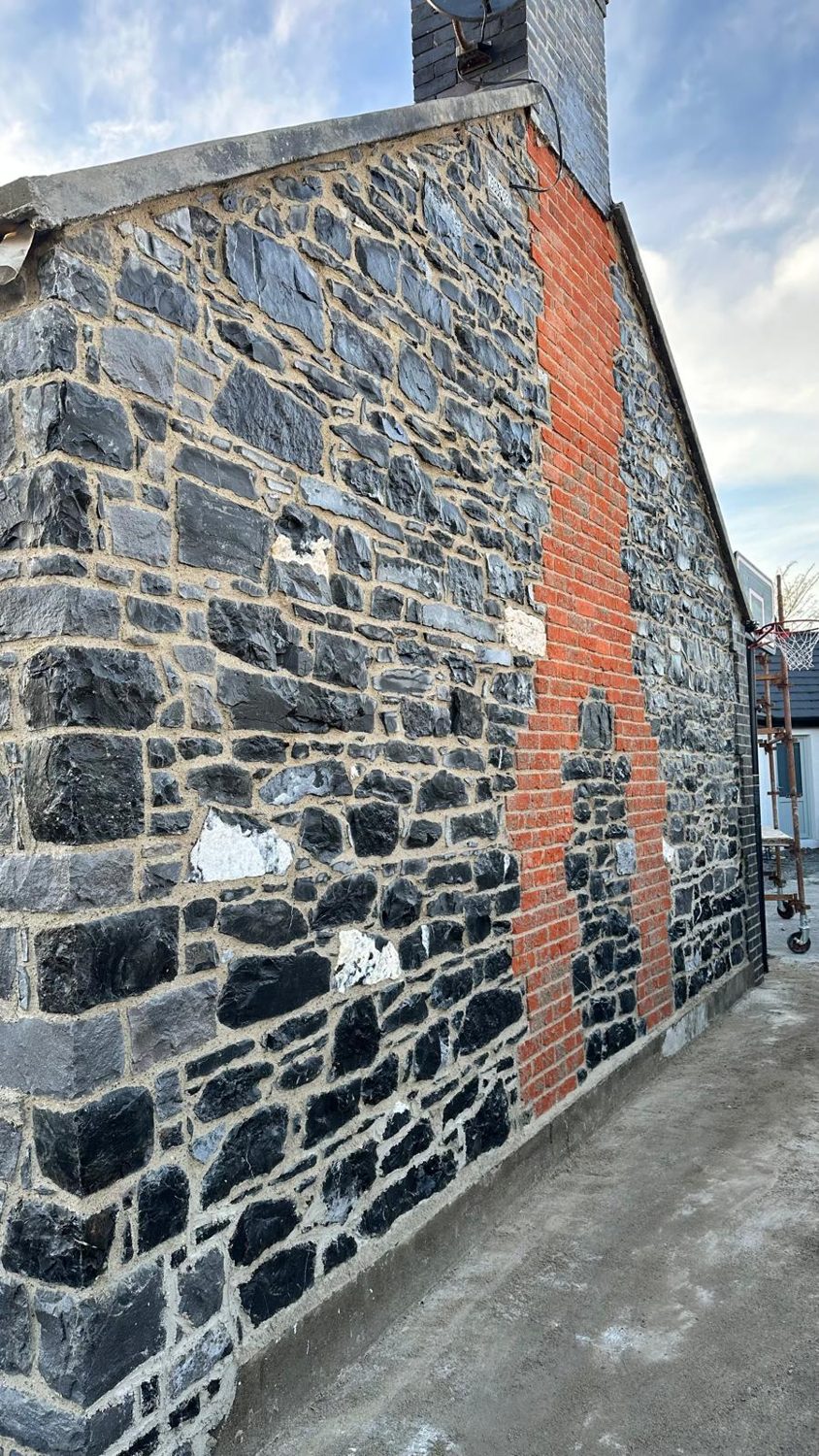
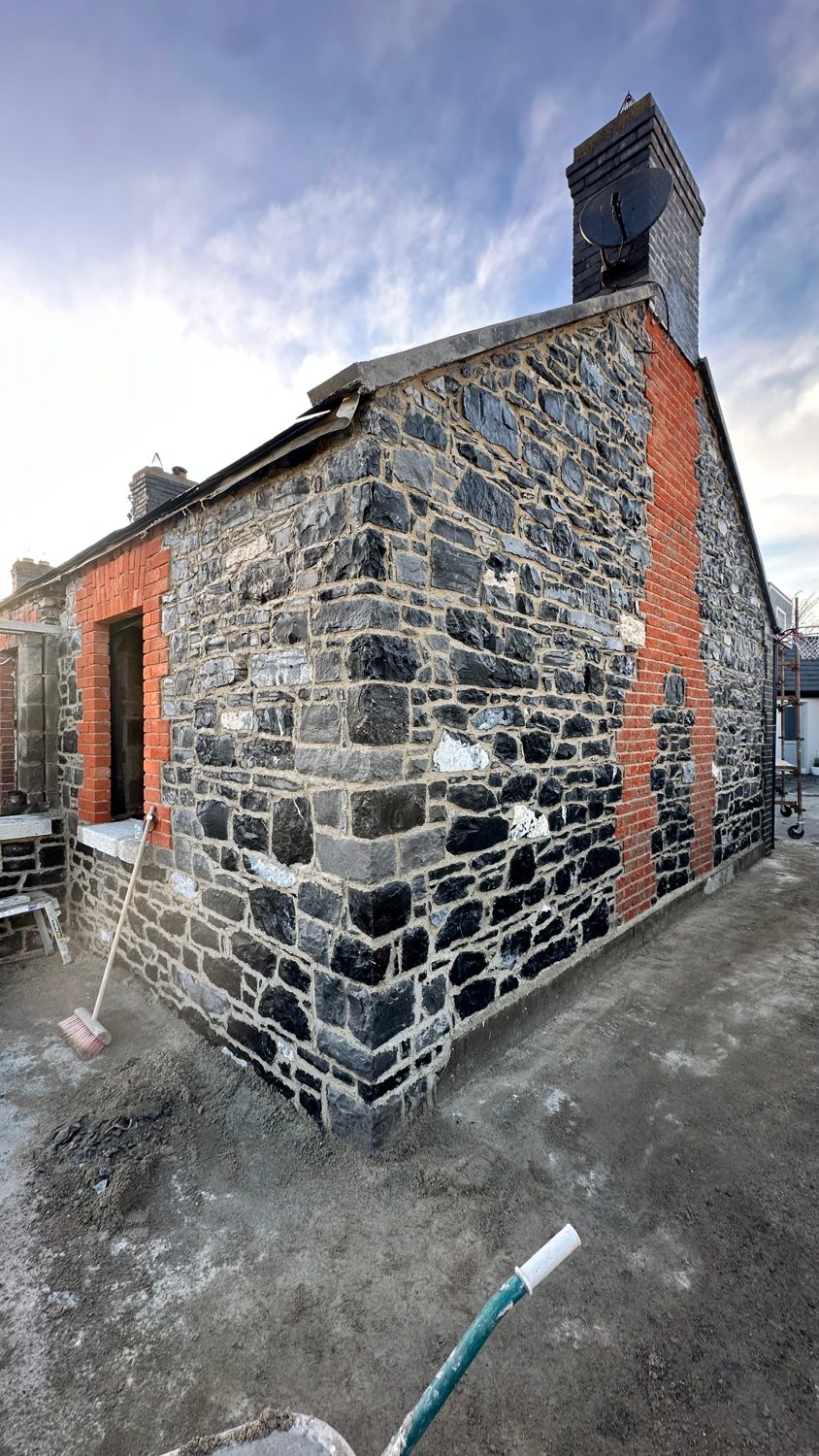
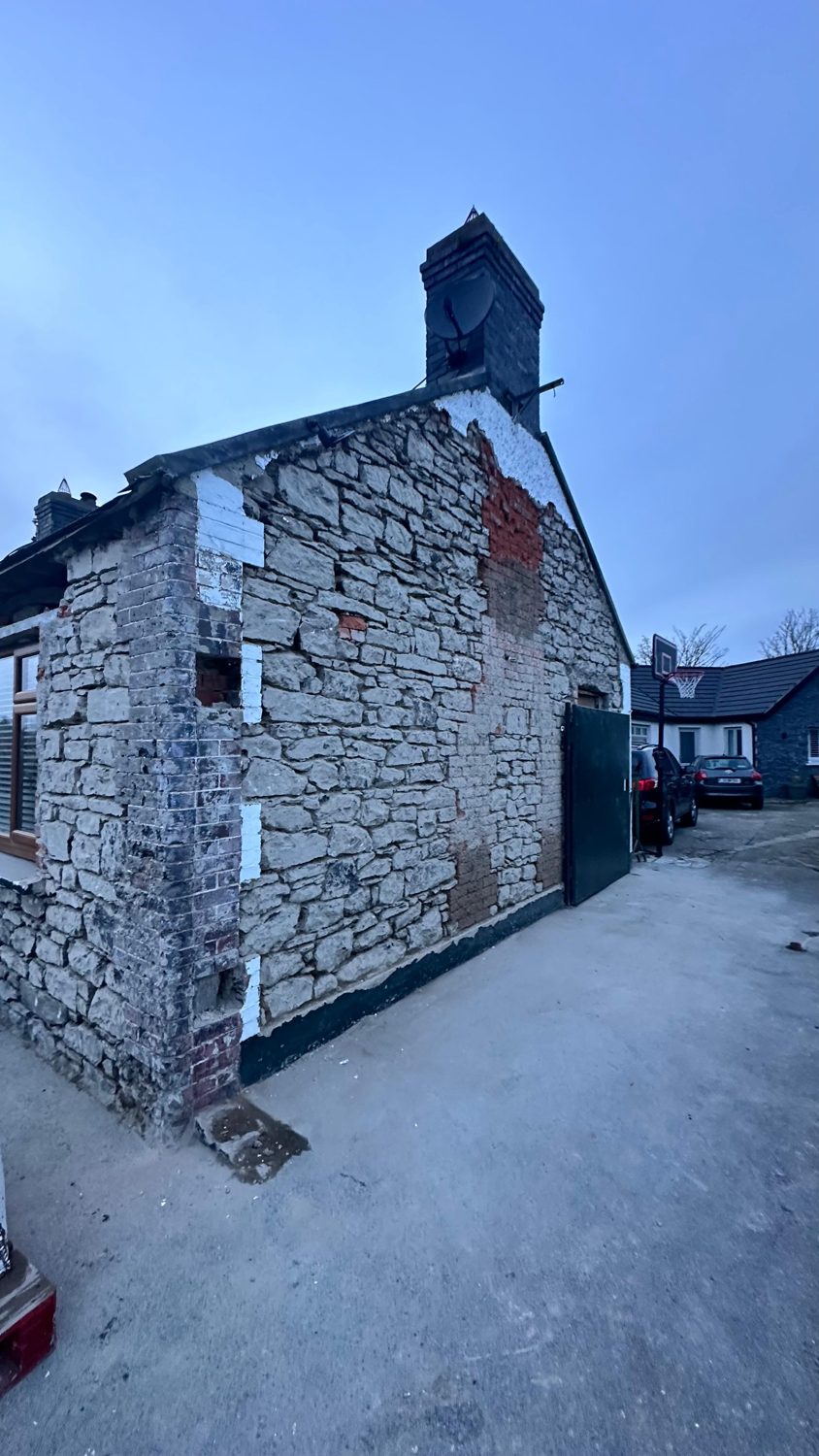
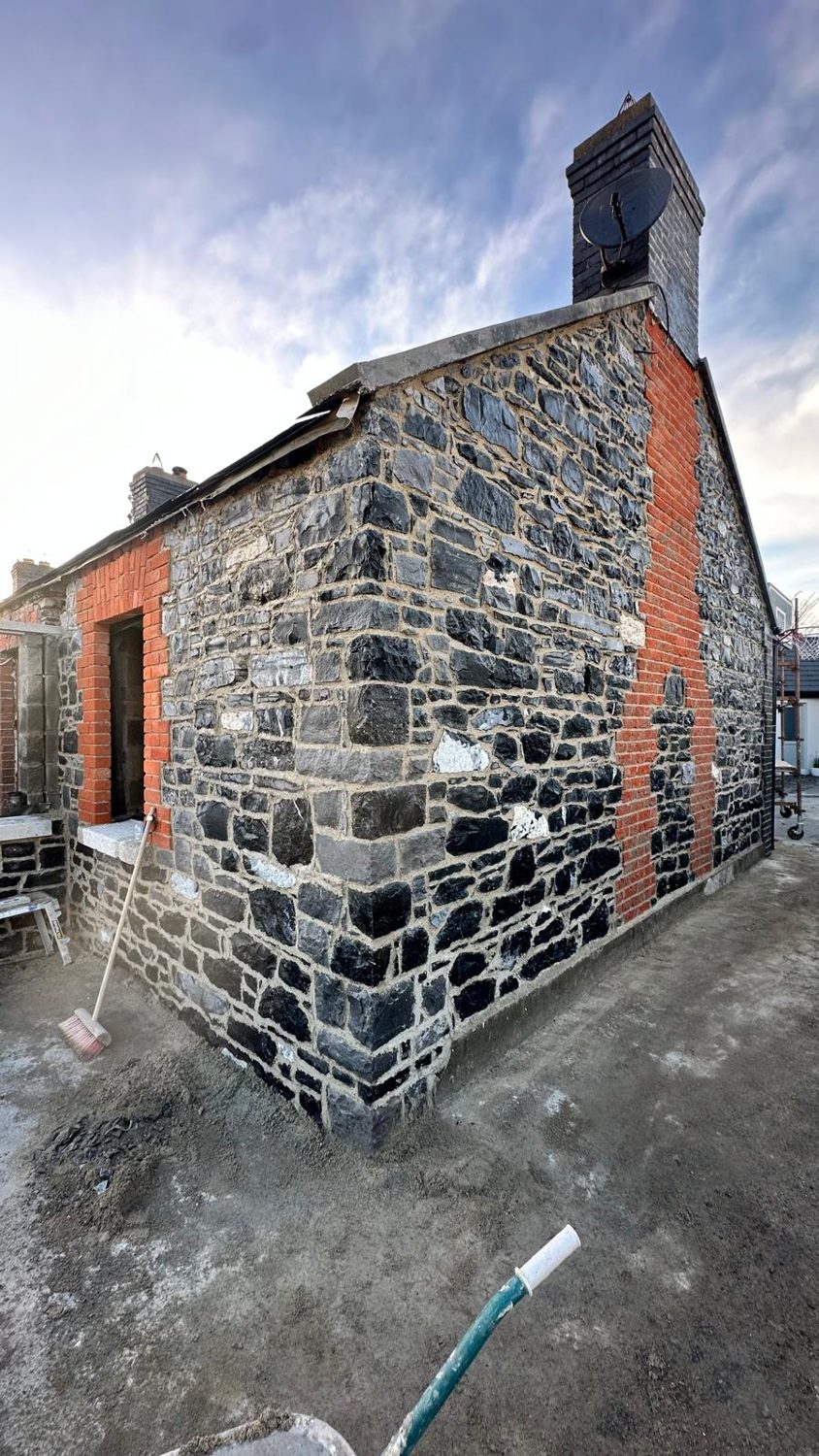
The gable end — rebuilt and repointed in lime
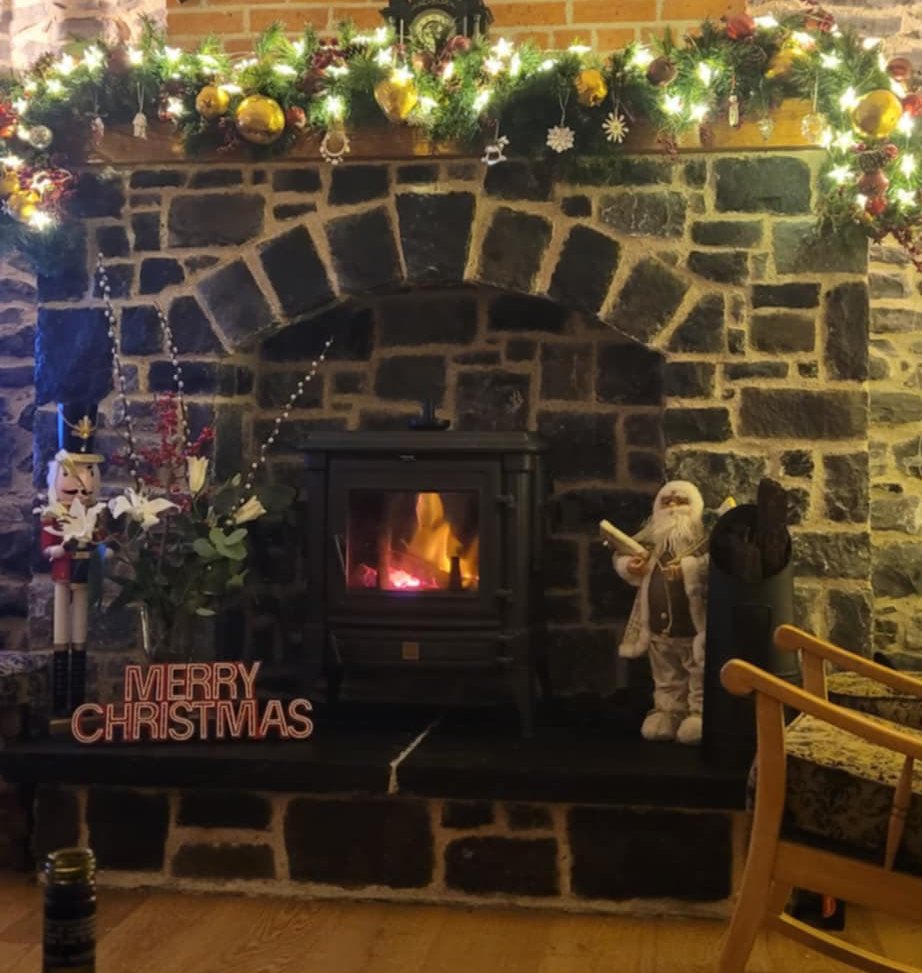
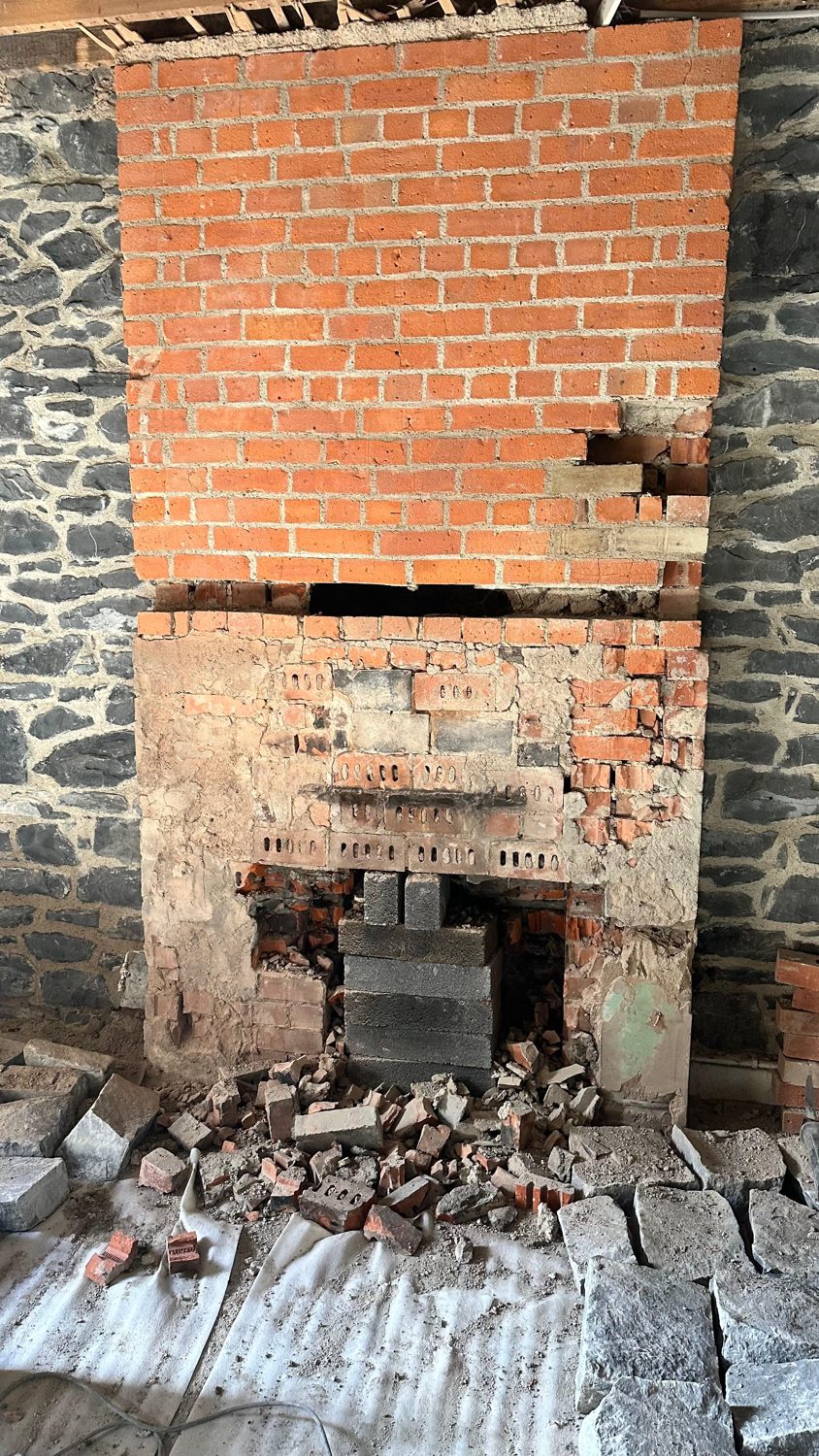
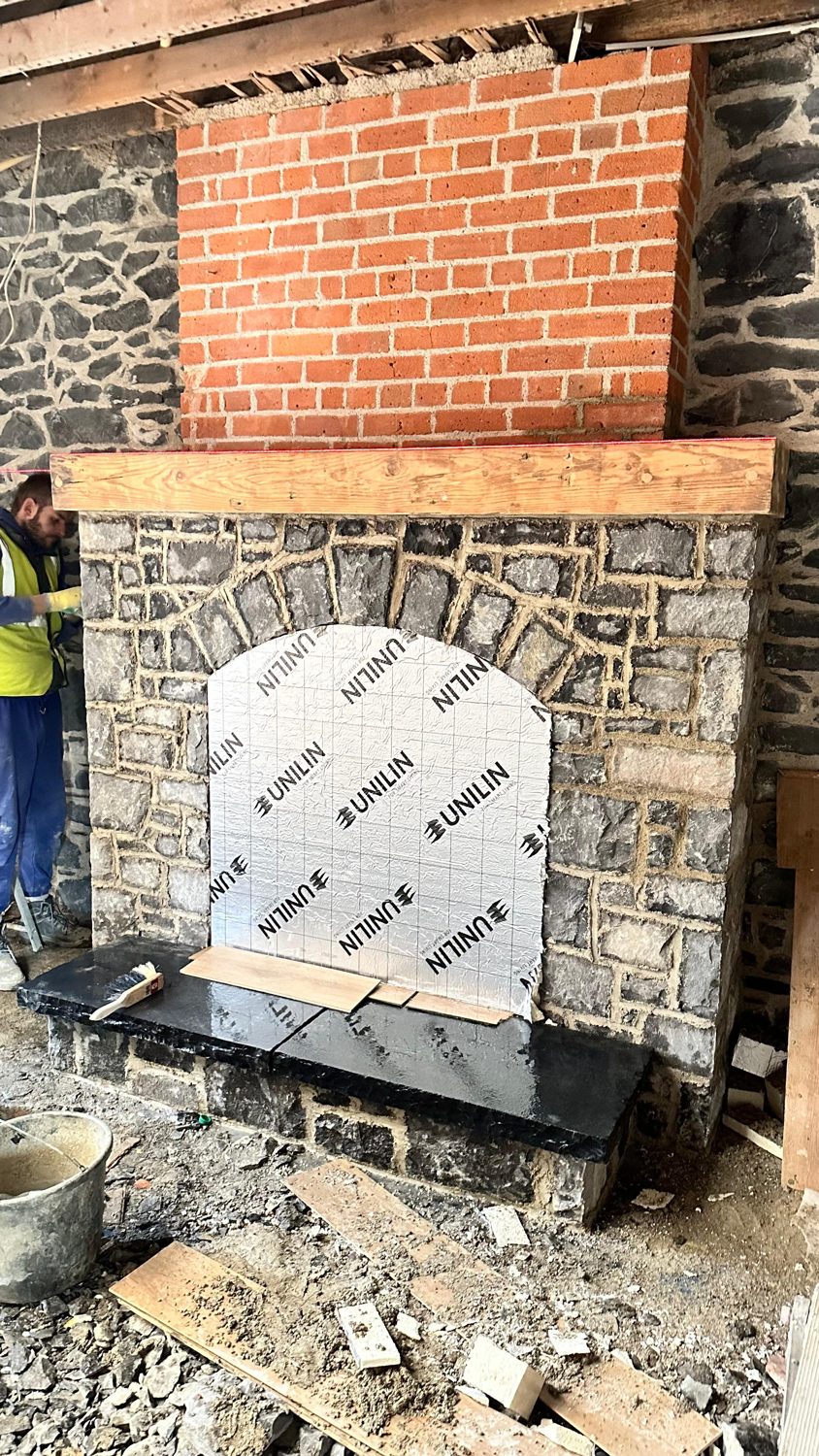
The fireplace — from a bare opening to a finished stone hearth
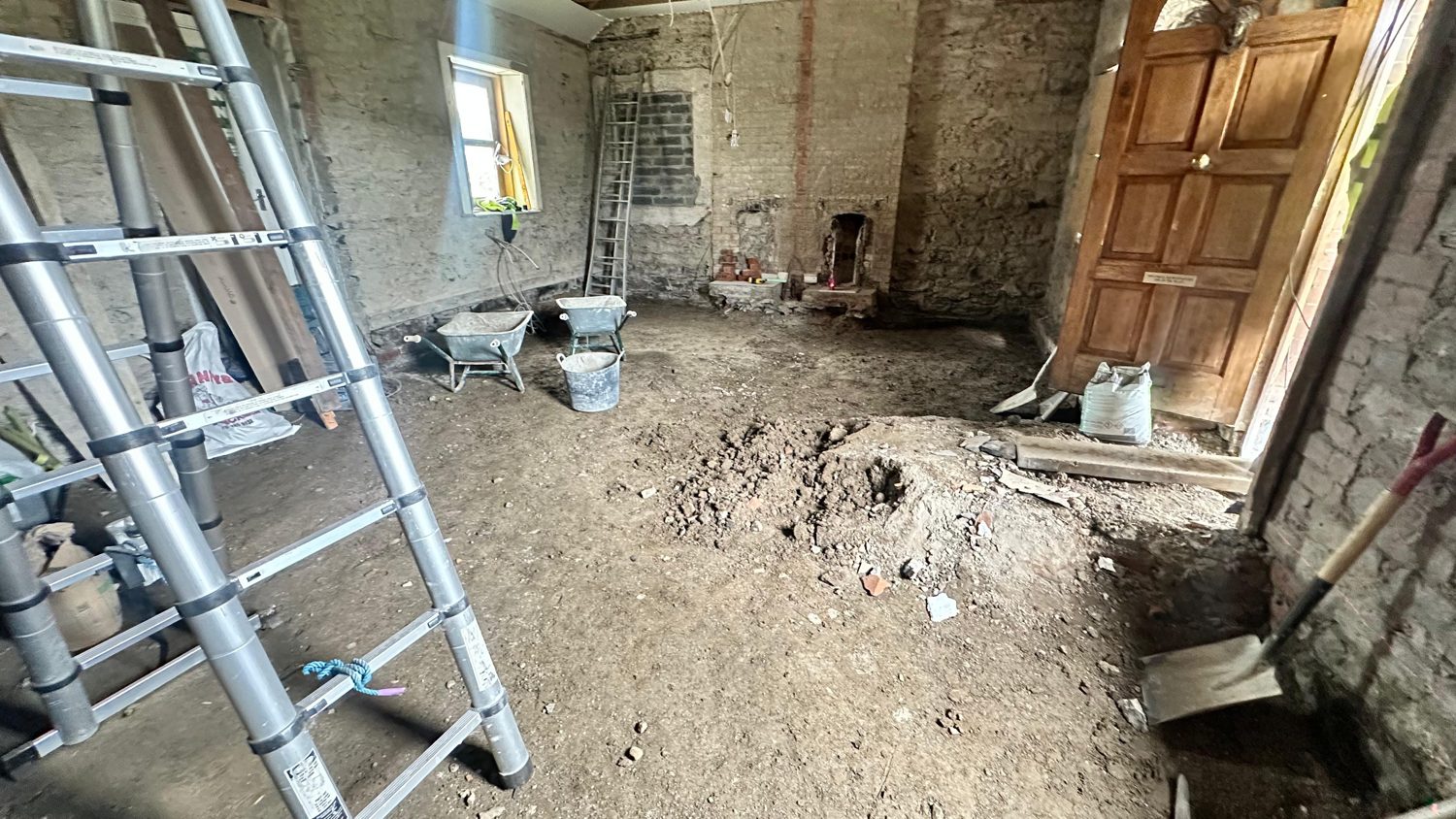
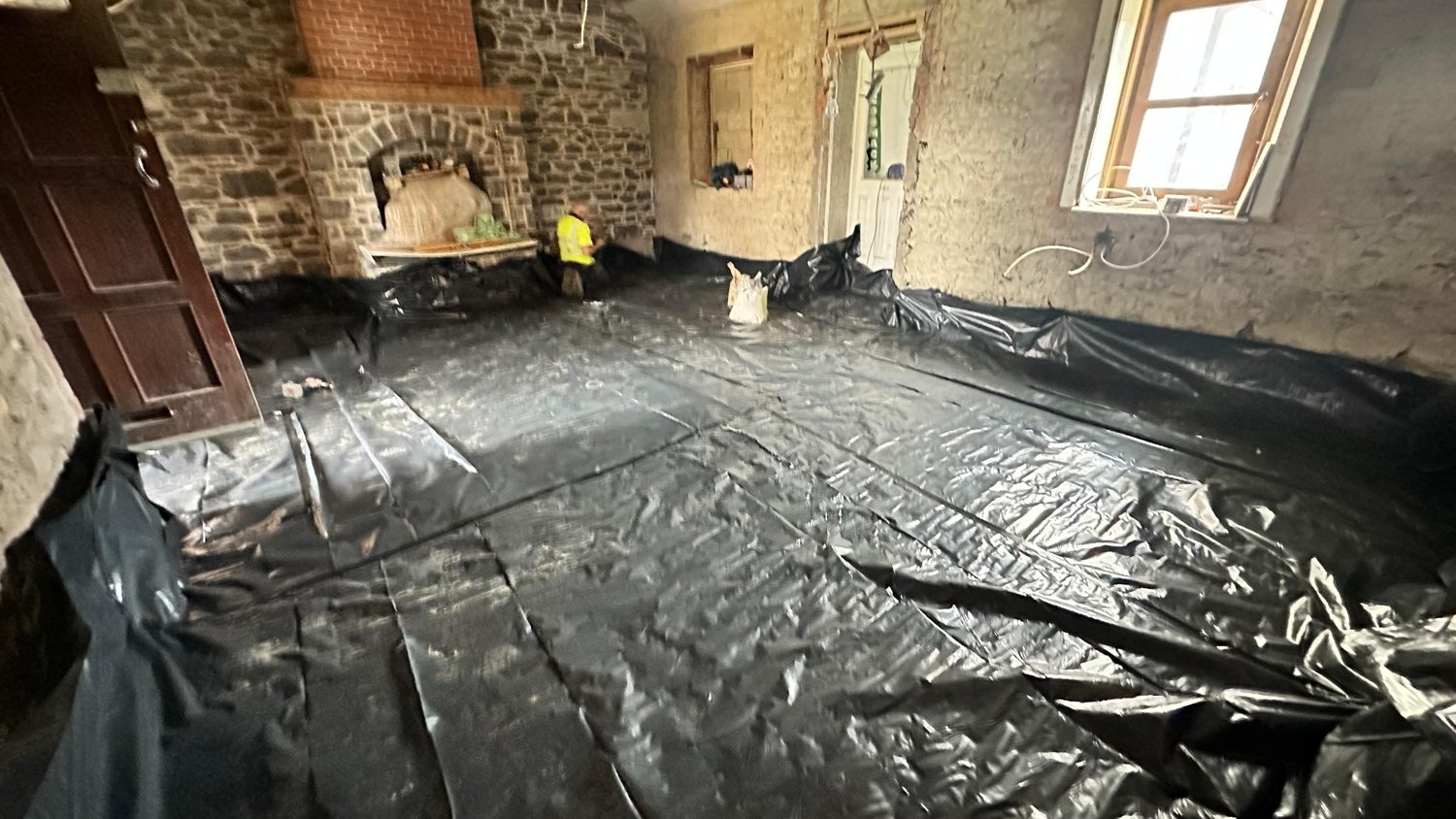
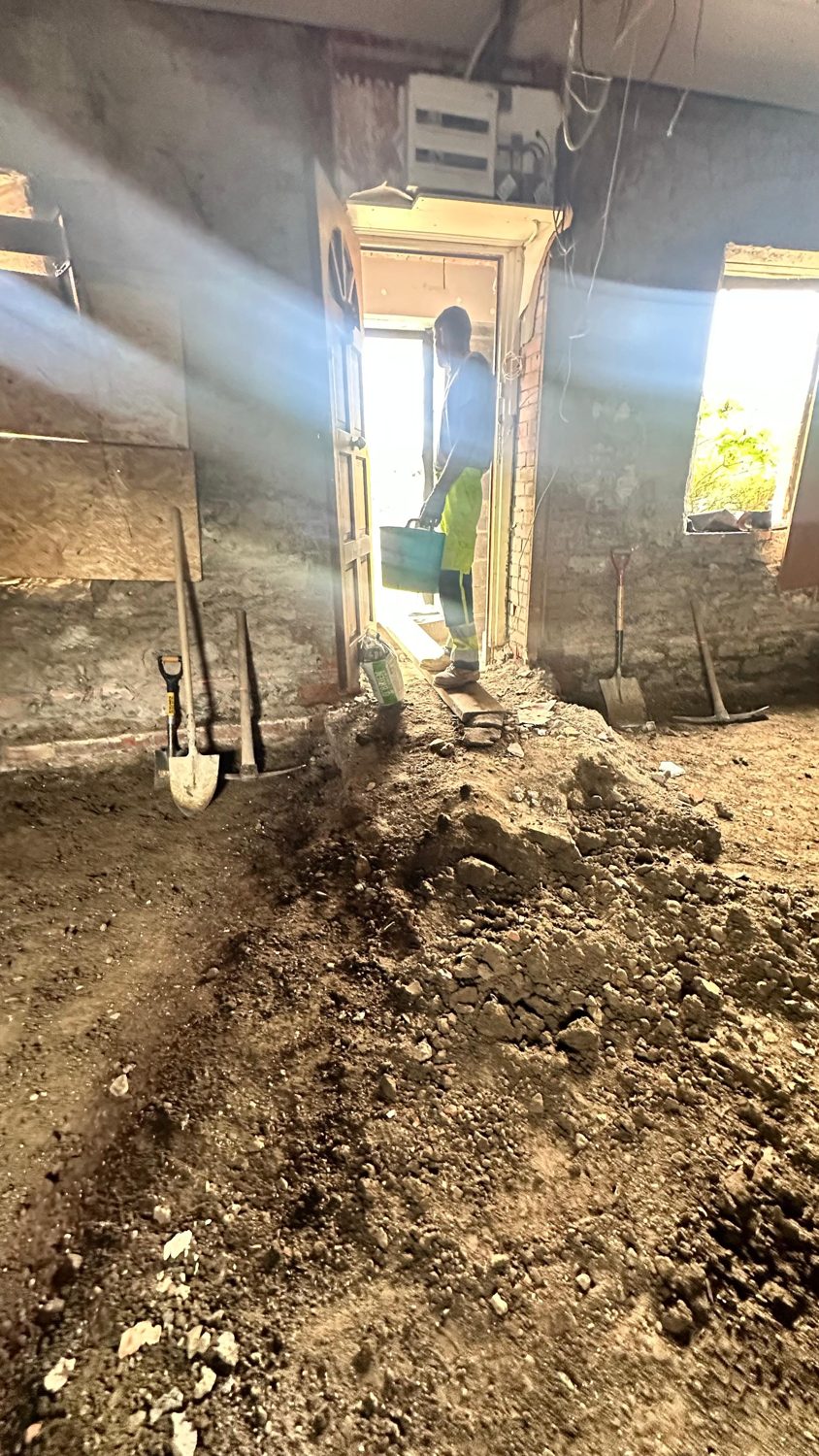
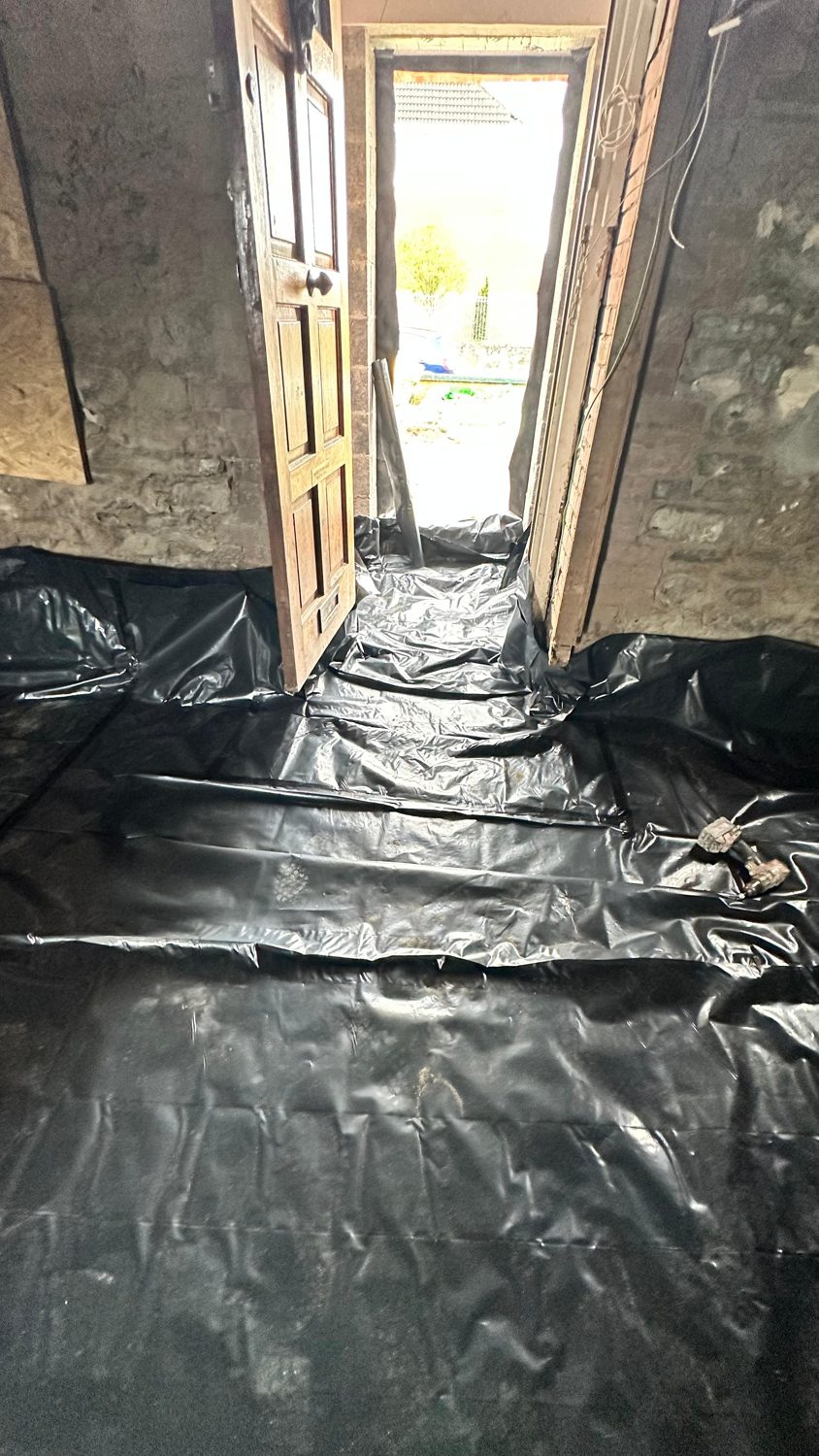
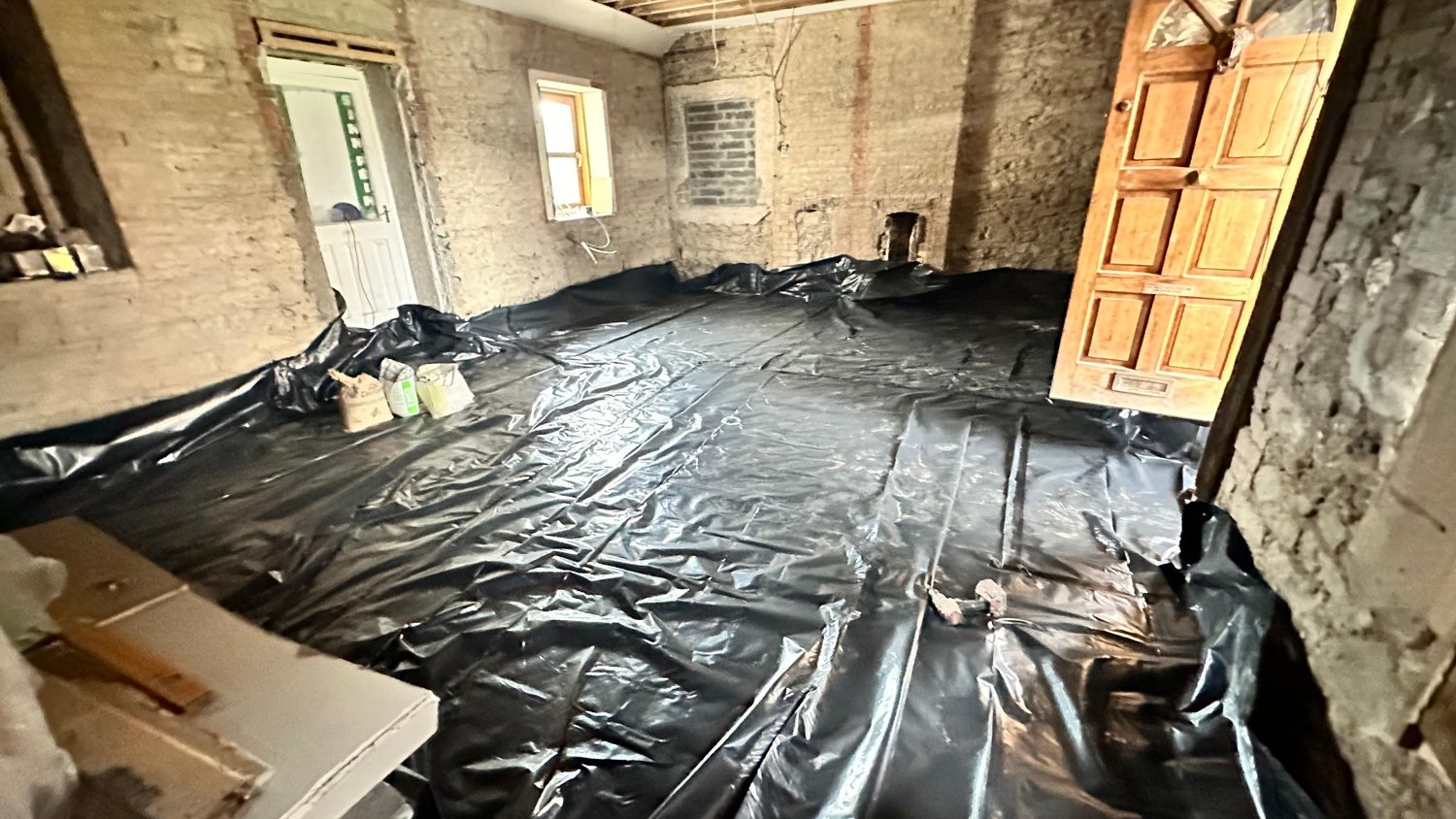
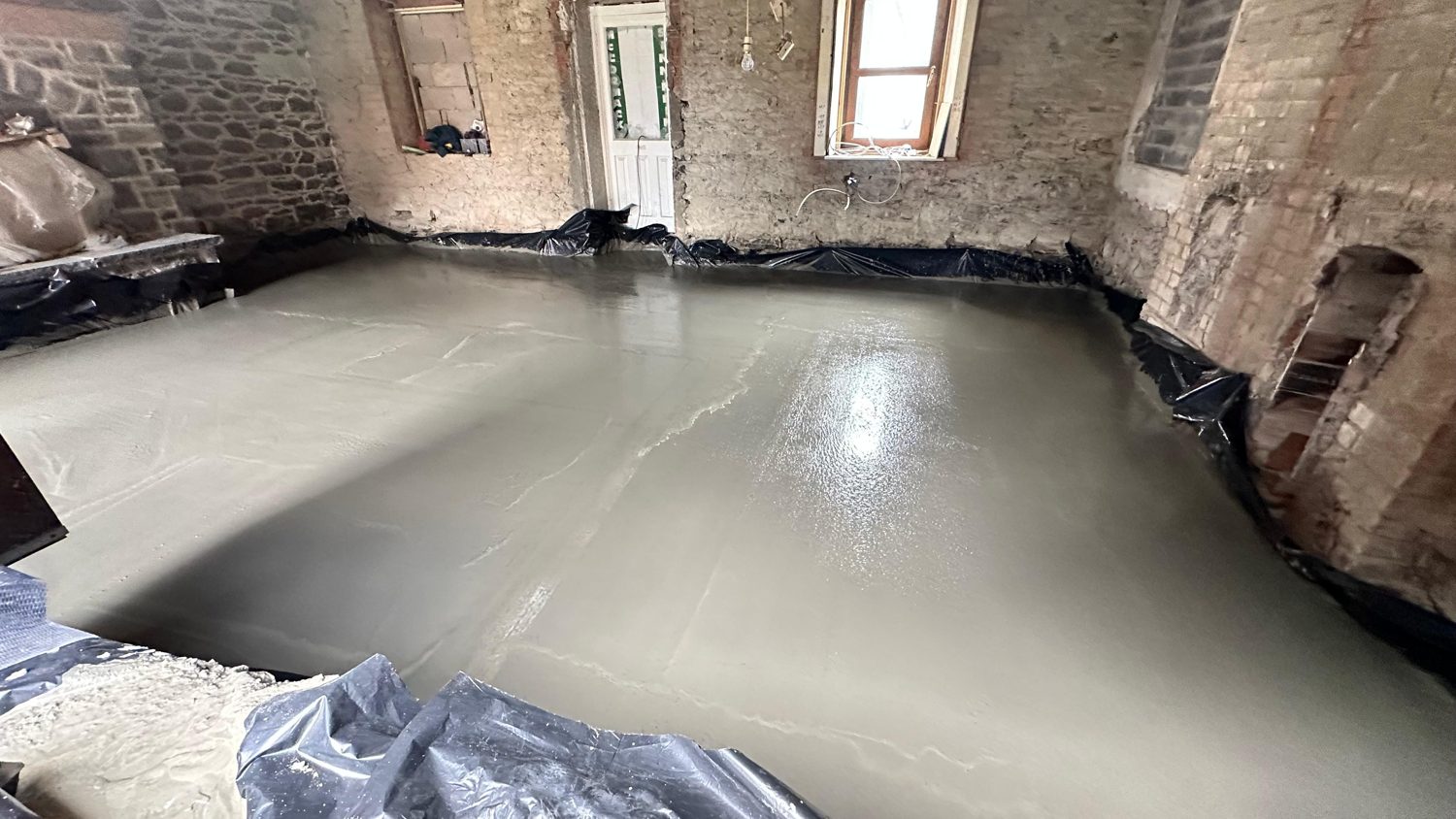
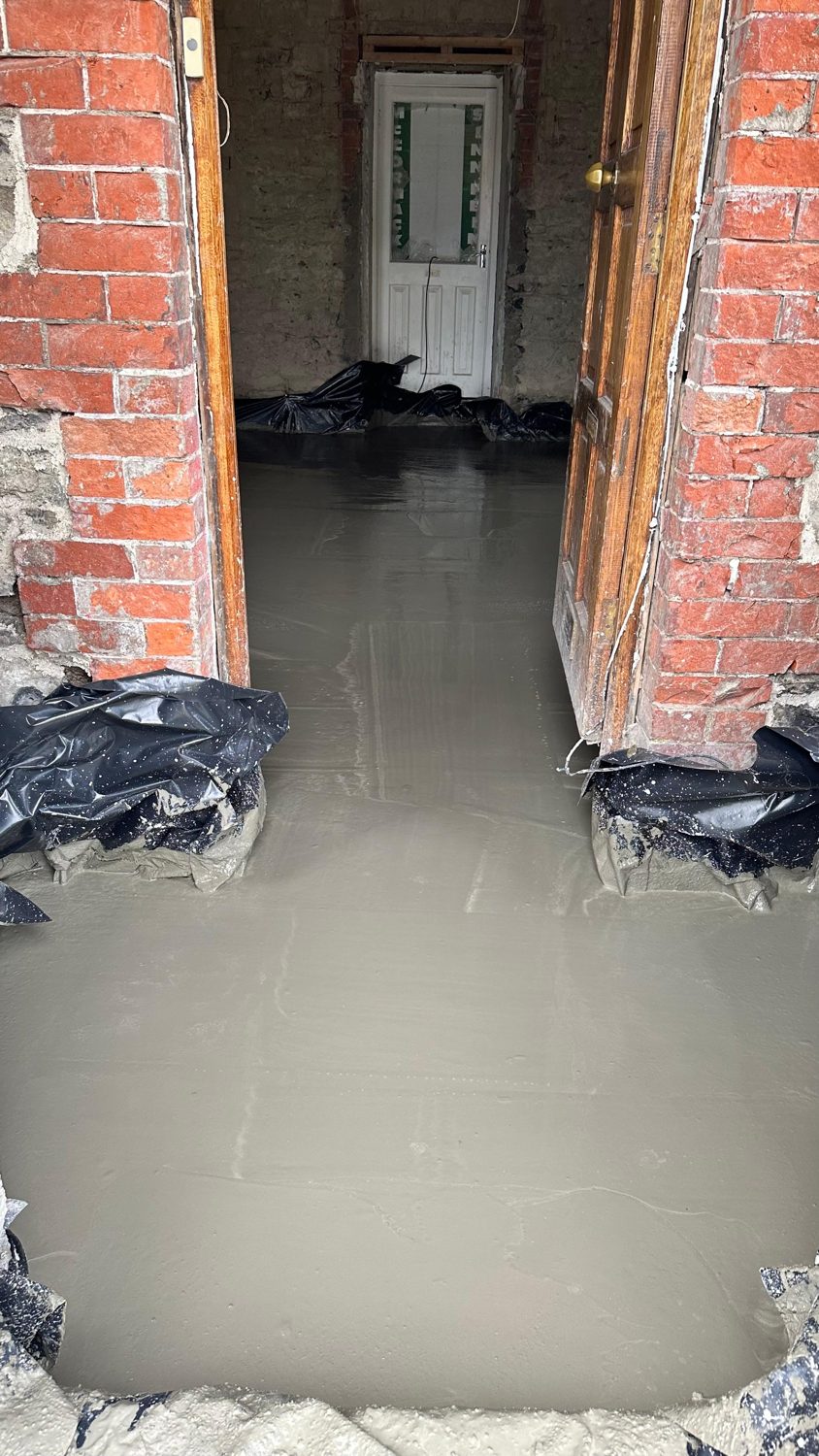
The floor — dug out, damp-proofed and re-laid
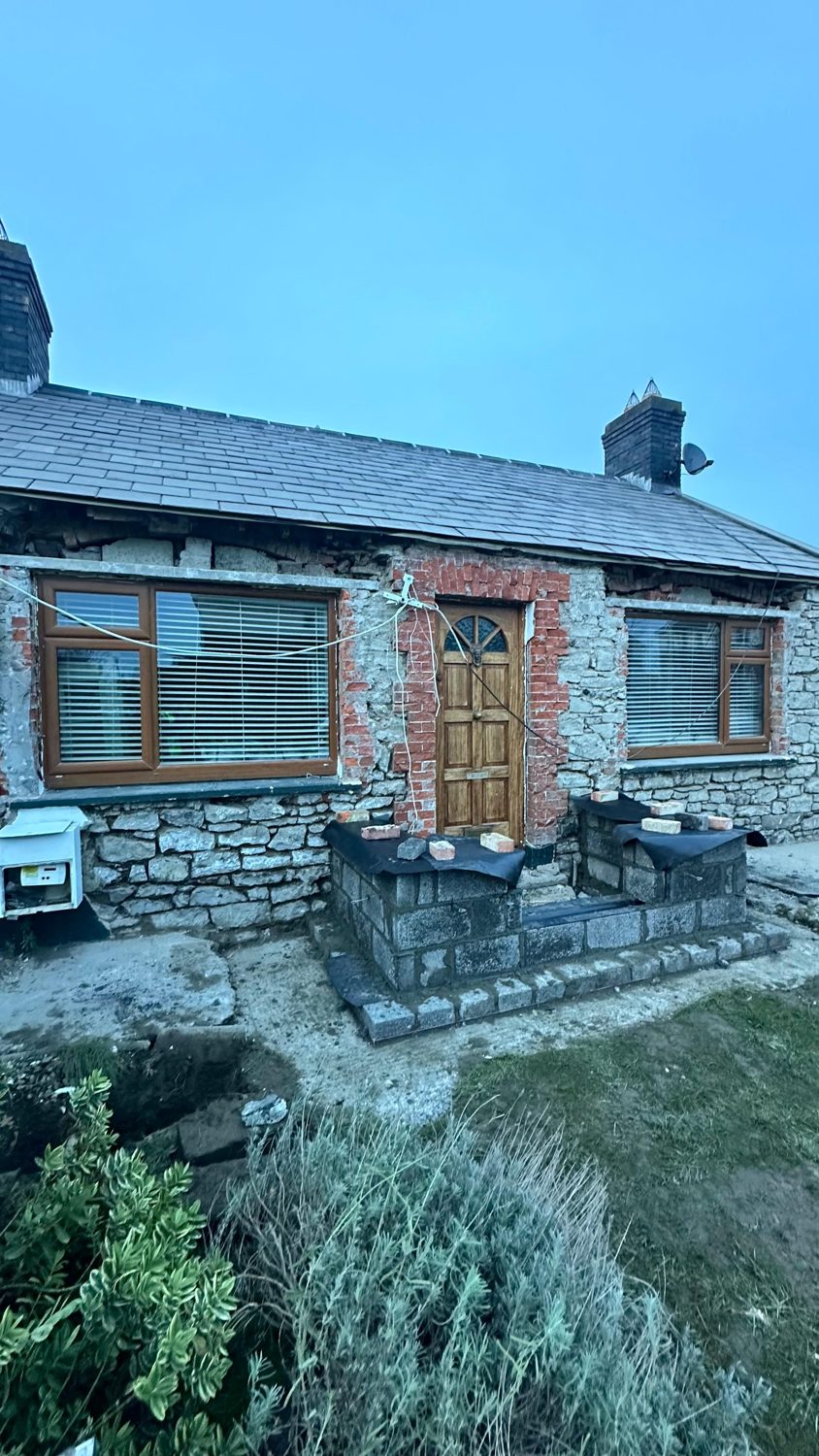
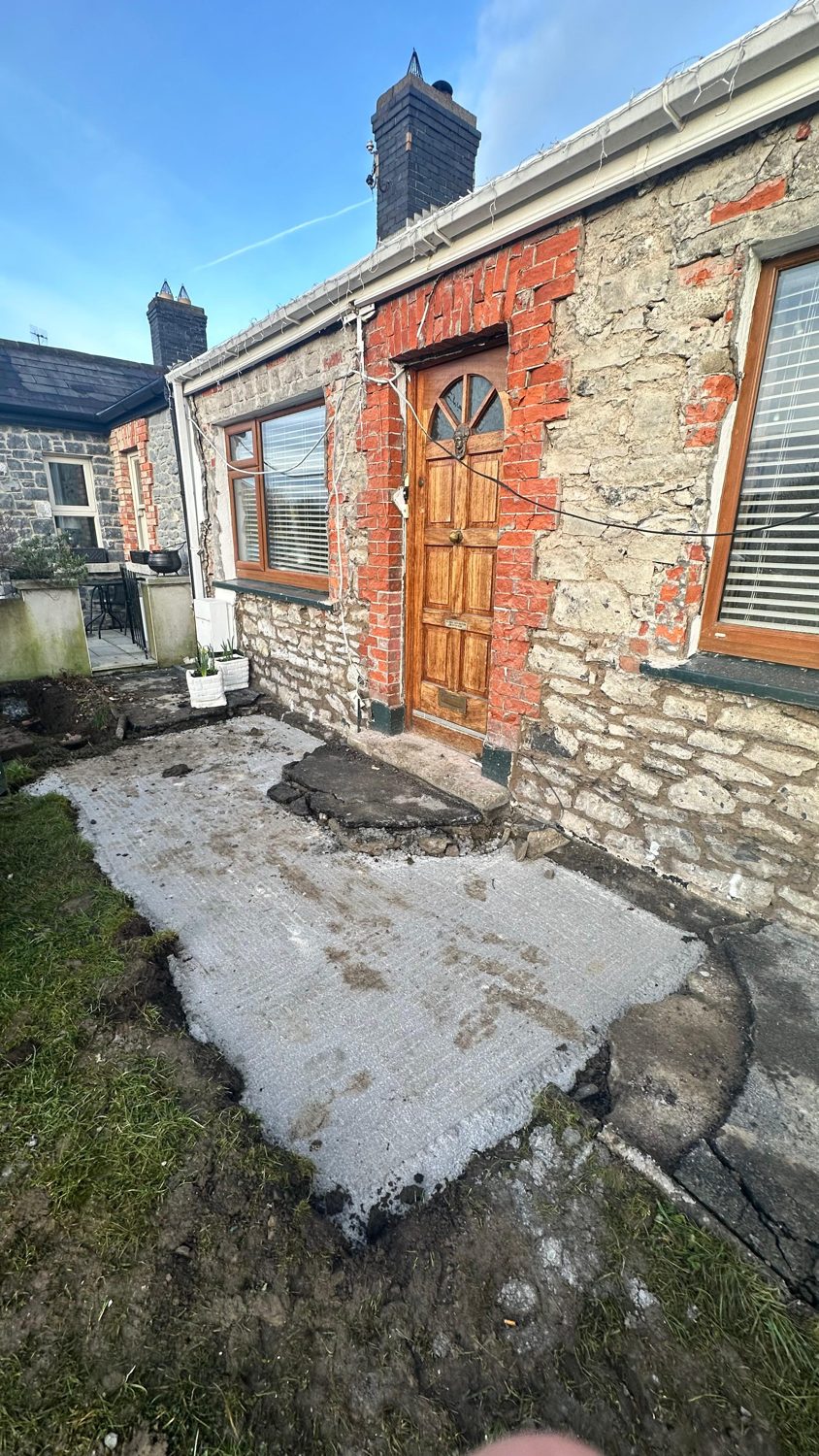
The front — a new stone porch, built on new foundations
An old cottage smothered in hard cement render
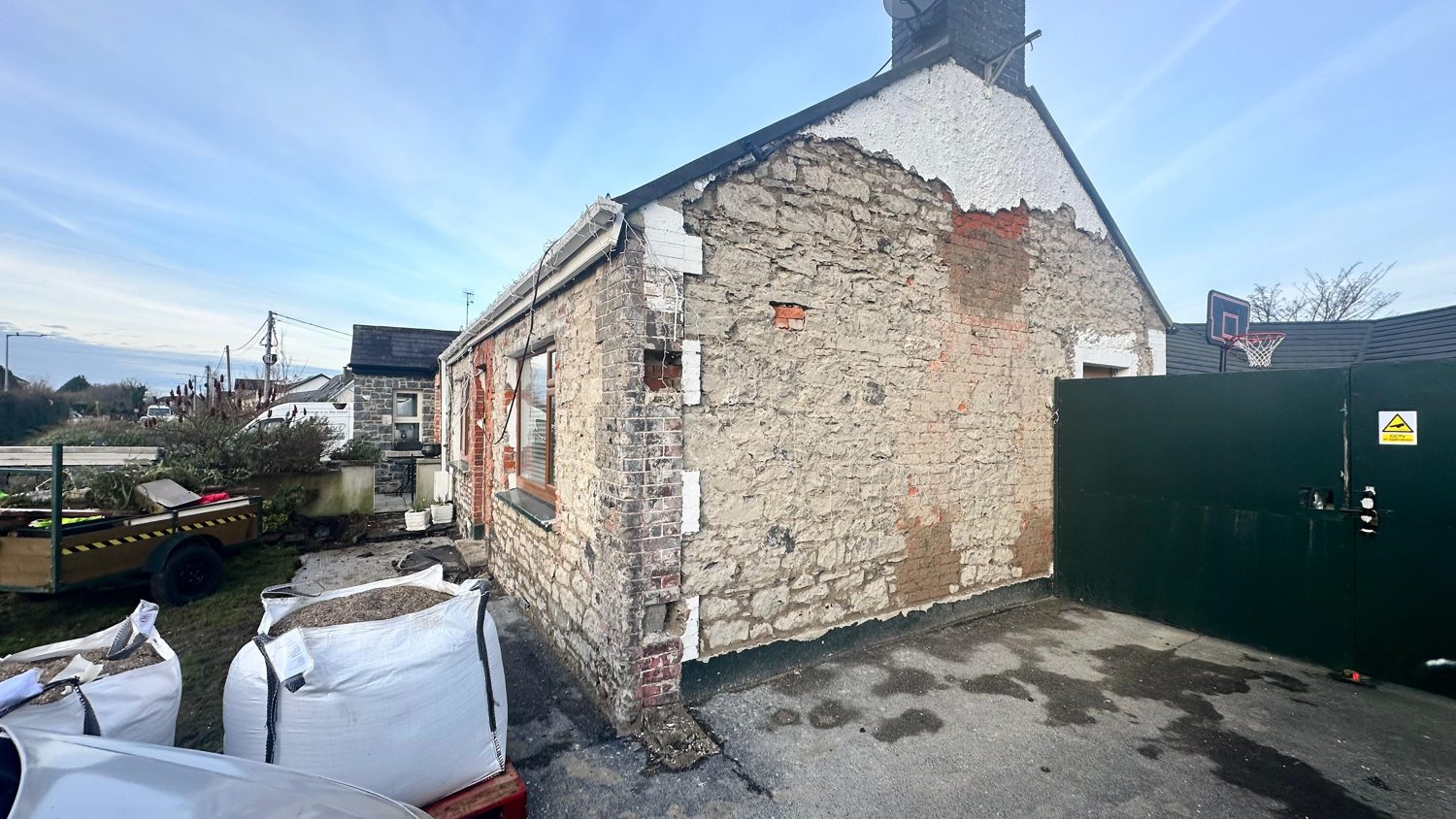
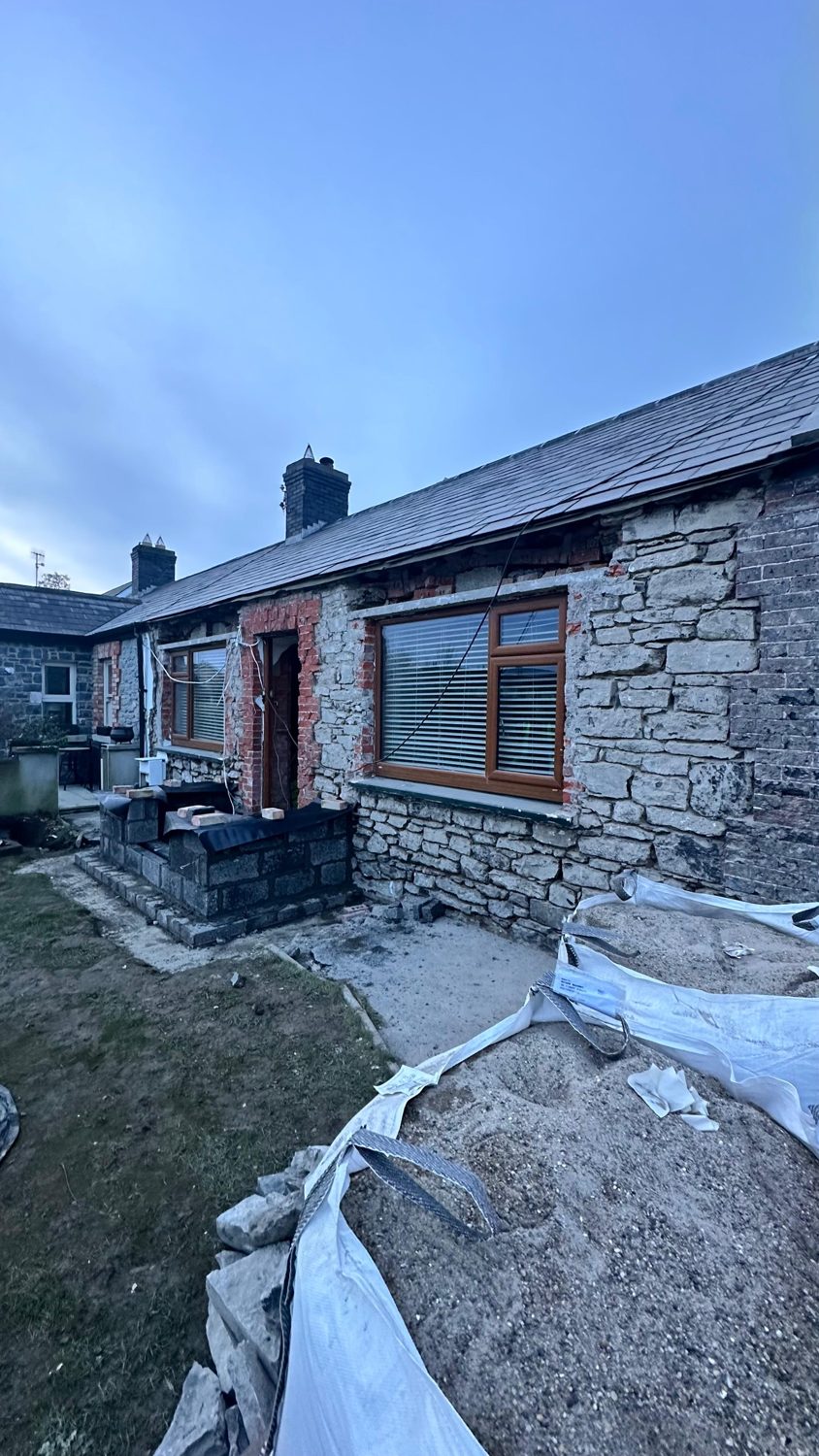
At some point the cottage had been coated in hard cement render — the kind of quick fix that looks solid but does real harm. Cement is sealed and rigid, so it traps moisture inside soft old stone walls instead of letting them breathe, and the damp had nowhere to go. Inside, the old plaster was blown, the floor was failing, and the original fireplace needed rebuilding.
Before we could restore anything, we had to understand the building — where the damp was coming from, which stone was sound, and what was holding the place up. On a cottage this age, that survey is half the job. Rush it and you build new problems into the wall.
Back to bare stone — and made structurally sound
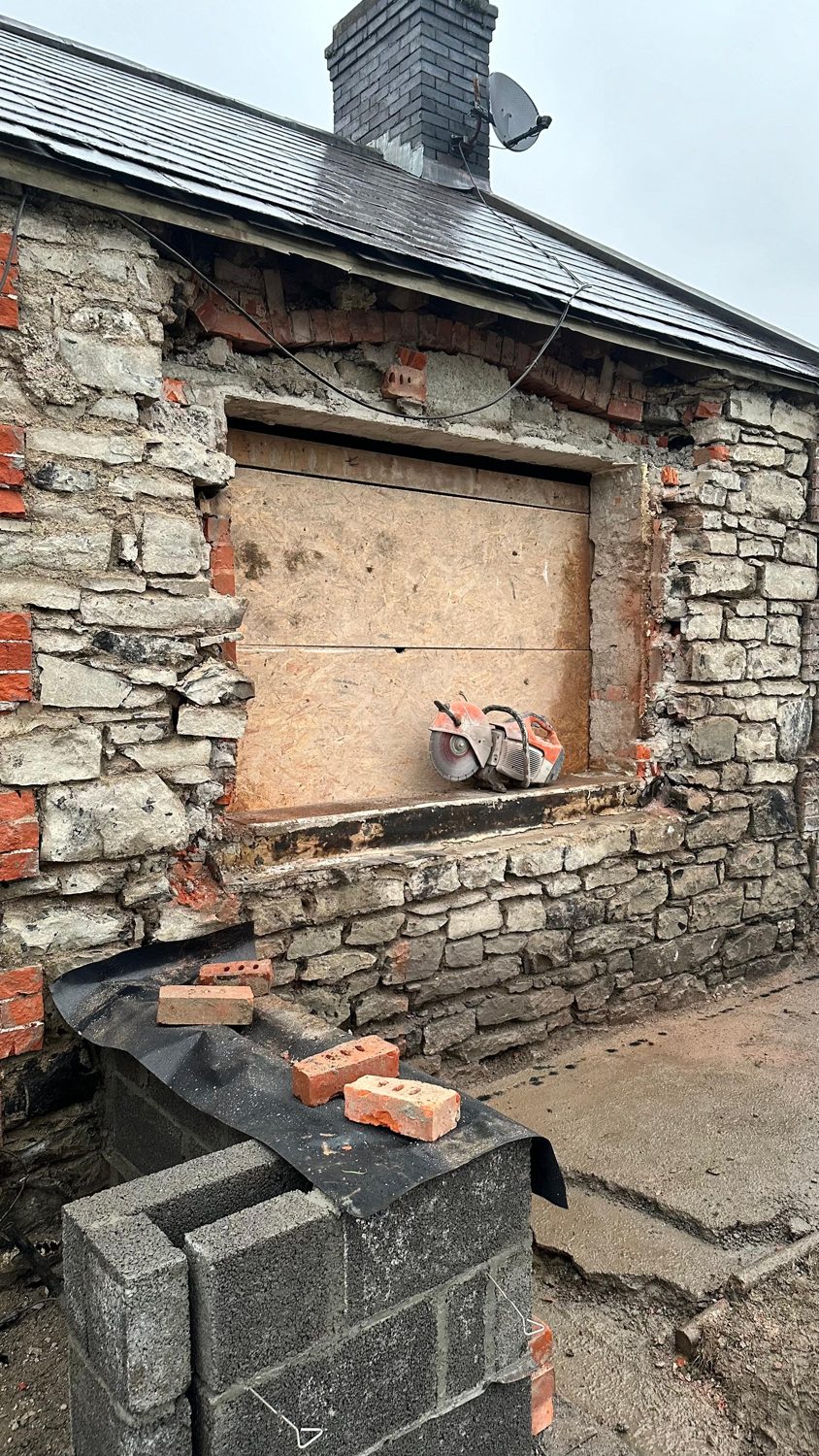
We stripped the cottage right back: off came the hard cement render, outside and in, along with the blown plaster and the failed floor, until we were down to honest stone. Getting that cement off is a job in itself — but it's the single best thing you can do for an old stone building, because it lets the walls dry out again. Only then can you see what the wall is really doing.
With the stone exposed we carried out the structural repairs — resetting loose and bulging stone, stitching cracks, and forming solid new openings where the old window and door heads had failed. Every opening got a proper new lintel and the jambs were rebuilt square and strong, ready to take new joinery.
A dry, solid floor — the part you never see
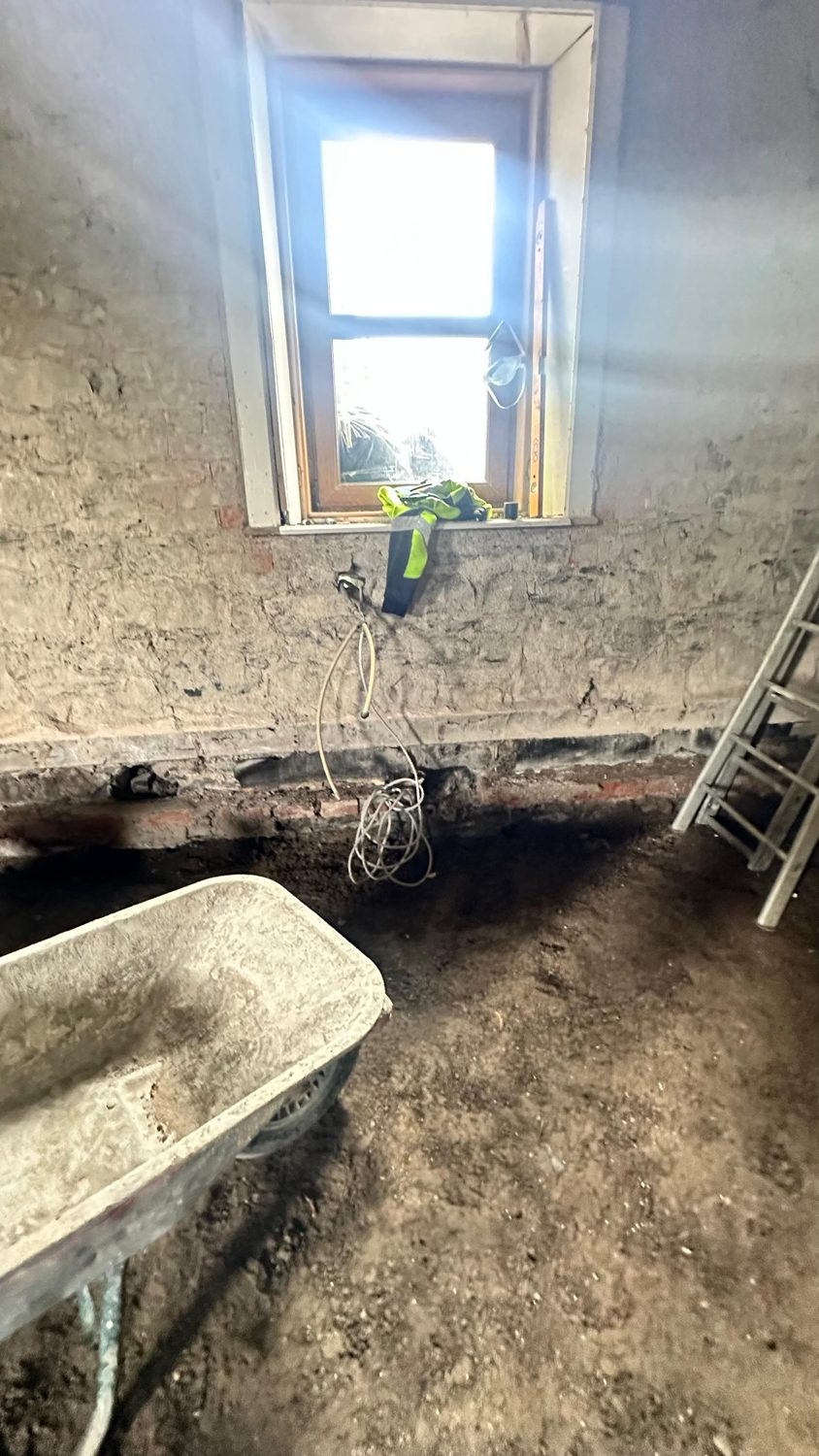
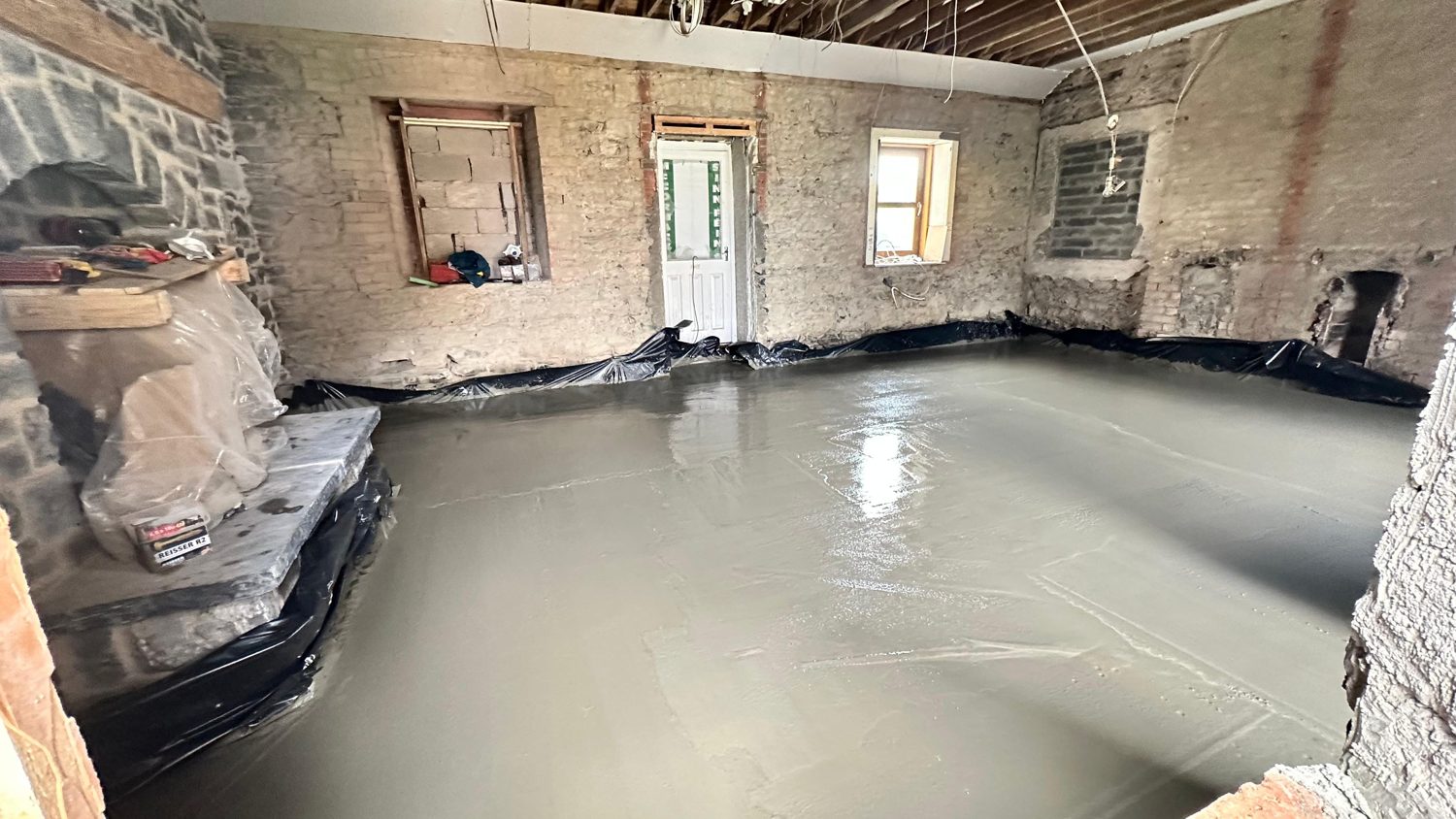
The old cottage had no real floor to speak of, and no defence against rising damp. We dug the whole floor out by hand, took it down to a good bearing, and formed new foundations where the structure needed them — including the base for the new porch.
Then the floor was built up properly: hardcore, a damp-proof membrane lapped up the walls to tie into the wall treatment, and a new concrete slab poured level throughout. This is what stops damp coming up through an old building for good — and it's why the finished cottage feels dry and warm, not cold and musty like it did before.
New window openings and a porch on new foundations
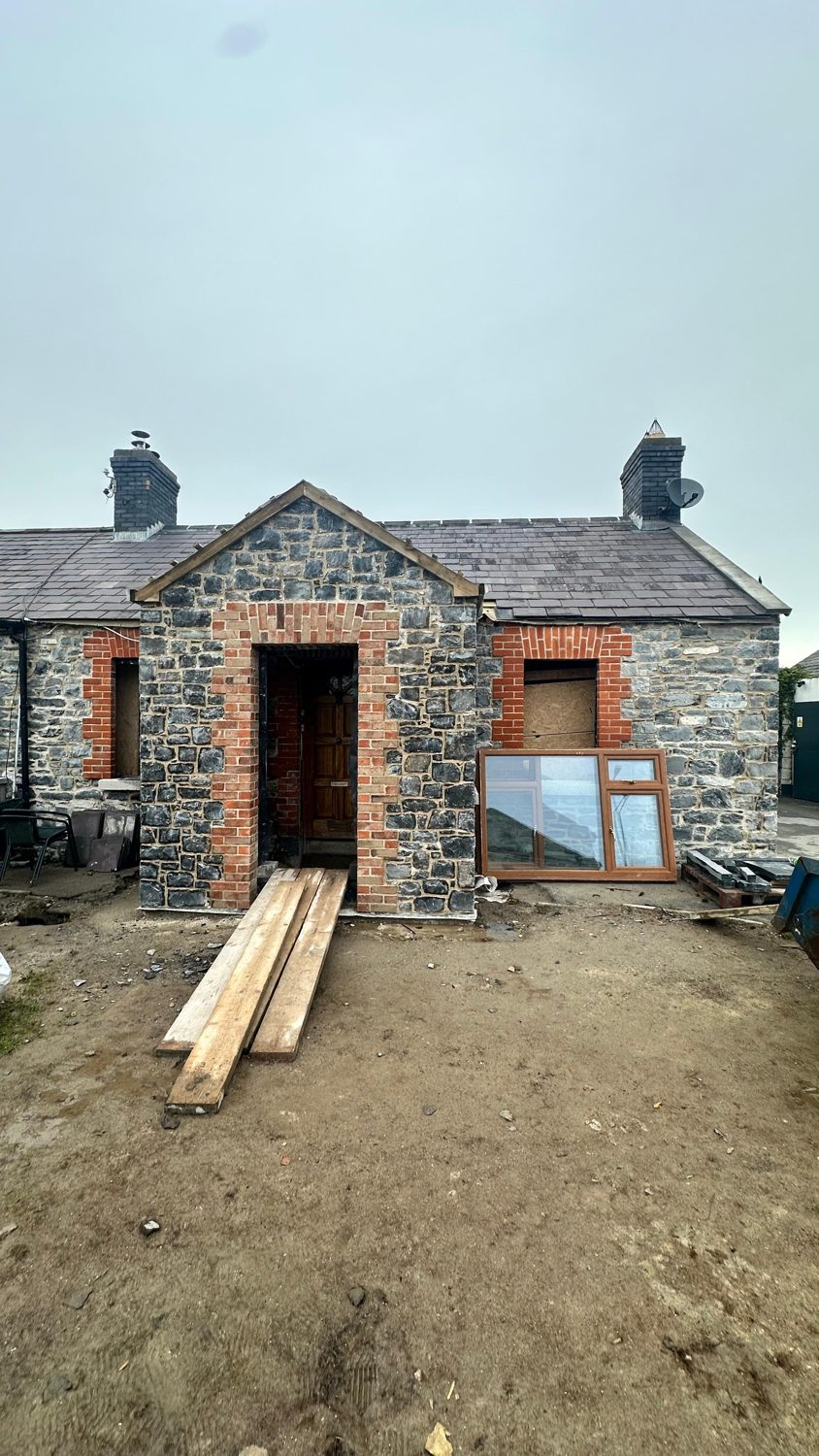
Part of the brief was to change how the cottage was used — so some window openings were altered and reformed to suit the new layout and let in more light. Each new opening was carefully cut and rebuilt in stone, with a proper structural head over it, so it looks like it was always there.
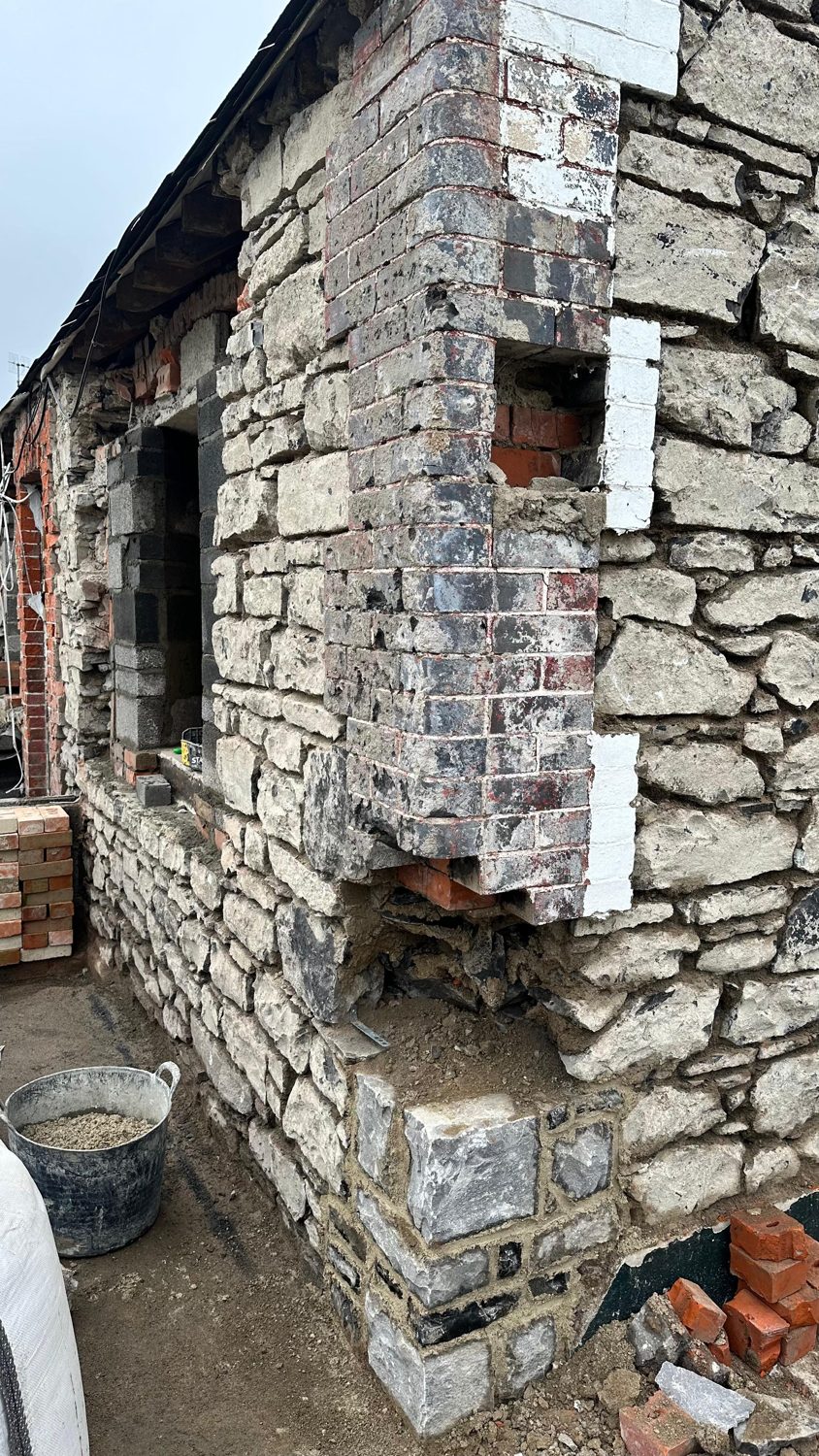
We also built a new porch on its own new foundation — tying new stonework neatly into the old wall so there's no weak joint and no line where old meets new. Getting that junction right, in matching stone and lime, is the difference between an addition that looks original and one that looks bolted on.
Rebuilt, cleaned and repointed — all in lime
With the cement render gone and the structure sound, the stone could finally breathe again. We rebuilt the stonework where it was needed, brought the loose sections back into line, and then raked out and repointed every joint on the building in breathable lime mortar. On an old stone cottage this is the single most important decision: lime, not cement.
Hard cement traps water in soft old stone and blows the faces off it over a few winters. Lime lets the wall breathe, flexes with the building, and protects the stone for generations — which is exactly what a cottage like this needs. We cleaned the masonry back, matched the mortar, and finished the joints by hand so the whole elevation reads as one.
The chimney — repaired and rebuilt in parts
The old chimney had suffered over the years, so we repaired it and rebuilt the parts that had failed in reclaimed brick — the breast and the sections of the stack that needed it, run up through the gable and topped off properly so it draws well and sheds water. Using reclaimed brick, rather than new, keeps the colour and character honest to the age of the building.
A chimney takes the very worst of the Irish weather, so it's built and pointed to last — solid brickwork, the right mortar, and a top detail that keeps rain out of the flue. Done once, done right.
A hand-built stone fireplace, and the heart of the house back
This is the piece we're proudest of. Where the collapsed old fireplace had been, we built a brand-new stone fireplace by hand — a stone surround with a shaped arched opening, a solid oak beam as the lintel above it and a stone hearth beneath, all set in lime. Above it, the reclaimed-brick chimney breast carries the flue away cleanly.
Then we installed a wood-burning stove into the new opening, sized and set for a good draw and a warm room. With the restoration finished, the cottage has its heart back — a real fire, in a real stone hearth, that will be the centre of the house again.
Dry, sound and full of character again
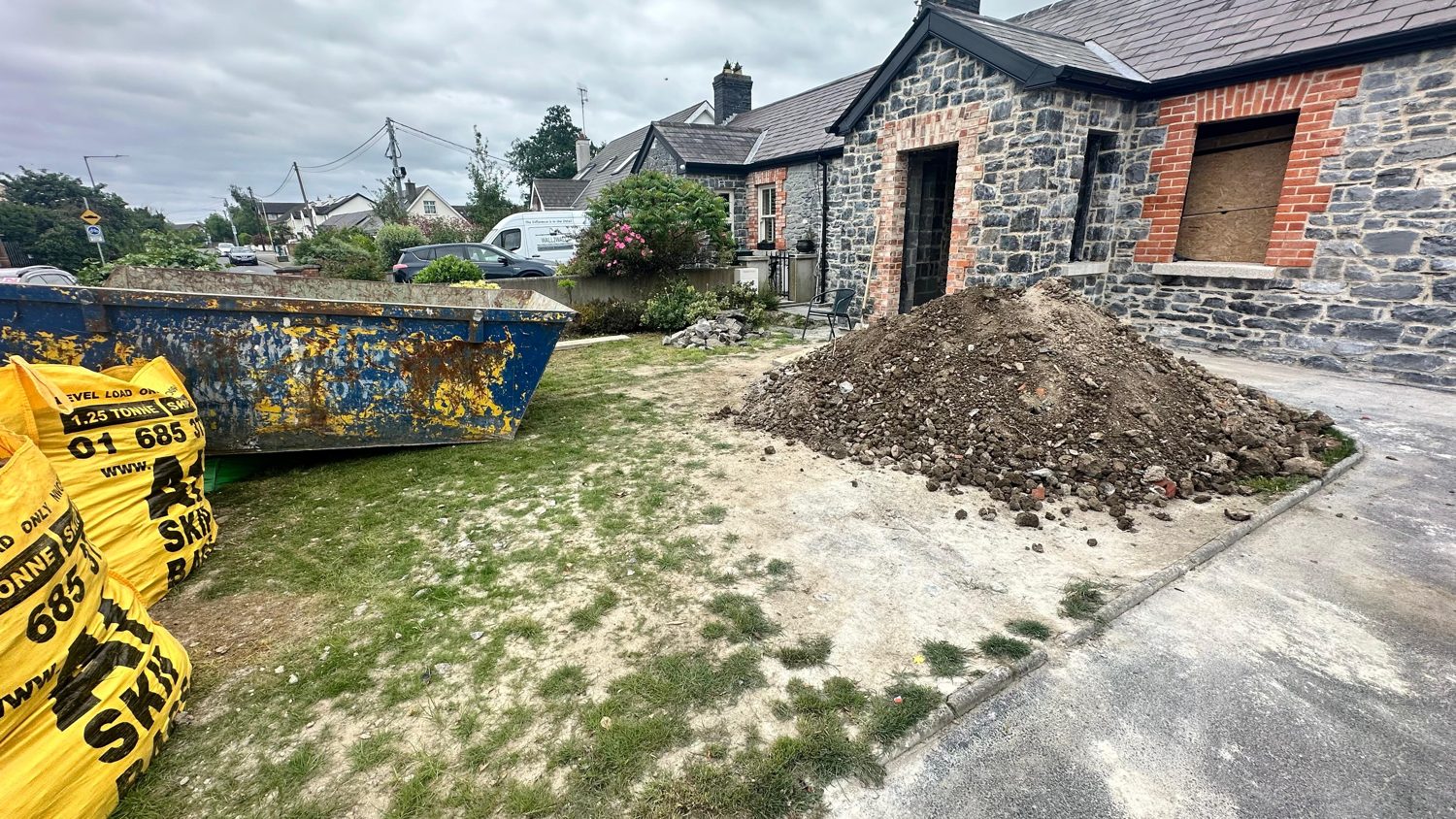
Finished, the cottage is transformed. Outside, the stone is clean, sound and neatly pointed, with the reclaimed-brick chimney and quoins giving it that unmistakable period look. New windows sit in solid openings, and the new stone porch ties in as if it was always there.
Inside, it's dry, warm and ready to live in — a new floor underfoot, sound walls, and that stone fireplace as the centrepiece. This is what a proper restoration looks like: the character of the original cottage kept completely intact, but every part of it made right for the next generation.
What the job involved
A full building restoration like this is really a dozen trades in one. On this Swords project we handled all of it, in-house:
🏗️ Structural repair
Resetting loose stone, stitching cracks, forming new lintels and rebuilding failed openings so the building is sound.
⛏️ Foundations & floor
Floor dug out by hand, new foundations formed, damp-proof membrane and a new concrete slab poured level.
🪨 Stone rebuilding
Rebuilding sections of wall and forming new openings in matching stone, tied into the original masonry.
🧴 Lime repointing
Every joint raked out and repointed in breathable lime mortar — the right choice for old stone.
🧹 Masonry cleaning
Stone cleaned back to bring out its natural colour and texture without damaging the face.
🏚️ Chimney repair
Chimney repaired and rebuilt in parts with reclaimed brick, topped off to draw well and keep water out.
🔥 Stone fireplace
A hand-built stone fireplace with a stone arch, an oak lintel beam and a stone hearth — plus a wood-burning stove installed.
🧱 New porch
A new porch built on new foundations and knitted into the old wall so there's no weak joint.
🏠 Full finishing
The stonework, chimney, porch and fireplace all finished and tied together, inside and out.
This restoration cost €69,000.
Most firms won't put a number on restoration — we will. That figure covers everything above: cement render removal, structural repair, new foundations and floor, rebuilt and repointed stonework in lime, the new stone porch, chimney repairs and the hand-built stone fireplace with stove. Every building is different, so yours will vary with size, access and how much stone and lime work is involved — but you'll always get a clear, itemised quote after a free site visit.
Get a free, itemised quote →The full project gallery
The whole restoration, from start to finish. Tap any photo to enlarge.
Everything in lime — because that's what old stone needs
People often ask why we don't just use ordinary cement — it's cheaper and faster. On an old stone building, cement is the wrong answer. It's hard and sealed, so it traps moisture inside soft old stone and, over a few winters, that trapped water freezes and blows the faces off the stone. The wall stays damp and slowly destroys itself.
Lime mortar is soft and breathable. It lets moisture evaporate back out of the wall, moves gently with the building instead of cracking it, and can be re-worked in future. It's how these cottages were built in the first place, and it's the only right way to restore them. Every joint on this Swords cottage — walls, openings, fireplace and chimney — was done in lime.
More on our restoration work →
What our customers say
"I can not recommend Arthur and his team highly enough, they started on the agreed date and nothing was a problem after that... 10/10 in everything they done for me, very professional team of guys."
Alan Bow · Google review"I would like to thank this firm for the stonework on a large project. Both the work and the employees were of the highest quality and did more than expected of them. I would highly recommend this company."
Kimmage Hardware · Google reviewGet my free quote
Your name and number is all we need — add a photo if handy. We’ll call you back today.
or call 086 066 6591 · WhatsApp · ★ Rated 5.0
We use the details you send to assess and respond to your enquiry. See our Privacy & Cookies page.
Have an old stone house or cottage to restore?
Whether it's a full restoration like this one or a single wall, chimney or fireplace — we'll call out, take a proper look and give you an honest quote. Based in Navan, covering Dublin, Meath and beyond.